Across the northern forests of North America, snowshoe hares are trading their summer brown for winter white right now, and the timing can be a matter of life and death. In a study of radio-collared hares, animals whose coats clashed with the ground around them saw their weekly survival fall by up to 7%.
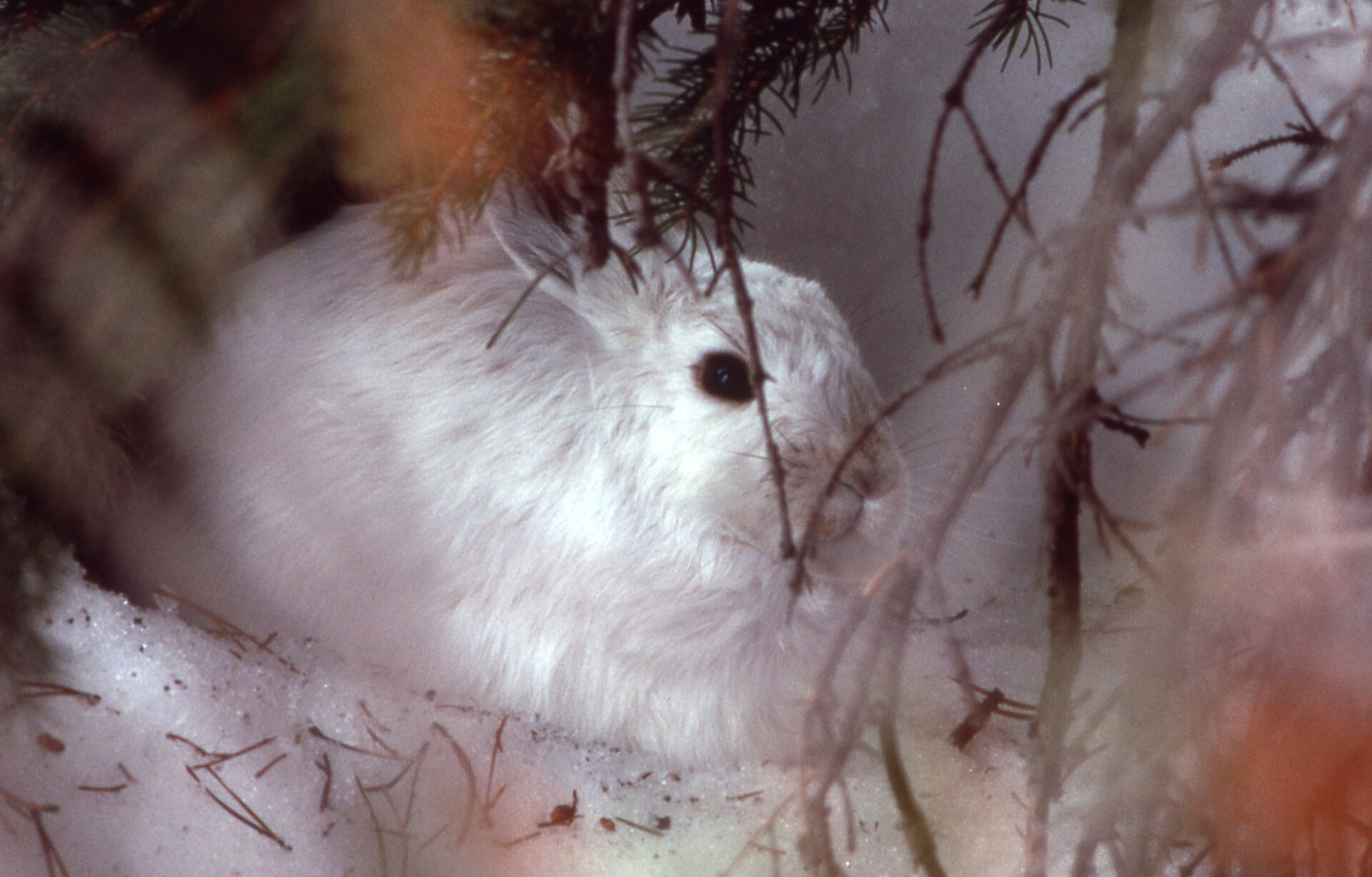
The snowshoe hare, Lepus americanus, is also called the varying hare for exactly this reason. Rocky Mountain National Park's guide to the species describes a dark brown summer coat with a small black-tipped tail, and fur that turns white in winter.
A hare built for snow
The name comes from the feet. According to Wikipedia's snowshoe hare entry, the hind foot measures 117 to 147 millimeters, about 4.6 to 5.8 inches, on an animal 413 to 518 millimeters long. Do the division and that single foot runs about 28% of the hare's total length, which spreads its weight like a snowshoe so it does not sink into powder.
The winter coat is longer as well as whiter. It is almost entirely white, except for black eyelids and dark tips on the ears, and the soles of the feet grow dense, stiff fur. Adults weigh only about 3.2 to 3.4 pounds.
The species ranges from Newfoundland to Alaska, south along the Sierra Nevada into California and down the Rockies to northern New Mexico. Its chief predator is the Canada lynx, and the two animals' numbers rise and fall in a famous cycle that peaks roughly every 10 years.
When the snow is late
The color change runs on an internal schedule, not on the weather outside. In a 2014 study in Proceedings of the Royal Society B, University of Montana researchers followed nearly 200 hares at two Montana sites. Molt timing differed between the sites, likely because of daylight and climate, but within each site it was largely fixed, with only slight flexibility in the spring switch from white to brown.
The hares also did not seem to know when they stood out. The team found no evidence that mismatched animals hid more, fled differently or picked better resting spots.
That matters because snow cover is getting shorter. A white hare on brown ground is easy to spot. In a 2016 paper in Ecology Letters, Marketa Zimova, L. Scott Mills and J. Joshua Nowak measured the cost: weekly survival dropped by up to 7% for mismatched hares, and the authors projected strong population declines by 2100 if hares cannot adapt.
There is a hopeful note in the same paper. Individual hares vary widely in when they molt, and natural selection could favor the ones whose timing fits. Some populations in low-snow areas already stay brown all winter.
Snow specialists turn up often in our wildlife coverage, from the Ussuri tube-nosed bat that hibernates in snowbanks to the Amur leopards rebounding in Russia's snowy Far East. For hares, the next big change is the spring molt back to brown, and breeding usually starts by late December or January.
Sources
- “Snowshoe hare”, Wikipedia, 2026
- “Snowshoe Hare Coloration”, Rocky Mountain National Park, US National Park Service, 2012
- “Snowshoe hares display limited phenotypic plasticity to mismatch in seasonal camouflage (Proceedings of the Royal Society B)”, University of Montana, 2014
- “High fitness costs of climate change-induced camouflage mismatch (Ecology Letters)”, North Carolina State University and University of Montana, 2016
Image: NPS/Jim Peaco, Public domain via Wikimedia Commons
This article was produced with AI assistance and reviewed by our Editorial Desk. How we work.