That cold, damp nose your dog shoves into your hand is doing more than sniffing. Trained dogs picked out a faintly warm object from 1.6 meters away using heat alone, in experiments run by researchers in Sweden and Hungary, and brain scans of 13 dogs lit up when the same gentle warmth was aimed at them.
The work appeared on February 28, 2020, as "Dogs can sense weak thermal radiation" in the journal Scientific Reports, with Anna Bálint as first author and a team that included Attila Andics, Ádám Miklósi and Ronald Kröger.
How the heat test worked
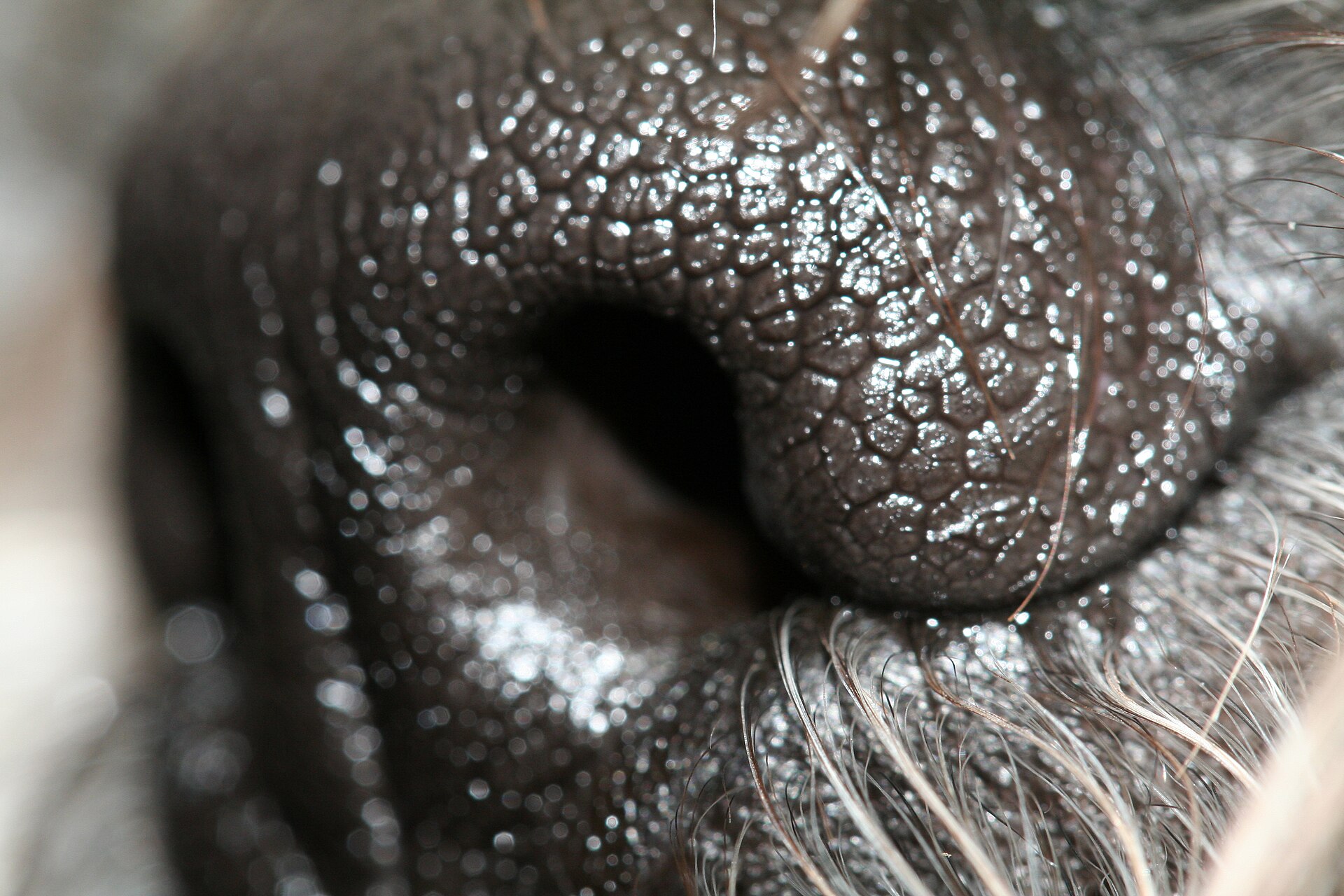
The team started from a hunch about temperature. The bare, often moist skin at the tip of a dog's snout, which biologists call the rhinarium, is packed with nerves. In meat eaters it also runs much colder than the nose tips of hoofed plant eaters, and the researchers suspected that chill makes it unusually good at picking up radiated heat.
To test it, they trained three dogs to choose between two objects placed some distance away. One sat at roughly room temperature. The other was warmed to about the surface temperature of a furry mammal. Their task was to tell the pair apart by the heat radiating from each one.
Lund University's announcement of the study says the dogs chose the warm target at a distance of 1.6 meters, or about 5 feet 3 inches, roughly the length of a small sofa. Kröger's own golden retriever, Kevin, was one of the trainees, and the dogs were taught with rewards only.
In Budapest, the group then scanned 13 awake dogs with functional MRI while presenting heat at similar temperatures. The warm stimulus raised activity in the left somatosensory association cortex, a brain region that handles touch and other signals from the skin. The authors concluded they had shown "a hitherto undiscovered sensory modality in a carnivoran species."
Why a cold nose helps
Kröger put the surprise plainly in the university's release: "It has taken a rather long time to discover this, given that dog and man have lived side by side for 15,000 years, and we have remained unaware of this ability."
He also tied the finding to working dogs. "The dog's nose must be cold to be able to find a warm human body," he said, adding that dogs bred so they cannot cool their noses may be a poor choice for search work after earthquakes and avalanches.
The heat sense sits on top of jobs the nose tip was already known to do. Wikipedia's entry on the rhinarium describes cold receptors in that skin that read wind direction from where evaporation cools it most, so a dog can tell which way a smell is drifting from. Breeders sometimes call this patch "nose leather."
There are limits. Only three dogs did the choice test, and the scans show a brain response rather than how dogs use the sense day to day. The researchers suggest it may help explain why wolves are such skilled hunters, though that link is still an idea, not a measurement.
The same Budapest group studies how dogs process words, including the gifted pups in Badiyaa's story on dogs that tilt their heads when they hear toy names. For more about canine senses, see how dogs picked out human stress in breath and sweat and why dogs see mostly blues and yellows.
One practical note: this research is about sensing, not health. If your dog's nose seems unusually warm, dry or sore, ask your vet.
Sources
- “Dogs can sense weak thermal radiation (Scientific Reports, vol. 10, 3736)”, Eötvös Loránd University and Lund University researchers, 2020
- “Dogs can detect heat with noses, study finds”, Lund University, 2020
- “Rhinarium”, Wikipedia, 2026
Image: Stockimagery, CC BY-SA 3.0 via Wikimedia Commons
This article was produced with AI assistance and reviewed by our Editorial Desk. How we work.