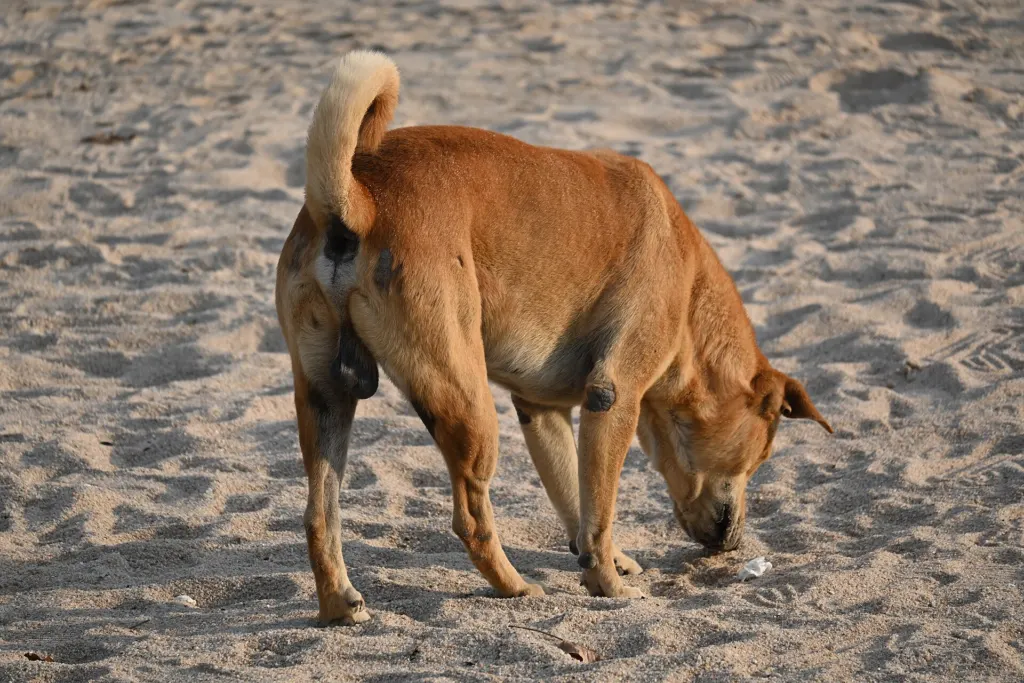
Four dogs in Northern Ireland were asked to pick a stressed person out of a lineup of smells, and they got it right 93.75% of the time. The dogs never saw anyone. All they had was a scrap of gauze carrying a stranger’s breath and sweat.
The experiment ran at the Animal Behaviour Centre at Queen’s University Belfast and was published in the journal PLOS ONE in September 2022. The paper, by Clara Wilson, Kerry Campbell, Zachary Petzel and Catherine Reeve, is titled “Dogs can discriminate between human baseline and psychological stress condition odours”.
How do you stress someone out for science?
With math, done out loud. Volunteers were told the study would be mildly stressful but not exactly why. Each one wiped a gauze pad across the back of the neck, breathed onto it and sealed it in a vial. That was the calm “baseline” sample.
Then came the hard part: counting backwards from 9,000 in steps of 17, aloud, in front of two researchers, with no pen or paper, while being urged to go faster. Right after the task, a second sample was taken. The team checked that each person really was stressed using heart rate, blood pressure and the volunteer’s own rating, and only kept samples from people whose bodies showed a genuine stress response.
The test
The dogs worked a row of three sniffing stations. In each trial one station held the stressed sample, one held the same person’s calm sample, and one held a blank pad. A dog signaled its choice with a trained alert, such as freezing and staring or sitting with its nose on the spot. Researchers running the trial did not know which sample was where, so they could not tip the dogs off.
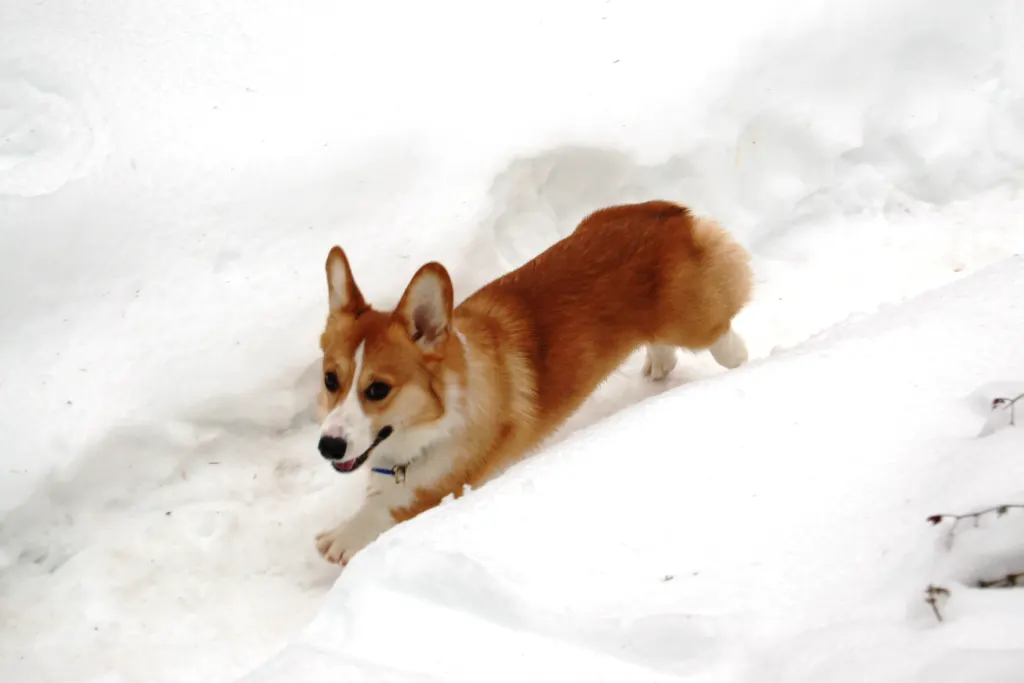
The four finalists were a Cocker Spaniel, a Cockapoo, a Lurcher-type mix and a terrier-type mix, aged between 11 months and 3 years. The two mixed breeds had come from rescue centers. Their names, listed in the paper, were Treo, Fingal, Soot and Winnie.
- Samples: breath and sweat from 36 volunteers
- Trials: 720 in the main test, spread over 36 sessions
- Best and worst dog: 96.88% and 90.00% correct
- All four combined: 93.75% correct
Why 93.75% is a big number
With three pots to choose from, a dog guessing blindly would be right about one time in three, or roughly 240 of the 720 trials. The dogs actually got about 675 right. That is close to three times what luck alone would deliver, and the authors’ statistical test put the odds of a fluke at less than one in a thousand.
The authors’ conclusion is that a sudden bout of psychological stress changes the chemical cocktail coming off our breath and skin, and that dogs can smell the difference. They suggest the finding could help in training emotional support and PTSD service dogs, the kind of work Badiyaa explored in the story of service dog Sparrow, who stops playing to warn her owner before a fainting spell.
What the study does not show
Twenty dogs started training, but only four reached the testing stage. These were also trained detection dogs, rewarded with food for finding a target, so the result shows dogs can tell the two smells apart, not that your pet notices or cares when you are stressed. The work also tested a short, sharp stressor, a math task lasting a few minutes, rather than long-running anxiety.
The nose doing the work is the same one police forces have relied on for more than a century, as Badiyaa’s history of the first police dog units in Ghent and Nottingham shows. The Belfast team’s next question is whether dogs pick up the stress smell on their own, without months of training to look for it.
Further reading
Image: PattayaPatrol, CC BY-SA 4.0 via Wikimedia Commons
This article was produced with AI assistance and reviewed by our Editorial Desk. How we work.