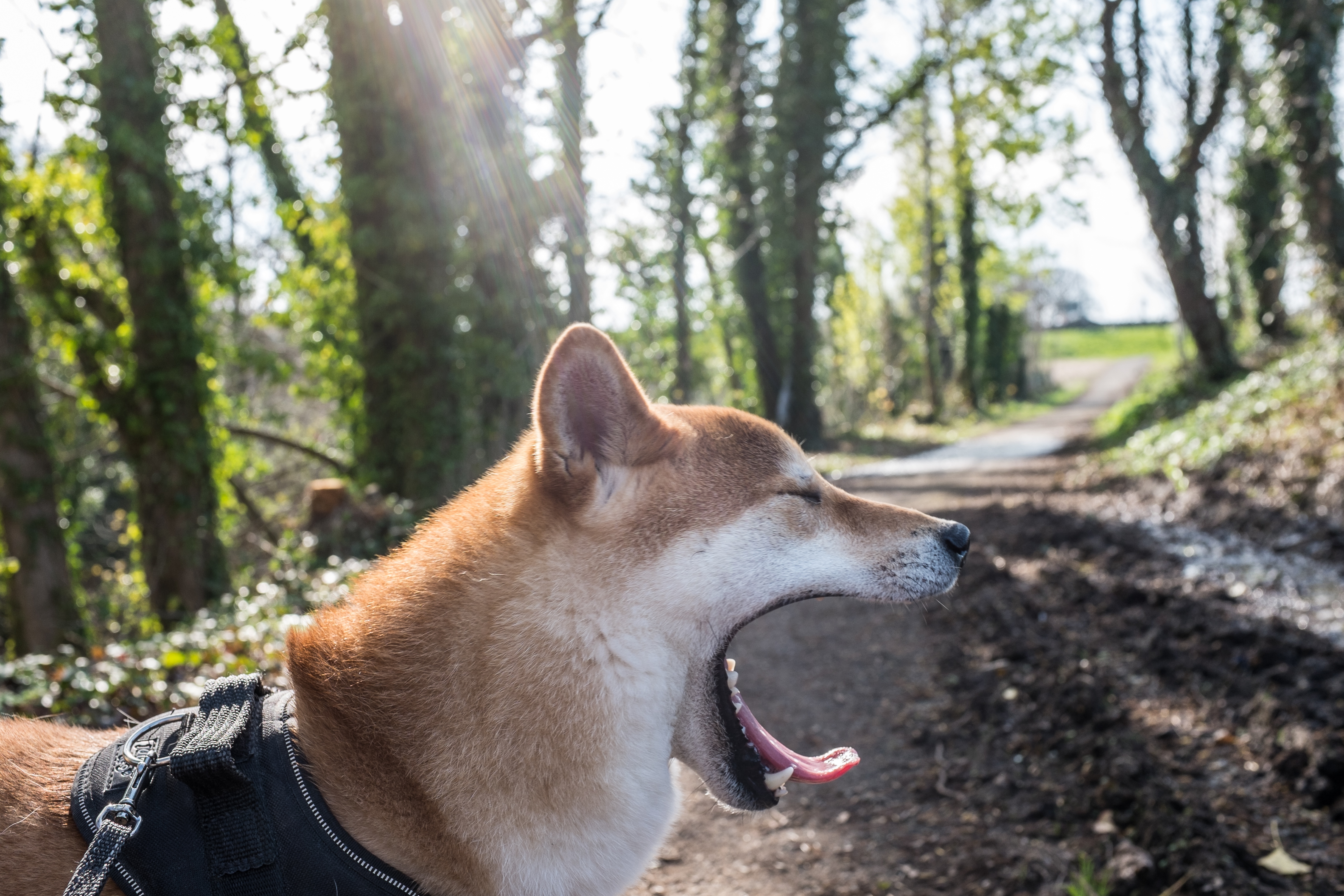
Yawn at your dog and there is a good chance it will yawn back. In the first experiment to test it, 21 of 29 dogs yawned after watching a person yawn, and not one of them yawned when the same person simply opened and closed their mouth.
That 2008 study, from psychologists at Birkbeck, University of London, was published in Biology Letters under the blunt title "Dogs catch human yawns." The authors said it was the first study to show that human yawns may be contagious to dogs, and that the effect is not limited to primates.
Owners are more contagious than strangers
A follow-up at the University of Tokyo asked whose yawns matter most. In the 2013 University of Tokyo study in PLOS ONE, 25 pet dogs watched either their owner or an unfamiliar researcher act out yawns, or make the same mouth movements without the yawn. Thirteen of the 25 dogs yawned during the sessions, and they yawned more often when their own owner was the one yawning.
The team also strapped heart monitors to 21 of the dogs to check a skeptical explanation: that dogs yawn because the setup makes them a little tense, since yawning can be a sign of mild stress in dogs. Heart rate and heart rate variability did not change between conditions. The authors wrote that their results "may indicate that rudimentary forms of empathy could be present in domesticated dogs."
The numbers side by side
- Birkbeck, 2008: 21 of 29 dogs yawned back, about 72%.
- Tokyo, 2013: 13 of 25 dogs yawned, 52%, with more yawns for owners than for a stranger.
- Humans, for comparison: the Tokyo paper puts contagious yawning at 45 to 60% of healthy adults.
Put that way, dogs in these tests caught human yawns at rates in the same range as people catch them from each other.
Puppies don't catch them yet, and not every study agrees
Age seems to matter. A 2013 puppy study by Elainie Alenkær Madsen and Tomas Persson in Animal Cognition found a contagion effect only in dogs older than about seven months, echoing how the habit develops with age in children and chimpanzees.
The finding is not unanimous. A 2009 study in Animal Cognition by Aimee Harr and colleagues asked whether dogs show contagious yawning and found little evidence, and a 2010 study reached a similar result. The Tokyo team noted that those negative studies mostly used videos of yawns rather than a live person, which dogs may treat as less real.
Researchers still argue over whether a caught yawn reflects empathy or something simpler, such as dogs paying close attention to the people they know best. What the live experiments agree on is that dogs watch our faces closely enough for a yawn to pass between species.
Badiyaa has covered other ways dogs read and answer people, including why dogs tilt their heads at familiar words and the play sneeze dogs use to keep games friendly. The simplest test needs no lab: sit facing your dog, catch its eye and yawn, and count to 30.
Sources
- Dogs catch human yawns (Biology Letters 4: 446–448), Birkbeck, University of London, 2008
- Familiarity Bias and Physiological Responses in Contagious Yawning by Dogs (PLOS ONE), University of Tokyo, 2013
- Contagious yawning in domestic dog puppies (Animal Cognition 16: 233–240), Animal Cognition, 2013
- Do dogs (Canis familiaris) show contagious yawning? (Animal Cognition 12: 833–837), Animal Cognition, 2009
Image: Picography, CC0 via Wikimedia Commons
This article was produced with AI assistance and reviewed by our Editorial Desk. How we work.