Most of the rock missing at the Great Unconformity, Earth’s famous billion-year gap, was stripped away by early supercontinent tectonics and not by a “snowball Earth” ice age, according to a study of ancient basement rock in North China. The researchers found that about 60 percent of the erosion there had already happened before 1.6 billion years ago.
The paper, published in the Proceedings of the National Academy of Sciences by a team from Northwest University in Xi’an, the University of Padova, the Chinese Academy of Sciences and Columbia University’s Lamont-Doherty Earth Observatory, takes on one of geology’s longest-running arguments.
What the Great Unconformity is
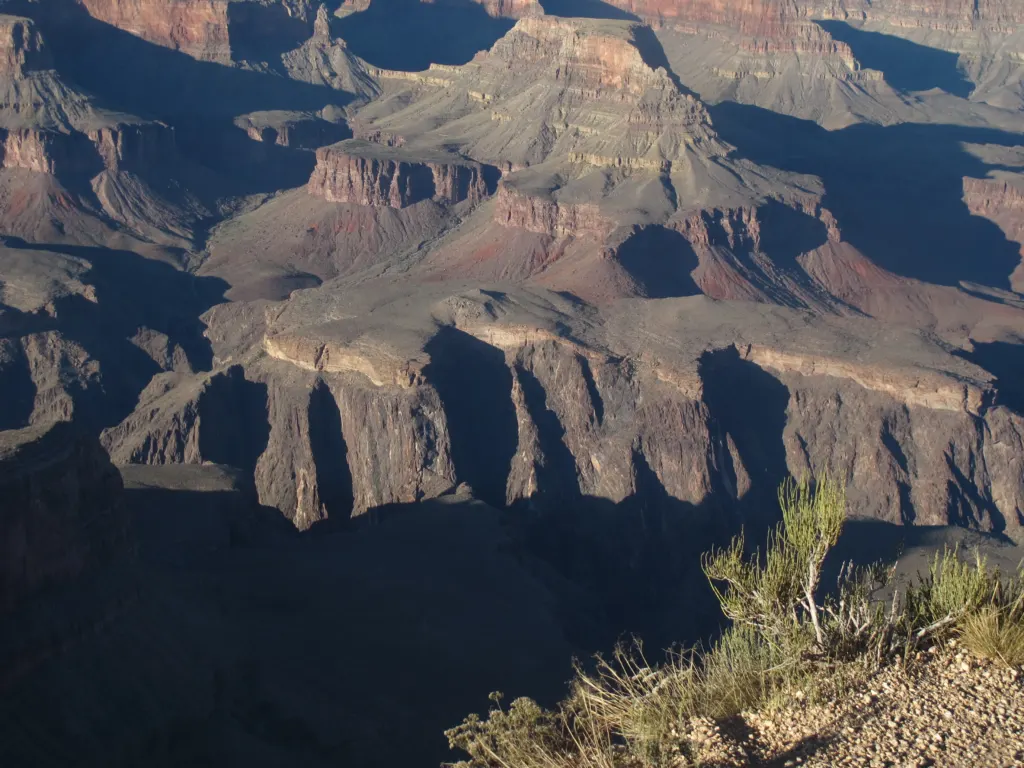
Across almost every ancient continent, layers of Cambrian sediment sit directly on top of far older crystalline rock, with a huge slice of time simply absent in between. In the Grand Canyon, roughly 505-million-year-old Tapeats Sandstone rests on Vishnu Schist that is about 1.75 billion years old. Rock was eroded away, and for long stretches nothing new was laid down.
Two explanations have competed. One blames the Cryogenian Period, about 700 million years ago, when ice may have covered much of the planet and glaciers could have scraped kilometers of crust off the continents. The other blames mountain building and uplift as supercontinents assembled and broke apart.
How the team tested it
The researchers sampled basement rock at five sites across the North China Craton, an old and stable block of crust, from its interior to its edges. In the interior, early Cambrian beds rest on rocks more than a billion years older; near the edges the gap shrinks.
They then read the cooling history locked in minerals such as zircon, monazite and mica. As buried rock is pushed up and the rock above it erodes, it cools, and different dating methods record when it passed through different temperatures. Statistical models stitched those dates into a cooling path for each sample.
The fastest cooling in the craton interior ran from about 2.1 to 1.6 billion years ago. In that window the rocks cooled by at least 370 degrees Celsius, which the team links to about 12 kilometers of uplift and erosion. Another 9 to 13 kilometers followed more slowly up to about 520 million years ago.
“If glaciation had been the dominant driver, you’d expect to see a clear pulse of erosion at the time of the Cryogenian ice ages,” said coauthor Nicholas Christie-Blick of Lamont-Doherty. “We don’t see that pattern in the North China data.”
Why it matters
Put the dates side by side and the gap is stark. The main erosion window closed about 1.6 billion years ago, while the Cryogenian glaciations peaked around 700 million years ago. That leaves roughly 900 million years between the bulk of the stripping and the ice age blamed for it.
In the paper’s abstract, the authors link the most intense erosion to Earth’s “first true supercontinent (Columbia)” rather than to the Cambrian explosion of animal life. Records from the ancient cores of North America, Europe and South America, known as Laurentia, Baltica and Amazonia, show the same early pulse, the study reports.
“The basement rocks in the cratonic interior of North China formed at depths of about 25 kilometers,” said coauthor Liang Duan of Northwest University. “To fully exhume them to the surface requires roughly that amount of erosion.”
Limits of the study
Ice is not ruled out entirely. Zircon ages from one interior sample fall between about 620 and 544 million years ago, and the youngest overlaps with a late Precambrian ice age in North China, so glaciers may have added some erosion late in the story. The estimates also depend on standard assumptions about how quickly temperature rises with depth in the crust.
It is also one craton among many. A separate idea, which Badiyaa covered last week, places part of the Grand Canyon’s missing rock on a lost mega-cliff that stripped up to 8 km of rock. For more on the canyon, read about native fish rebounding in Bright Angel Creek.
The paper’s figure to remember: about 75 percent of the North China erosion was done by roughly 1.35 billion years ago, long before any snowball Earth.
Further reading
Image: Mikenorton, CC BY-SA 4.0 via Wikimedia Commons
This article was produced with AI assistance and reviewed by our Editorial Desk. How we work.