In the village of Pačir in northern Serbia, a small geothermal pool turns a shade of pink that has earned it the local nickname Pink Lake. It is one of only five European sites listed in the pink lake entry, alongside salt works in southern France and Spain and lakes in Crimea and southern Ukraine, and it is the odd one out: warm spa water in farm country rather than a salt flat.
Pačir, known in Hungarian as Pacsér, lies in the municipality of Bačka Topola in Vojvodina, Serbia’s northern province. The village had 1,806 residents in the 2022 census, and Hungarians make up the majority.
A hot spring cooled for bathers
According to a travel listing for the site, the lake covers about 2,000 square meters, roughly the area of two Olympic swimming pools. The spring water comes out of the ground at about 72°C (161°F) and is cooled to around 30°C (86°F) before people bathe in it. The same listing says the water carries sodium, iodine, sulfates and bromine, and that the pool on Branka Radičević street opens daily from 10 a.m. to 8 p.m.
The listing also admits nobody has pinned down where the pink comes from, suggesting that the minerals, the warmth and sunlight combine to produce it. We could find no published study of the pool’s color.
How other lakes turn pink
The science behind the world’s famous pink lakes is better documented, and it is mostly biological. The usual suspect is Dunaliella salina, a single-celled green alga that survives in water with up to 35% salt, compared with about 3% in seawater. Under strong light and high salinity it piles up beta-carotene, the same orange-red pigment found in carrots, which shields it from sun damage and tints the water.
Bacteria and archaea also play a role. When researchers led by molecular biologist Ken McGrath sampled Australia’s Lake Hillier in 2015, the alga made up only about 0.1% of the DNA they recovered, while the red bacterium Salinibacter ruber made up 20 to 33%. A pink archaeon, Halobacterium salinarum, colors other lakes, including one in Melbourne’s Westgate Park. Our story on why Lake Hillier stays pink even in a jar goes deeper into those microbes.
Why Pačir is a different case
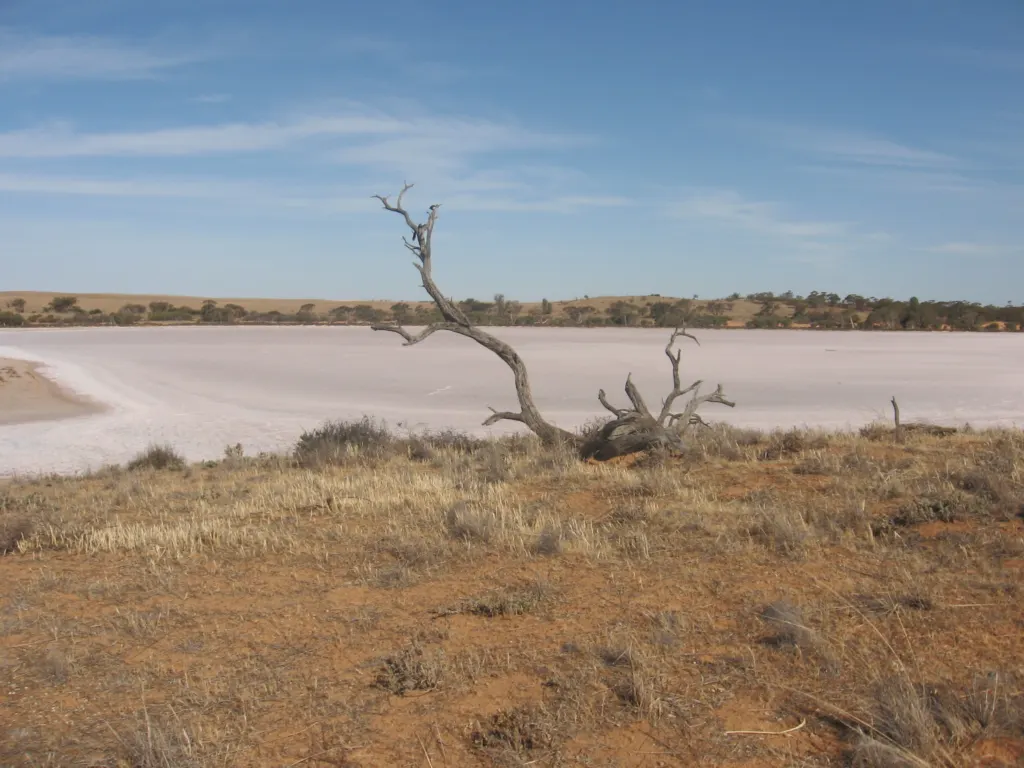
Classic pink lakes are hypersaline. Lake Hillier can be up to ten times saltier than the ocean, and many pink lakes change shade with rainfall and evaporation; Westgate Park’s lake was pink in 2017 and 2019 but had turned dark green by early 2022. Pačir’s pool is a cooled hot spring, and no salinity measurements for it appeared in the sources we checked. That leaves open whether salt-loving microbes, dissolved minerals or simple light effects are behind its color.
- Typical pink lake: very salty, colored by algae, bacteria or archaea.
- Pačir: warm mineral spring water, cause of color unconfirmed.
The pool is a summer draw for visitors across Vojvodina. For another unusual body of water, see our piece on Lake Paiku, 4,591 meters up on the Tibetan Plateau. Pačir’s lake is listed in the same pink lake index as Lake Retba in Senegal and Lake Hillier in Western Australia.
Further reading
Image: Papphase, Public domain via Wikimedia Commons
This article was produced with AI assistance and reviewed by our Editorial Desk. How we work.