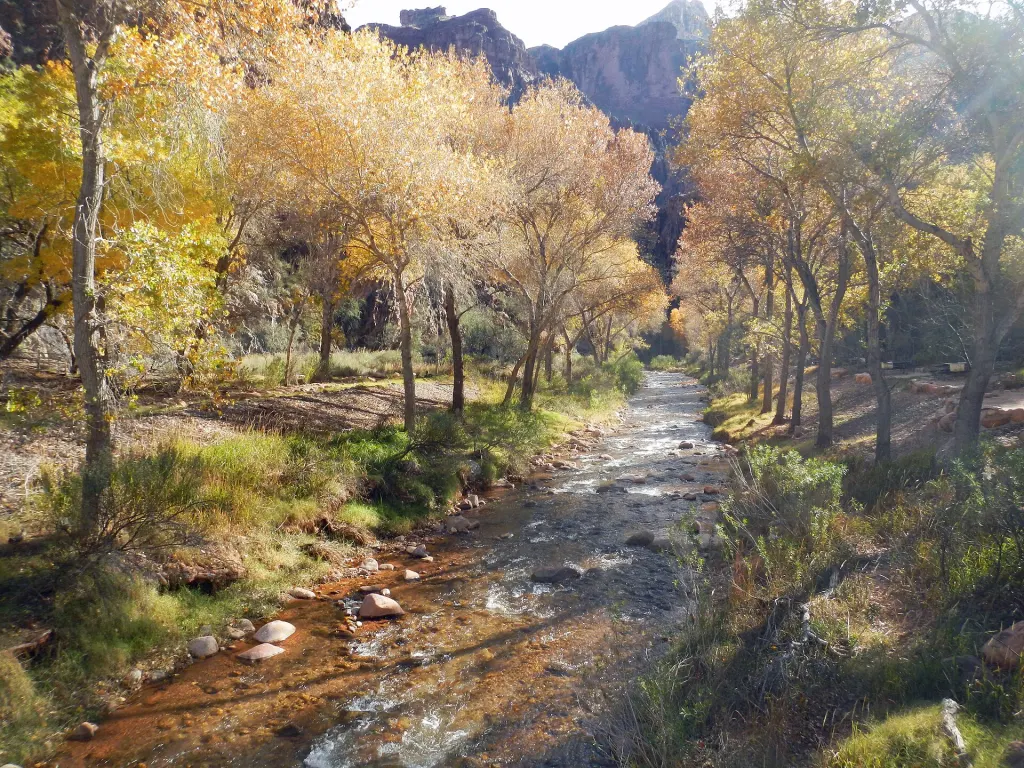
Native fish in Bright Angel Creek, the stream that runs past Phantom Ranch on the floor of the Grand Canyon, have increased by 480% since biologists began a sustained campaign to pull out the brown and rainbow trout that prey on them. Grand Canyon National Park fisheries staff report that trout in the creek fell by 89% across eight seasons of removal, and the federal Fish and Wildlife Service puts native species at 97% of the fish now living there.
It also sets up the next step: the creek is now a nursery for the humpback chub, a federally threatened fish found only in the Colorado River basin.
Why trout are trouble in this river
The Colorado through the canyon evolved with just two families of native fish, minnows and suckers, and many of those species live nowhere else. Eight native species once swam here; the park counts five today. Trout were never part of that community. They were stocked in the early 1900s, and USGS researchers date the arrival of brown trout in Bright Angel Creek to the 1920s.
Glen Canyon Dam, completed in 1963, tipped the balance further. Because it releases cold water drawn from deep in Lake Powell, long reaches of the main river became too chilly for humpback chub, which need water of at least 61°F (about 16°C) to spawn. Warm side streams such as Bright Angel Creek turned into some of the few places young natives could grow. The same creek also became the main brown trout spawning ground in the park.
The damage runs two ways. Trout eat juvenile native fish, and they compete with them for food and space. When USGS researchers checked what trout near the Little Colorado River had been eating, humpback chub and other natives were the most likely fish prey, according to the park. The natives have few defenses against introduced trout, bass and catfish. Their historic predator was a native one, the Colorado pikeminnow, last verified in the canyon in 1972.
Two decades of effort, in dates
- 2002–2003: The first trout-reduction season. Further rounds follow in 2006–2007 and 2010–2012, though wildlife officials later judged the early-2000s attempts ineffective.
- 2010–2011: A weir, a trap across the stream, catches 105 mature brown trout and 107 rainbows; electrofishing crews remove another 594 brown and 454 rainbow trout.
- Fall 2012: An intensive multi-year campaign starts. The park’s 2013 fisheries plan sets a target of cutting trout by at least 80%.
- Early 2015: Brown trout are down 62%.
- May 14, 2018: With trout reduced by more than 80%, biologists from the park, the Fish and Wildlife Service and the Bureau of Reclamation release microchipped humpback chub into the creek.
- Now: After eight seasons of removal, trout down 89% and natives up 480%.
What a 480% rise actually means
Percentages this big are easy to misread. A 480% increase is the starting population plus 4.8 times that amount again, so the creek holds about 5.8 times as many native fish as it did when removals began. A stretch of stream that held 100 natives at the start would hold roughly 580 now. Run the trout number the same way and every 100 trout has shrunk to about 11.
A 2017 project review recorded speckled dace and flannelmouth sucker numbers climbing as brown trout declined, the pattern you would expect if predation had been holding them back.
How the work is done, and where it falls short
Each winter crews walk about 12 miles of creek with backpack electrofishing gear to find and take out trout. Near the mouth, a seasonal one-way weir stops adult trout coming up from the Colorado to spawn while letting native fish pass.
There are side effects. A 2022 study by USGS and park scientists in the Canadian Journal of Fisheries and Aquatic Sciences found that blocking the creek stopped brown trout returning to spawn there, and that experimental fall high flows from the dam helped push more of them upstream into the tailwater below Glen Canyon Dam. Park staff also say colder reaches and natural barriers shelter trout that crews struggle to get at. Their answer is a chemical option, which still needs an environmental review and talks with tribes first. Meanwhile a new predator, smallmouth bass, has started showing up below the dam.
The chub connection runs deep. One of the specimens used when the species was first scientifically described, in 1946, was caught in or near Bright Angel Creek. The species was downlisted from endangered to threatened in 2021, and its largest remaining population lives where the Little Colorado joins the Colorado. Jeanne Calhoun, the park’s chief of science and resource management, marked the 2018 release by saying: “I’m excited that we have reached this critical milestone in endangered fish recovery.”
If you fish the creek
Anglers near Phantom Ranch may notice fewer trout, but the park sets no bag limit on brown or rainbow trout in the creek and encourages people to keep what they land. Native fish get the opposite treatment: release any you hook straight away and unharmed. The giveaway for an adult humpback chub is the fleshy hump behind its head, but young chub only start growing it at three to four years old.
Further reading
- National Park Service: Grand Canyon's Native Fish
- National Park Service: Bright Angel Creek Trout Reduction Project
- U.S. Fish and Wildlife Service: Non-Native Trout Removal
- Wikipedia: Humpback chub
Image: Fredlyfish4, CC BY-SA 3.0 via Wikimedia Commons
This article was produced with AI assistance and reviewed by our Editorial Desk. How we work.