The people who keep elevators running earn a median $109,910 a year, more than double the typical American wage. That is the headline figure from the Bureau of Labor Statistics' Occupational Outlook Handbook, and it comes with a twist: you can get there without a college degree, but only after years of supervised work inside shafts and machine rooms.
The median for all US workers in May 2025 was $50,980. Elevator and escalator installers and repairers more than doubled it, at $52.84 an hour, and the top 10% cleared $158,890. Those working for government, outside schools and hospitals, did best of all, with a median of $116,480.
A small, hard-to-join club
Part of the reason is scarcity. The whole US occupation held just 24,700 jobs in 2025, with 89% of them at building equipment contractors. The BLS projects 6% growth to 26,100 jobs by 2035, twice the 3% average for all occupations, and about 1,900 openings a year, most of them created when existing mechanics retire or move on.
Badiyaa's sum: 1,900 openings a year is roughly 7.7% of the entire workforce, every year, which means a steady stream of trainees has to be found and taught from scratch.
Four to five years to earn the keys
Nearly every mechanic learns through an apprenticeship. The National Elevator Industry Educational Program, the training arm for the International Union of Elevator Constructors, says its apprenticeships run four to five years, with 2,000 hours of full-time supervised work in every year plus 100 to 200 hours of classes. Applicants need a high school diploma or GED and must sit the Elevator Industry Aptitude Test and an interview.
The money starts lower. A first-year apprentice earns 50% of a constructor's wage, rising each year at a fixed rate. Only after finishing the coursework and logging 8,000 working hours can an apprentice sit the mechanic exam. The union says it has more than 27,000 members.
Most states also demand a license, according to the BLS job profile, and the training never really stops, because modern elevators run on computerized controls that need complex troubleshooting.
Why the pay is so high
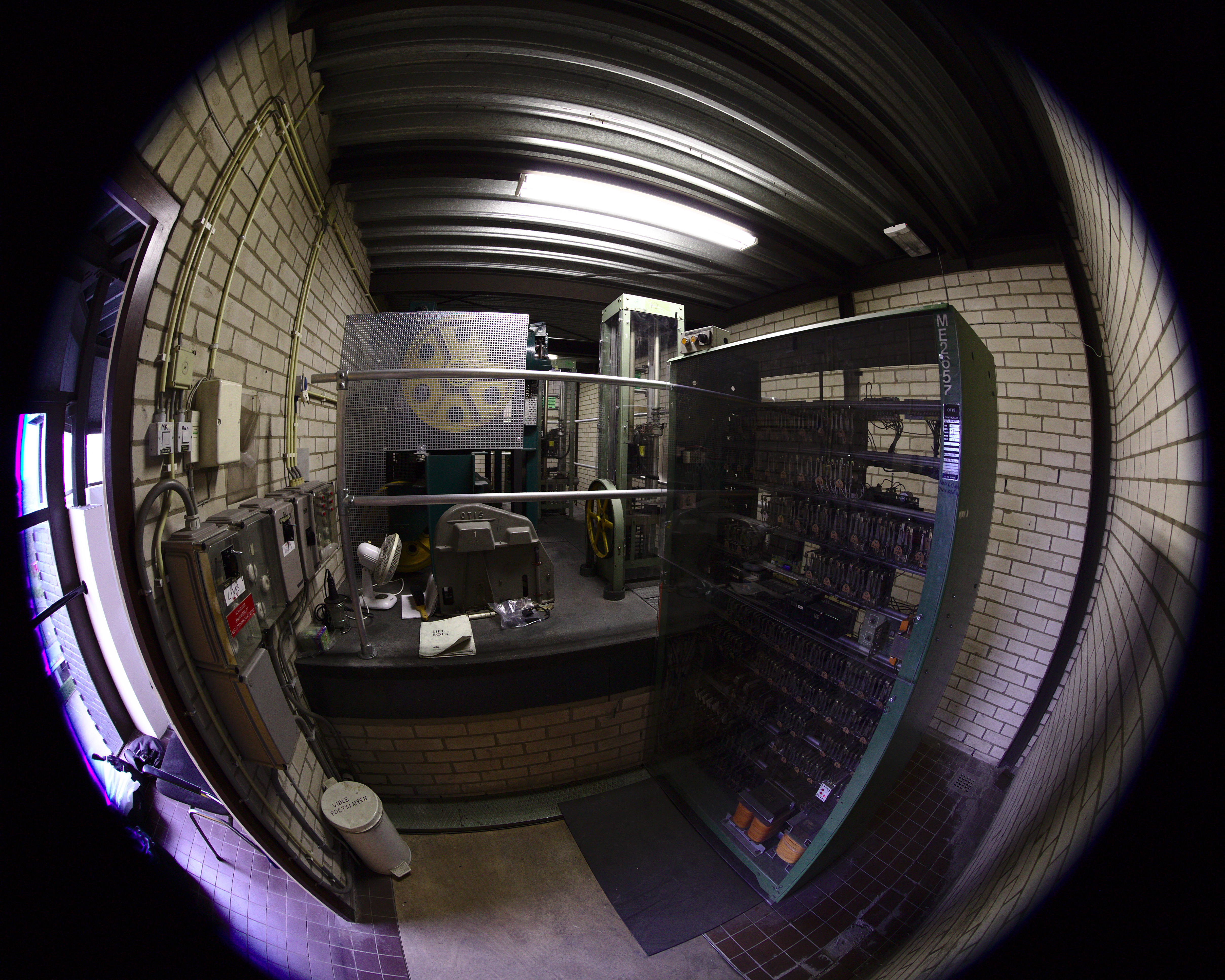
The job is not glamorous. Mechanics squeeze into crawl spaces and machine rooms, work at height in open shafts, and may lift parts weighing up to 200 pounds. Repairers can be on call around the clock for emergency breakdowns, and maintenance means greasing moving parts, swapping worn components and fine-tuning the ride.
Demand also does not depend only on new towers. The BLS expects construction of buildings with elevators to slow, but old equipment still needs regular service and upgrades, and accessibility rules keep adding lifts. Badiyaa has covered other machines that quietly run modern life, including the 1950s lift Queensland physicists used to send a message with gravity and the slipform machines that extrude concrete curbs.
Sources
- Occupational Outlook Handbook: Elevator and Escalator Installers and Repairers, U.S. Bureau of Labor Statistics, 2026
- Apprenticeship program, National Elevator Industry Educational Program (IUEC), 2026
Image: Dennis van Zuijlekom, CC BY-SA 2.0 via Wikimedia Commons
This article was produced with AI assistance and reviewed by our Editorial Desk. How we work.