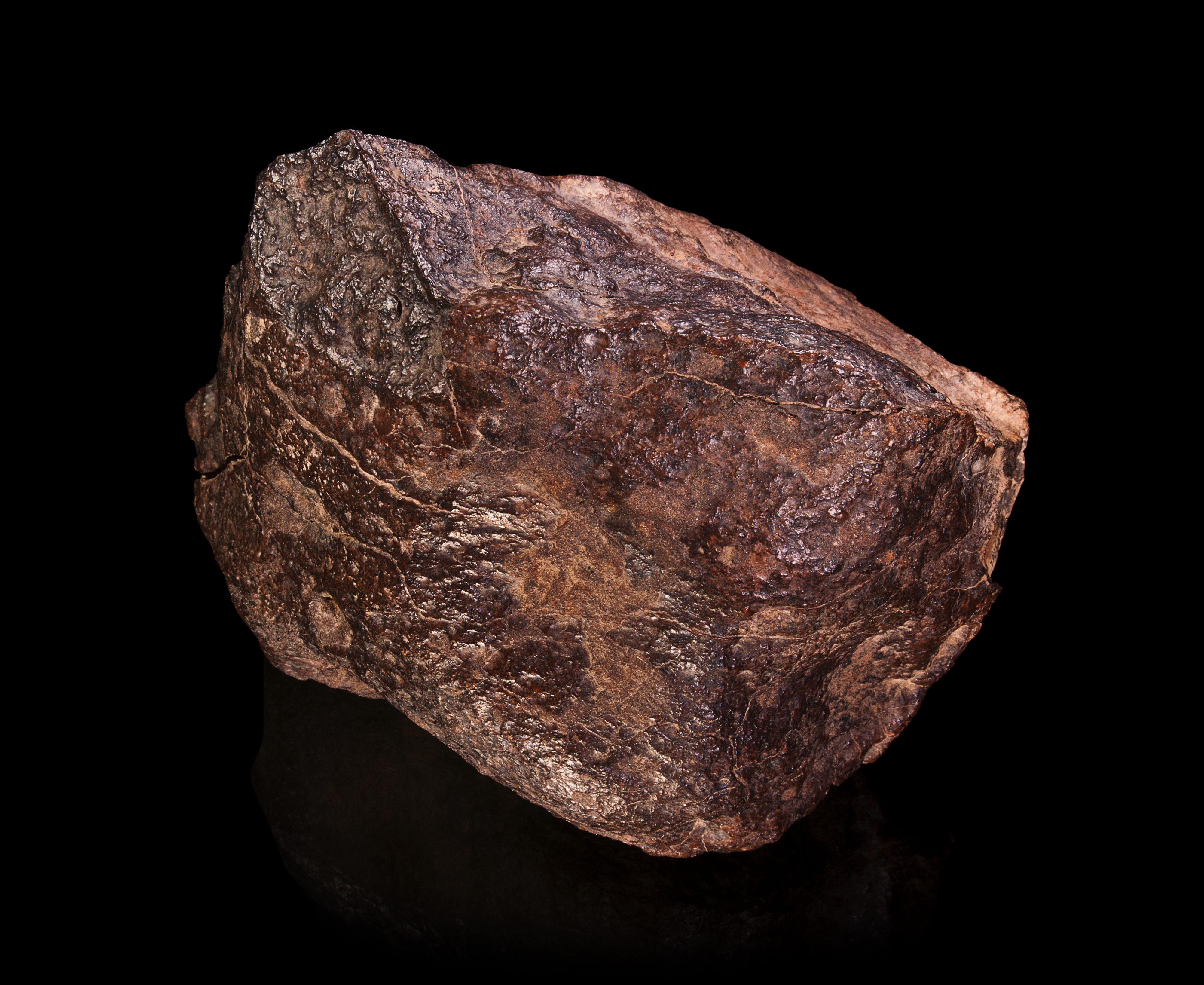
David Hole went looking for gold and dug up something far older than any nugget: a 17-kilogram lump of space rock that is about 4.6 billion years old.
The Australian prospector was sweeping a metal detector through Maryborough Regional Park, near the town of Maryborough in Victoria, in May 2015 when he hit the heavy, reddish stone. He was struck by how dense it felt for its size. It took until 2018 for the rock to be identified for what it was, after a thin slice was cut off with a diamond saw and staff at the Melbourne Museum confirmed it came from space, according to the Maryborough meteorite's Wikipedia entry.
What was inside the 'nugget'
The formal description, published in 2019 by William Birch, Dermot Henry and Andrew Tomkins in the Proceedings of the Royal Society of Victoria, classes it as an H5 ordinary chondrite. That is a stony meteorite packed with chondrules, tiny once-molten grains that are among the oldest solid material in the solar system. In this stone they reach about 1 millimeter across.
The team found it is a single stone roughly 39 by 14 by 14 centimeters, or about 15 by 5.5 by 5.5 inches. Its metal comes as kamacite, taenite and tetrataenite, iron-nickel alloys, and shows only the first signs of rusting as thin iron-oxide skins. There is no sign it was ever shocked by a big impact.
Its outside tells the story of the fall. The surface is sculpted and dimpled from melting as it ploughed through Earth's atmosphere.
Why it felt so heavy
The weight that first caught the prospector's attention fits the type. H chondrites are named for their high iron content, about 25 to 31 percent by weight, and more than half of that iron sits in metallic form, which makes these stones strongly magnetic even though they look like ordinary rock, as Wikipedia's overview of H chondrites explains. They are also the single most common kind of meteorite, around 40 percent of all those catalogued, and many probably come from the asteroid 6 Hebe.
How long it sat in the park
Carbon-14 dating puts its time on Earth at under 1,000 years, and Wikipedia's summary gives a window of 100 to 1,000 years, which places the fall roughly between the years 1026 and 1926. Locals reported several bright meteors over the district in the past. In one, in June 1923, a man named Harry E. Hallett said a brilliant fireball "almost dazzled" him. None of those sightings can be pinned to the spot where the stone was found.
A rare find for Victoria
The 2019 paper ranks Maryborough as the third H5 ordinary chondrite known from Victoria and the second-largest single chondritic mass found in the state. The record holder, the Kulnine stone, weighs 55 kilograms, more than three times as much. In imperial terms, Maryborough is about 37.5 pounds, roughly the weight of a large dog.
It is not the only buried treasure found by someone hunting for something else. Badiyaa has covered the Hoxne Hoard, found by a man searching for a lost hammer, the Treasure of Villena's pieces made from meteorite iron, and a rose-colored Sahara meteorite from Mars.
The stone that was not gold now has a formal name in the scientific record, published in volume 131 of the Proceedings, pages 18 to 23.
Sources
- Maryborough meteorite, Wikipedia, 2026
- Maryborough, a new H5 meteorite find from Victoria, Australia (Birch, Henry and Tomkins), Proceedings of the Royal Society of Victoria, 2019
- H chondrite, Wikipedia, 2026
Image: Didier Descouens, CC BY-SA 4.0 via Wikimedia Commons
This article was produced with AI assistance and reviewed by our Editorial Desk. How we work.