Physicists at the University of Queensland have sent a message through a brick wall using nothing but gravity, and the transmitter was a lift built in the 1950s. By parking the elevator's 1.8-metric-ton counterweight (about 4,000 pounds) at one of two positions, the team spelled out the word "Gravity" in binary code at a crawling 1 bit per minute.
The result is published in a 2026 paper in Science Advances titled "Unblockable communication with gravity," by Andrew Groszek, Charles Woffinden, Michael Harvey, Andrew White and Matthew Davis of the Australian Research Council Centre of Excellence for Engineered Quantum Systems.
How a lift became a transmitter
The setup, in UQ's Parnell Building, is almost comically simple. Sending the car between two floors moves the counterweight up or down the shaft; one position stands for a binary 0 and the other for a 1. Every mass tugs on everything around it, so shifting 1.8 tons of metal changes the local gravitational pull by a tiny amount.
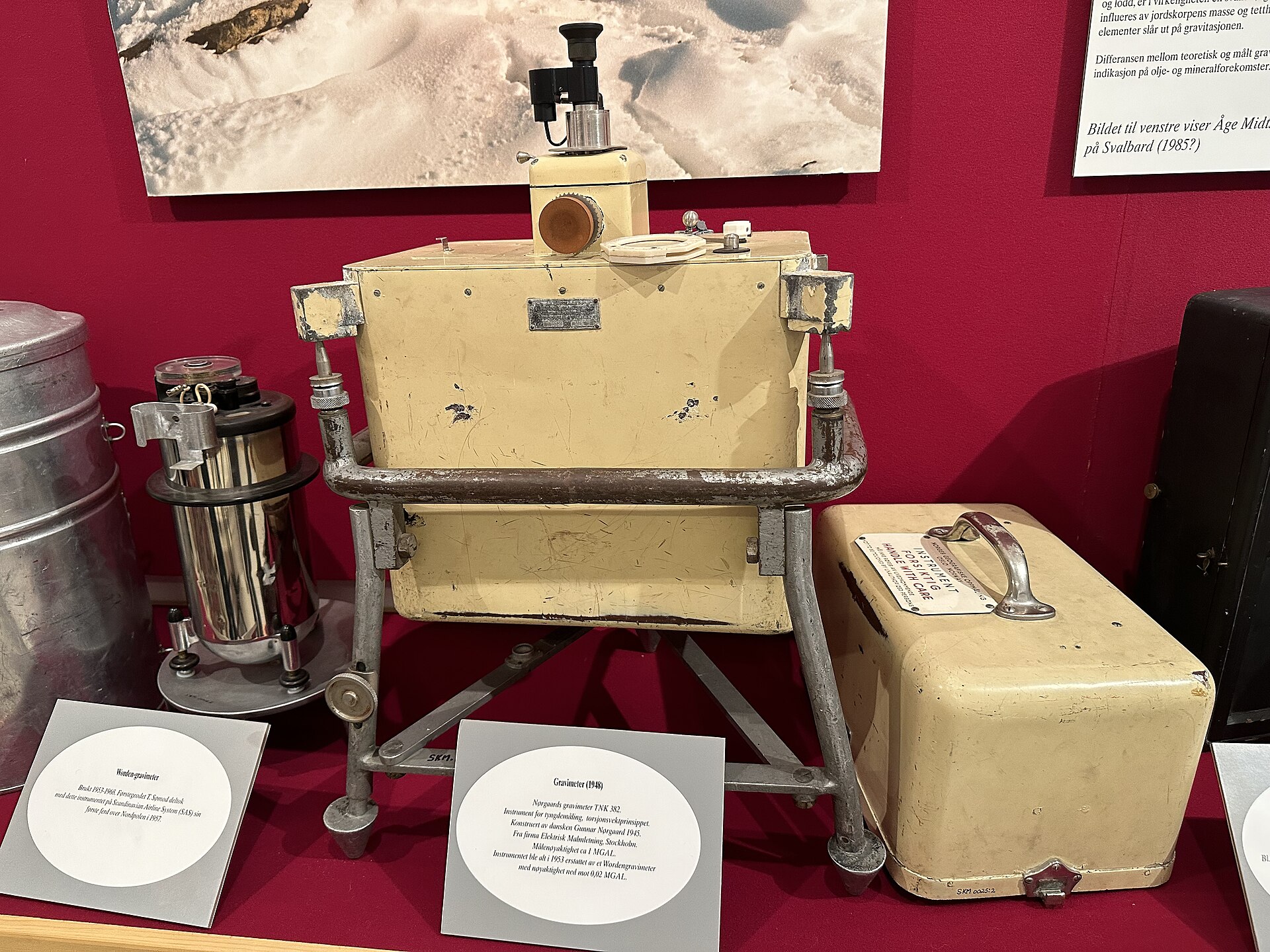
On the other side of a brick wall, in a bathroom next to the shaft, sat a gravimeter, an instrument that measures the strength of gravity. The best gravimeters are sensitive enough to register workers shoveling snow off a lab roof, according to Wikipedia's overview of gravimetry. Here it picked up the counterweight's moves and decoded them. The paper puts the gap between sender and receiver at about 0.7 meters (2.3 feet).
Why gravity cannot be blocked
Wi-Fi, phone signals and light are all electromagnetic, and walls, water and metal can absorb or reflect them. Gravity has no such shield. "Unlike the electromagnetic signals used in modern wireless communication, a gravitational signal cannot simply be screened out by placing ordinary material in its path," Woffinden said in the university's announcement. "Anyone who has lost phone reception in a tunnel or struggled with Wi-Fi through a solid wall will understand the appeal."
The idea grew out of something more practical. Groszek said the team had been trying to weigh trucks without touching them: "We were aiming to determine the mass of trucks and other large vehicles by measuring their tiny gravitational pull."
One word per hour, and what limits it
The catch is speed. "Our lift was snail-paced – it's from the 1950s – so our experiment transmitted just 1 bit per minute, meaning it took an hour to send a single word," White said. For scale, a seven-letter word in standard 8-bit text is 56 bits, close to an hour at that rate, while a home broadband line moves millions of bits every second.
White listed the three levers: how big the moving mass is, how fast it moves and how sensitive the detector is. Davis said the team's modeling suggests quantum sensors could, "with rather ambitious assumptions," reach ranges of about 500 meters (1,640 feet) and around 15 bits per minute.
What the experiment does not show
This is one proof-of-principle test, over less than a meter, with a classical sensor and a known, heavy mass. The researchers themselves call the system far from practical. The 500-meter figure is a model, not a measurement, and it rests on assumptions the team describes as ambitious. Possible uses such as signaling into mines, through rock or underwater remain ideas, not tests.
"It's not often that you get to demonstrate an entirely new way of communicating," Davis said. "We have shown experimentally that information can be encoded in the gravitational field and recovered at the other end."
For more on measuring mass in strange ways, read how astronauts on the ISS are weighed with a spring-loaded arm, and how Einstein presented the field equations of gravity in 1915.
Sources
- Unblockable communication with gravity, Science Advances (AAAS), 2026
- UQ researchers send an unblockable message using gravity, The University of Queensland, 2026
- Gravimetry, Wikipedia, 2026
Image: Ssu, CC BY-SA 4.0 via Wikimedia Commons
This article was produced with AI assistance and reviewed by our Editorial Desk. How we work.