Astronomers got a three-hour warning. At 04:53 UT on November 19, 2022, a telescope on Arizona's Mount Lemmon caught a faint speck heading straight for Earth. By 08:27 UT the speck was a fireball blazing over southern Ontario, and a sonic boom was rattling Hamilton.
The object, later named 2022 WJ1, was only the sixth asteroid in history spotted in space before it hit, according to Wikipedia's entry on the impactor. It was also tiny. Telescope data put it at 40 to 60 centimeters across, roughly the size of a beach ball, which made it the smallest asteroid ever characterized while still in space.
From 25% to a sure thing in about an hour
The countdown ran like a thriller written by orbital math. The Scout impact-hazard system, working from the first four images, gave the rock a 25% chance of striking Earth. Four more images pushed the odds to 50%. Within roughly an hour, follow-up observations made the hit a certainty.
The last telescope sighting came from Mauna Kea in Hawaii, 32 minutes before impact, just as the asteroid slipped into Earth's shadow. Before it vanished it had brightened to about magnitude 15, close to how bright Pluto looks through a telescope.
In Flagstaff, Lowell Observatory's Teddy Kareta happened to be booked on the 4.3-meter Lowell Discovery Telescope that night. His team tracked the incoming rock for about an hour. "At the time that we lost the asteroid – when it got too dim to be seen in our images – we had the telescope moving at five degrees per second to try to keep up with it," Kareta said in Western University's report on the study.
A fireball people were told to watch for
The warning did something that had never happened before: it let scientists go outside and wait for a natural fireball. Members of Western's Meteor Physics Group drove to find clear skies. Professor Paul Wiegert watched from Brescia Hill on the London, Ontario, campus.
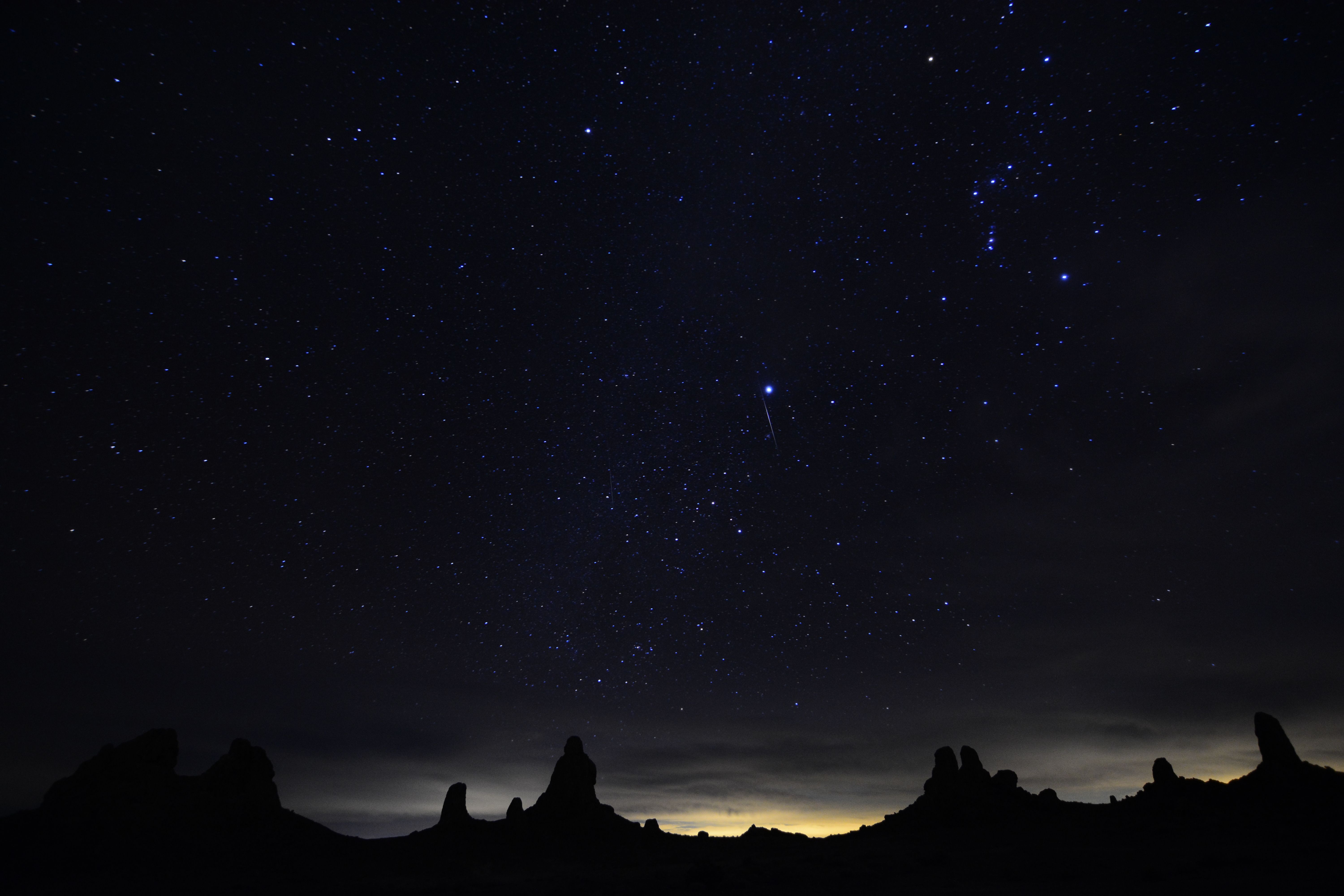
"Then the fireball suddenly appeared, passing almost overhead. It was easily visible between broken clouds and noticeably orange-red," Wiegert said.
Western's Southern Ontario Meteor Network cameras filmed the rock entering the atmosphere above London and burning out near St. Catharines. Witnesses across the Greater Toronto Area saw it, and so did people as far away as New York, Pennsylvania, Ohio and Maryland.
Two methods, one answer
In November 2024, Kareta, Western's Denis Vida and colleagues compared the telescope view with the camera footage in a paper in The Planetary Science Journal. The two methods agreed on the orbit to within 40 meters and both pointed to a stony, silica-rich S-type body, the most common kind of meteorite to reach Earth. "This is only the sixth asteroid discovered before impact," Vida said.
For context, here is how fast the window closed: the first image came 3 hours and 34 minutes before impact, and the final sighting 32 minutes before. That left a little over three hours to measure, predict and get observers outside.
The meteorites nobody has found
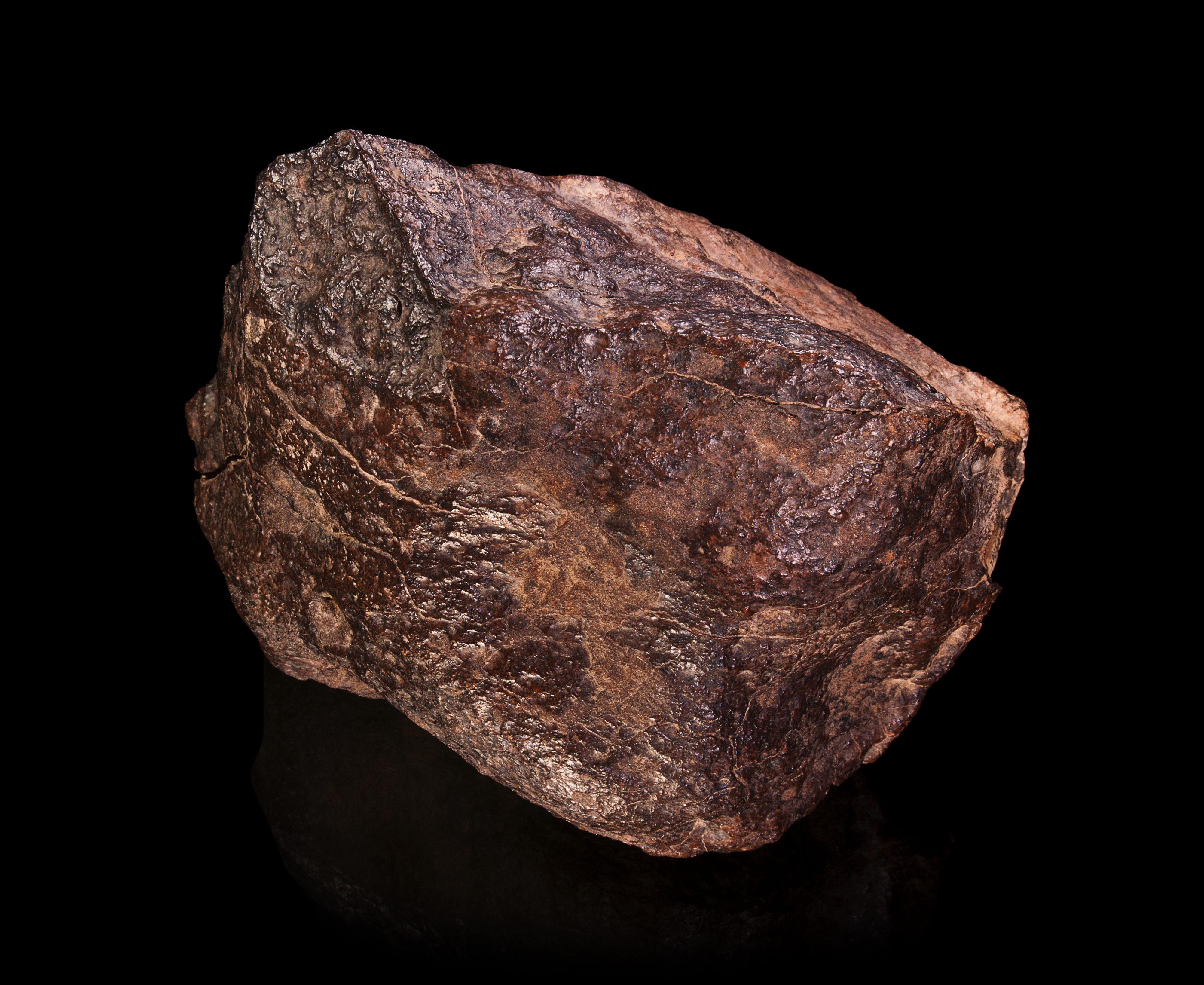
Pieces probably survived. Weather radar picked up falling fragments from about 15 kilometers up down to 850 meters. Most of the predicted fall zone, from east of Grimsby toward Niagara-on-the-Lake, lies under Lake Ontario, and the paper reports that no meteorites have been recovered.
"We may still get lucky and find a meteorite or two from this fall in the coming months and years," said Western's Phil McCausland. Any piece on land should carry a fresh black fusion crust, and most would weigh about 5 grams, the size of a nickel.
Badiyaa has covered other space rocks this month, from the 17 kg Maryborough meteorite a gold hunter kept for years to Earth's temporary mini-moon 2026 QQ8, plus a guide on how to tell a Taurid fireball from a contrail.
Without Earth's gravity, the model trajectory shows, 2022 WJ1 would have missed the planet entirely.
Sources
- 2022 WJ1, Wikipedia, 2026
- News release on the 2022 WJ1 telescope-to-fireball study, Western University, 2024
- Telescope-to-Fireball Characterization of Earth Impactor 2022 WJ1, The Planetary Science Journal (American Astronomical Society), 2024
Image: Matthew Dillon, CC BY 4.0 via Wikimedia Commons
This article was produced with AI assistance and reviewed by our Editorial Desk. How we work.