Charles Richet won the 1913 Nobel Prize in Physiology or Medicine for discovering anaphylaxis, the violent immune reaction behind severe allergies. Nearly two decades earlier, in 1894, the same French physiologist had coined the word “ectoplasm” to describe a substance he believed some mediums pushed out of their bodies during séances.
Both words are still in use. Only one of them describes something science has confirmed.
The serious scientist
Richet was born in Paris on August 25, 1850, trained in medicine in the city, and became professor of physiology at the Collège de France in 1887. He studied digestion, breathing, body heat and brain chemistry, helped discover the drug chloralose, and dabbled in aviation, history, plays and poetry.
His biggest result began at sea. In 1901 he and Paul Portier sailed with Prince Albert I of Monaco aboard the research ship Princesse Alice II and extracted a toxin from sea creatures such as the Portuguese man o’ war. Back in the lab in 1902, they found that a first small dose did not build protection, as they expected. Instead it left animals dangerously sensitive to a second dose weeks later.
Richet first called this “aphylaxis,” then switched to “anaphylaxis” because he thought it sounded better. The pair presented it in Paris on February 15, 1902. Their work is seen as the start of the scientific study of allergy and helped explain hay fever and asthma.
The believer in the séance room
At the same time, Richet was drawn to hypnosis, extrasensory perception and mediums. He founded a journal of psychic research in 1891, became president of Britain’s Society for Psychical Research in 1905, and later led the Institut Métapsychique International in Paris.
His idea of ectoplasm was physical, not ghostly. He argued that a material substance projected from a medium’s body could explain some séance effects. He did not believe in spirits or life after death. Instead he proposed a “sixth sense” able to pick up unknown vibrations, the theme of his 1928 book Our Sixth Sense.
“It seems to me prudent not to give credence to the spiritistic hypothesis,” he wrote, comparing his vibrations to radio’s Hertzian waves.
Fooled more than once
His caution about spirits did not protect him from tricksters. From 1905 to 1910 he sat in on many séances with the medium Linda Gazzera and declared that she moved objects by thought alone. She was exposed as a fraud in 1911. He also vouched for Joaquín María Argamasilla, billed as the “Spaniard with X-ray Eyes,” until the magician Harry Houdini exposed him in 1924.
The historian Ruth Brandon summed up the problem as “his will to believe, and his disinclination to accept any unpalatably contrary indications.”
His record has darker parts too. Richet promoted eugenics, presided over the French Eugenics Society from 1920 to 1926, and held openly racist views.
Two words, two fates
Set the coinages side by side. “Ectoplasm” came first, in 1894, and survives mostly in ghost stories and films. “Anaphylaxis” followed in 1902 and is now a standard medical term for a life-threatening allergic reaction. The same mind produced both, eight years apart.
Badiyaa has written about another family’s brush with spiritualism, when Dan Aykroyd’s great-grandfather hosted séances in Ontario, and about a discovery Richet’s generation watched unfold, Wilhelm Röntgen’s X-rays in 1895.
Richet died in Paris on December 4, 1935, aged 85. His son Charles and grandson Gabriel went on to hold medical professorships of their own.
Further reading
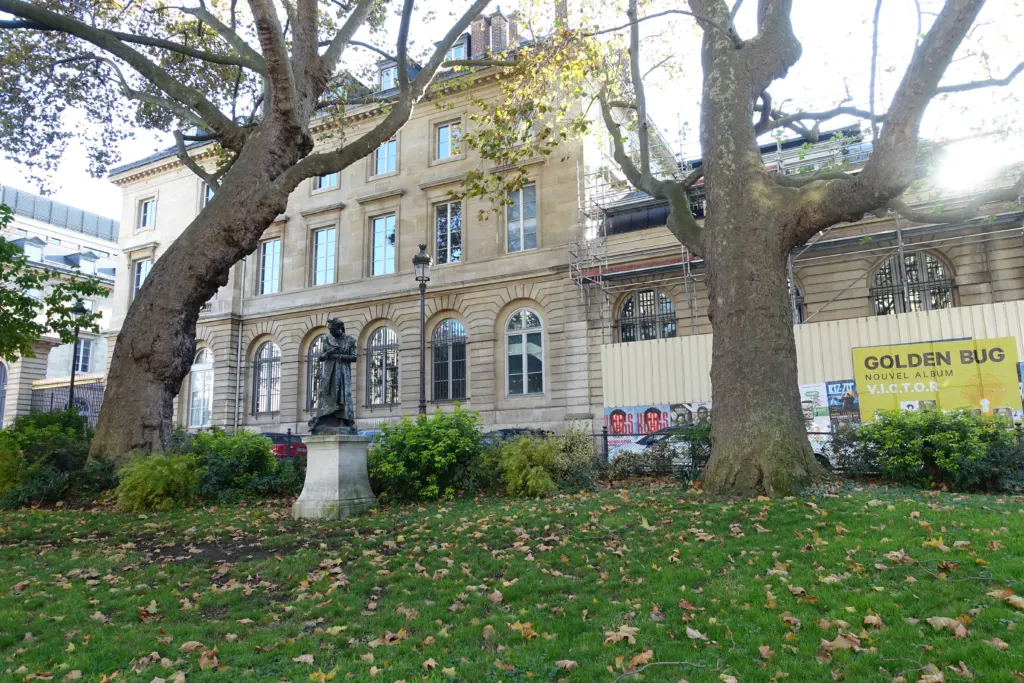
Illustrative image. Image: Guilhem Vellut, CC BY 2.0 via Wikimedia Commons
This article was produced with AI assistance and reviewed by our Editorial Desk. How we work.