A clear block of plastic can be carved so that the light passing through it lands as a picture, and a team of computer graphics researchers has found a way to make those pictures sharp under ordinary lamps. In a paper on caustic lens design, Sizhuo Zhou, Yuou Sun, Bailin Deng and Juyong Zhang report that modeling a real light source as a fitted set of point sources produces lenses whose projected images closely match the target.
The effect looks like a trick: a seemingly blank, wavy slab of acrylic turns a beam into a portrait or a word on the wall behind it. The physics behind it is the same one that paints bright, wobbling lines on the floor of a swimming pool.
What is a caustic
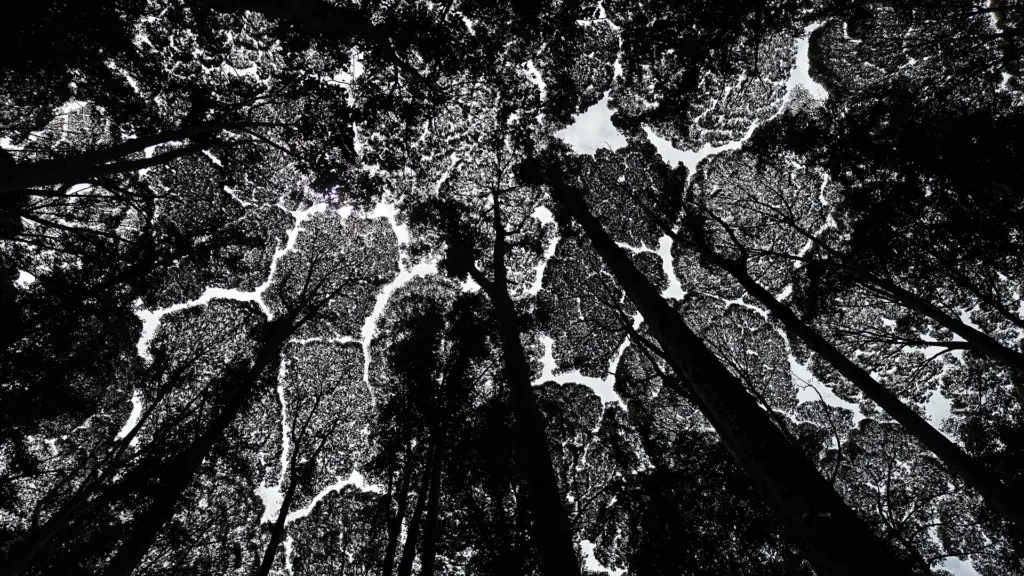
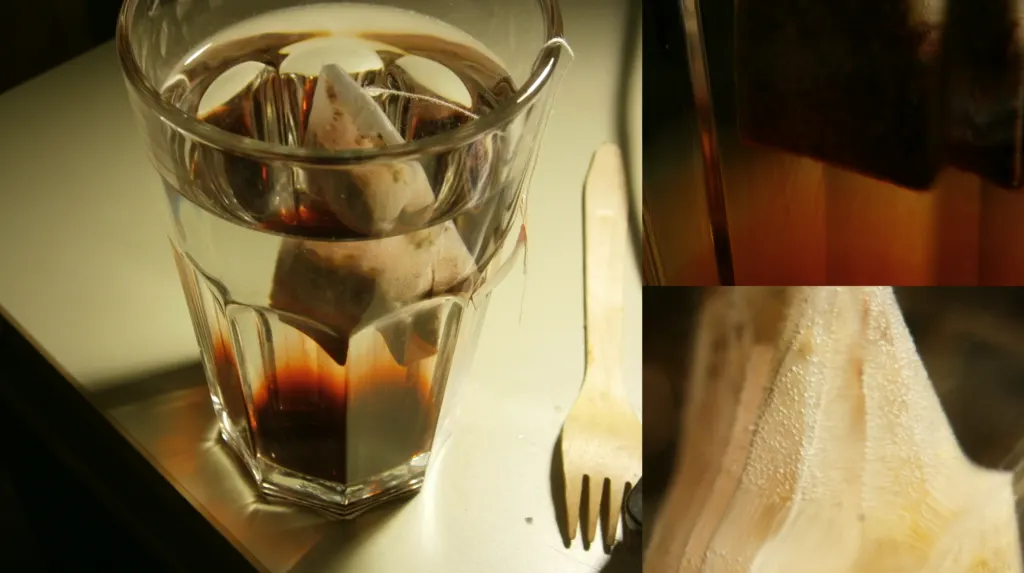
A caustic is the bright curve or patch that forms where many light rays, bent or reflected by a curved surface, pile up in one place. The word comes from the Greek for burnt, because focused sunlight can burn. Common examples include the crescent of light beside a glass of water, the rippling net under waves, and, in a broader sense, the rainbow.
Computer graphics usually runs the problem forward: given a glass and a lamp, where does the light fall? Caustic engineering runs it backward. You start with the image you want and solve for a surface shape that will bend light into it. One popular route borrows optimal transport, a branch of math about moving one distribution onto another with the least effort, then refines the surface using Snell’s law of refraction.
The point-source problem
Earlier caustic lens designs tended to assume an idealized light source, either a single point or perfectly parallel rays. Real lamps, such as LED panels, glow from a whole surface. Shine one through a lens designed for a point and the projected image blurs.
The new method fits an optimized cloud of point sources to how the real lamp actually lights a scene, using a differentiable renderer that tracks light flux. It does not need the lamp’s intensity profile in advance. A mathematical step called a contraction mapping turns a constrained search into an unconstrained one so the optimizer can move freely. The lens surface is then shaped for consistent flux and a surface that can actually be built.
According to the authors, both simulations and physical experiments showed the approach represented real surface light sources more accurately than point-source approximations.
How a caustic lens gets made
Once a design exists, it is usually machined, cutting away material from a block. Common see-through choices are acrylic, polycarbonate, polyethylene, glass and even diamond; steel, aluminum, gold and silver serve for mirror versions. Uses range from lighting fixtures and jewelry to architecture and decorative glass.
Think of the lens as a map with every point of the surface assigned a destination: a sculpted bump the width of a hair can shift where a ray lands by centimeters on a wall several feet away. That leverage is why precise machining matters as much as the math. Our story on Theodore Maiman’s ruby laser patent traces an earlier leap in controlling light, and our report on Auburn’s laser-flash crystal experiment shows light used to rearrange matter.
Limits
The paper describes lab demonstrations, not a commercial product, and the abstract gives no figures on how closely each image matched. The method also assumes the lamp’s position stays fixed, since a lens tuned for one light placement will not project as sharply under another. The work appears in IEEE Transactions on Visualization and Computer Graphics.
Further reading
Image: Bernát Kalló, CC BY-SA 4.0 via Wikimedia Commons
This article was produced with AI assistance and reviewed by our Editorial Desk. How we work.