Tropical trees are friendlier neighbors than trees in cooler forests, and that may help explain why rainforests hold so many species. A study of about 2.7 million trees in 17 forest plots, published in the journal Nature, found that the share of tree species surrounded by more, and more varied, neighbors falls steadily as you move away from the equator.
The plots run from 5 degrees south to 47 degrees north and include over 5,400 species. They belong to ForestGEO, a network coordinated by the Smithsonian Tropical Research Institute in which every stem at least a centimeter thick is measured, mapped and tagged the same way.
How the team measured neighborliness
The researchers, led by Han Xu of the Chinese Academy of Forestry, Matteo Detto of Princeton University and the Smithsonian institute, and Suqin Fang of Sun Yat-sen University, drew small circles around individual trees and counted what grew nearby. They then compared each species against computer-shuffled versions of the same forest.
If a species had more neighbors, and more kinds of neighbors, than the shuffled forests predicted, it counted as facilitative, a helper. Fewer than expected marked it as a competitor. The model accounted for three biotic and eight environmental factors.
Competition still won in most plots. But near the equator the helpers and competitors came out roughly even. Farther north, helper species thinned out and competitors gained ground.
“Most research has focused on competition and other negative interactions among trees, but trees can also help their neighbors in many ways,” Detto said. “We find that these positive interactions are more common in tropical forests, adding another piece to the puzzle of understanding their remarkable diversity.”
Three reasons trees help each other more in the tropics
The team points to three patterns that fade with latitude:
- Legumes, the bean family, are more common in the tropics. They pull nitrogen from the air and leave it in the soil for others.
- Tropical trees lean on mycorrhizal fungi other than the arbuscular kind, which spread through the soil and help several species reach scarce nutrients.
- Giant rainforest trees act as nurses, shading smaller species from heat and drying. That canopy nursing effect weakens toward the poles.
Mean annual temperature shaped all three. That led the authors to suggest that warming could increase helpful interactions in higher-latitude forests and raise their tree diversity.
Why it matters
Ecologists have long explained tropical diversity mainly through pests and competition, which stop any one species from taking over. This study adds cooperation to that list. Put in concrete terms, a Panamanian hectare and a Canadian hectare differ not only in how many species they hold but in how often those species make room for each other.
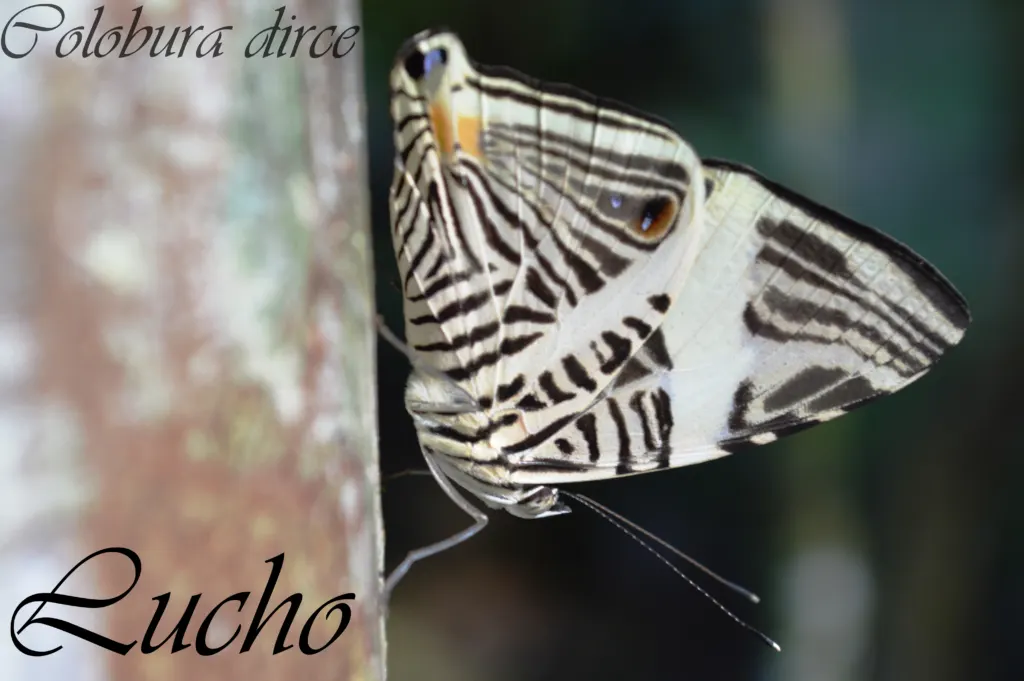
For a sense of how much remains uncounted in tropical forests, our story on a rainforest butterfly that turned out to be three species shows how even familiar animals can hide extra species. Our piece on a black bear fishing in Alaska’s Tongass forest covers a temperate rainforest at the far end of this gradient.
Limits
The work is observational. Counting who stands next to whom shows a pattern, not the mechanism behind it, and the three explanations are the authors’ best fit, not direct experiments. Seventeen plots also leave large gaps, especially in Africa and the far north. The next test will come from the network’s newer plots, whose data can be requested through ForestGEO.
Further reading
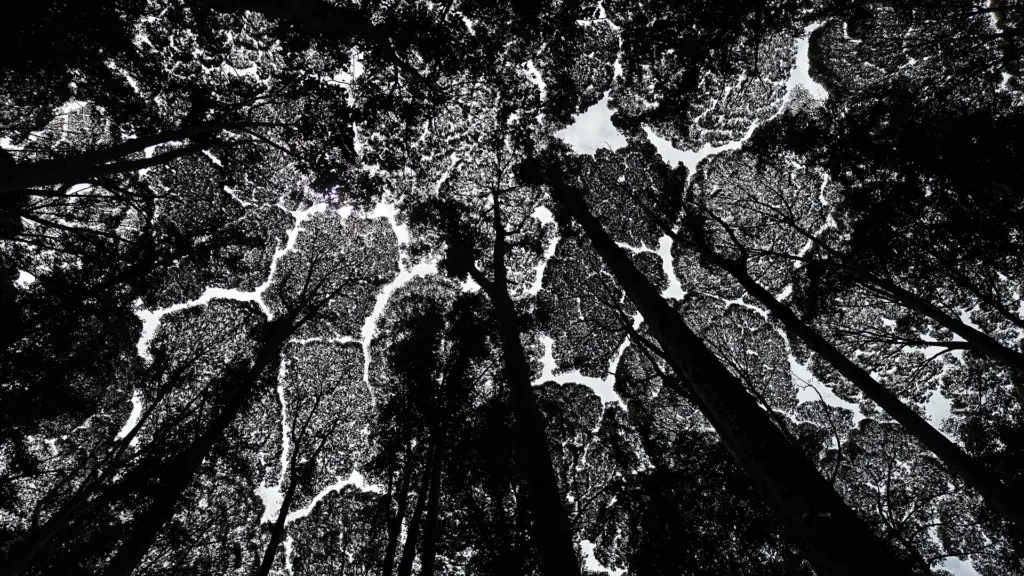
Image: Rohitjahnavi, CC0 via Wikimedia Commons
This article was produced with AI assistance and reviewed by our Editorial Desk. How we work.