If a backyard feeder can hold only one food this winter, wildlife specialists at Penn State Extension say it should be small black-oil sunflower seed. Its thin shell is easy for chickadees, nuthatches and titmice to crack, and its high oil content packs the energy small birds burn through on cold nights.
The Cornell Lab of Ornithology’s Project FeederWatch, which collects counts from feeder watchers across North America, calls black-oil sunflower the most common seed offered at feeders on the continent. Cardinals, chickadees, finches and sparrows all rank it among their favorites, and woodpeckers will take it now and then.
Which birds want what
No single food suits every species, so the trick is matching the menu to the visitors. Here is how the two guides break it down:
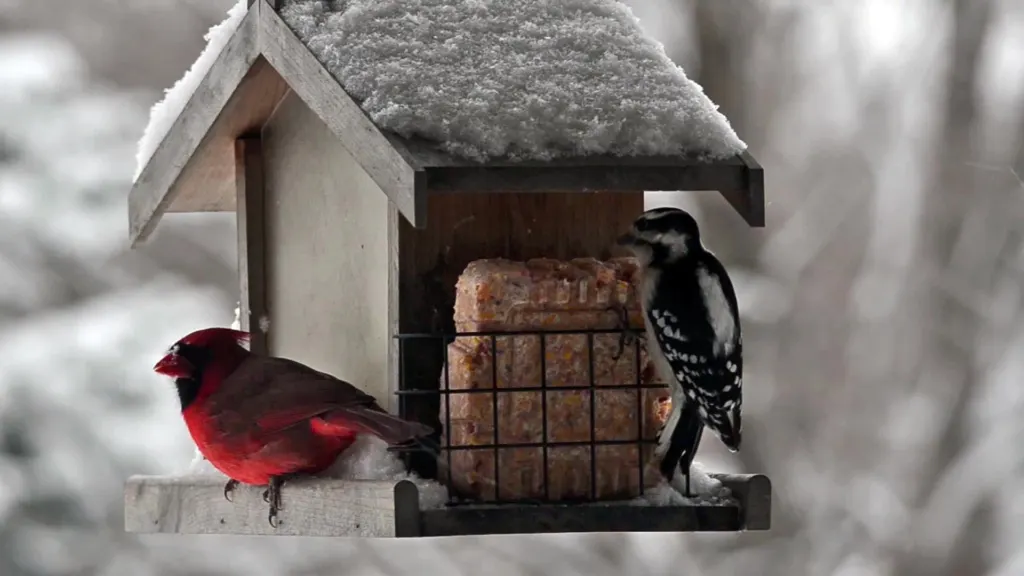
- Suet, usually beef kidney fat, draws insect eaters such as woodpeckers, chickadees, nuthatches and titmice, plus less typical feeder birds like Carolina wrens and brown creepers. Raw suet can turn rancid in warm weather, which makes winter its natural season.
- Nyjer, often sold as “thistle” though it comes from an African plant, Guizotia abyssinica, pulls in American goldfinches, pine siskins and common redpolls. The seed is tiny and needs a feeder with very small ports.
- White proso millet scattered on the ground keeps juncos and native sparrows busy, though it also attracts house sparrows and brown-headed cowbirds.
- Peanuts, plain and never salted or coated, suit jays, chickadees, titmice and woodpeckers. Shelled kernels or small peanut hearts work best for the smaller birds.
- Mealworms, live or dried, are a protein treat for wrens and nuthatches and one of the few foods that reliably bring in bluebirds.
One common mistake is the cheap bag. Bargain mixes often lean on milo, wheat, oats or rice, which most eastern birds pick through and drop. FeederWatch notes that western birds eat milo more readily, but in the East it advises avoiding mixes heavy in it. Reading the ingredient list before buying saves money, because the seed birds reject ends up as waste under the feeder.
Who actually shows up
In Pennsylvania, around 35 species may visit feeders in winter. Penn State’s extension fact sheet, using FeederWatch data, lists the dark-eyed junco as the most widespread visitor, seen at 97% of feeders, followed by the mourning dove at 94% and the tufted titmouse at 93%. The black-capped chickadee rounds out the top ten at 77%.
That ranking also explains the food advice. The top visitors include ground feeders (juncos, doves) and clingers (titmice, nuthatches, chickadees), so a setup with one hanging tube of black-oil sunflower, one suet cage and a scatter of millet on a platform covers most of the list.
Water, cover and clean feeders
Food is only half of it. Cold snaps lock up water, so an unfrozen birdbath no deeper than 3 inches (about 8 centimeters) can draw birds that never touch seed. FeederWatch warns never to add antifreeze, which poisons birds. Place feeders within about 10 feet of shrubs or trees so birds have somewhere to dodge a hawk, and either under 3 feet from a window or well away from it to cut collisions. Platform feeders should hold only a day’s worth of seed and be scrubbed weekly, and moldy seed belongs in the trash.
Winter is a hard stretch for many animals. Read how crows commute to winter roosts of up to two million birds, or how Britain’s hazel dormice fared through the cold months. More backyard wildlife stories are in our Pets & Animals section.
Penn State’s advice on when to stop is blunt: if a black bear finds your feeder, take everything down at once, because bears are especially fond of black-oil sunflower seed.
Further reading
Image: U.S. Fish and Wildlife Service – Midwest Region, Public domain via Wikimedia Commons
This article was produced with AI assistance and reviewed by our Editorial Desk. How we work.