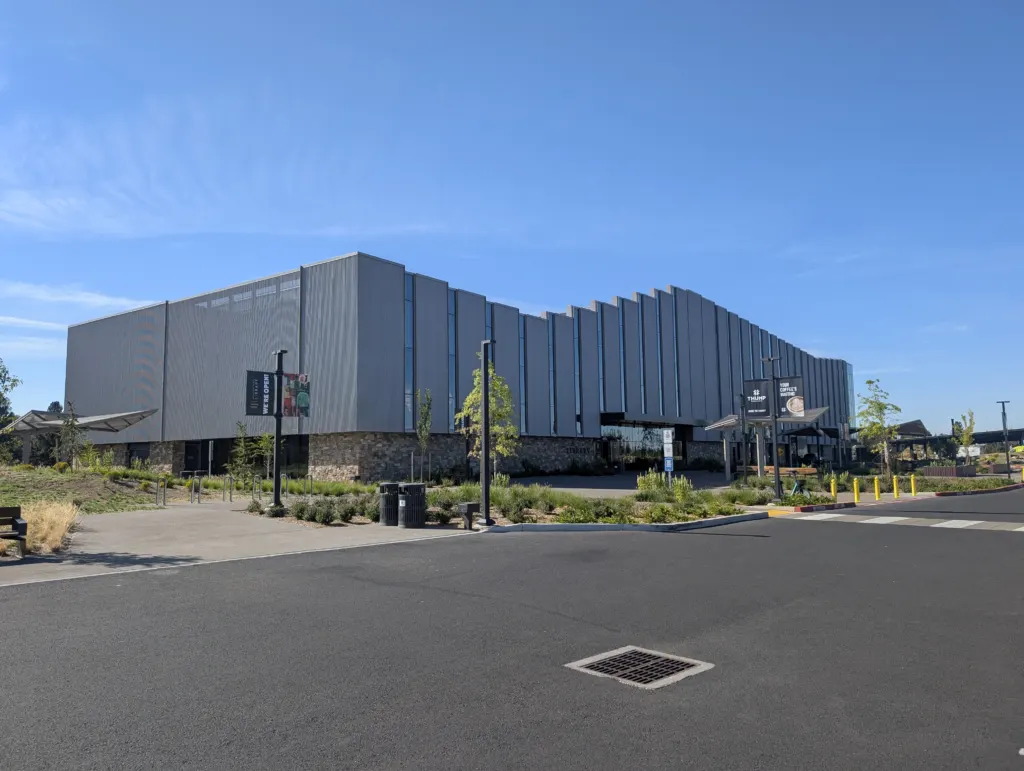
A brand-new library in Bend, Oregon, has stopped asking readers to decode call numbers like 641.5. The Central Library at Stevens Ranch, run by Deschutes Public Library, shelves its books with an in-house system called Wayfinder on shelving built to feel like a bookstore, rather than by the Dewey Decimal Classification most American public libraries still use.
The building’s architects, the Miller Hull Partnership, highlight the switch on Miller Hull’s own news page about the Bend library, which describes “a new set of shelving units designed to feel more like a bookstore” and says books were placed using the libraries’ proprietary Wayfinder system.
A 100,000-square-foot bet on browsing
The library itself is big. According to Deschutes Public Library’s Central Library page, the building covers 100,000 square feet at 61956 SE Santorini Street in Bend and officially opened to the public on May 11, 2026. New and best-selling titles greet visitors on the first floor next to a café, children and teens get the second floor, and the adult collection fills the third, alongside co-working areas, study rooms and a makerspace. The library says it is all electric, designed to LEED Platinum standards, and topped with solar panels as part of a net-zero goal.
For a visitor, the change is simple: instead of hunting a number on a spine label, you walk to a topic and browse, much as you would in a bookshop.
Why libraries drop Dewey, and why some go back
Bend is not the first. The encyclopedia entry on Dewey-free classification traces the idea, often called the “bookstore model,” to a 1998 article by Los Angeles librarian Steve Coffman. It records that Arizona’s Maricopa County Library District moved its Perry Library off Dewey in 2007 and reported a sixfold jump in nonfiction circulation, and that Colorado’s Rangeview Library District became the first district to convert fully, in 2009.
The same entry is frank about the downsides. Critics say broad subject labels can scatter related books, that better signs could fix much of the confusion, and that the bookstore approach suits smaller collections better than big ones. One New York library, Nyack, went back to Dewey in 2013 after complaints. And there is little formal research: libraries usually point to higher checkouts, but those changes tend to arrive alongside other makeovers, so it is hard to credit the shelving system alone.
A quick comparison, Oregon to Oregon
Oregon offers a neat contrast this year. About 150 miles southwest of Bend, the Ashland branch of Jackson County Library Services went the other way with one collection. In a May 2026 post on the Jackson County library blog, librarian Elinor Anderson explained that biographies, once shelved on their own, were moved back into Dewey order at numbers 920-921, while new books got three times as much display space.
Both libraries say they want easier browsing; they just disagree on whether numbers help or hinder. Libraries keep finding new ways to reach readers, from Singapore’s first mobile library in a converted army bus to the Haskell Free Library that straddles the US-Canada border.
Sources
- News post on the Bend Central Library, Miller Hull Partnership, 2026
- Central Library, Deschutes Public Library, 2026
- Dewey-free classification, Wikimedia Foundation encyclopedia, 2026
- Wait! Where’d You Put the Biographies?, Jackson County Library District, 2026
Image: TurquoiseGoose, CC BY-SA 4.0 via Wikimedia Commons
This article was produced with AI assistance and reviewed by our Editorial Desk. How we work.