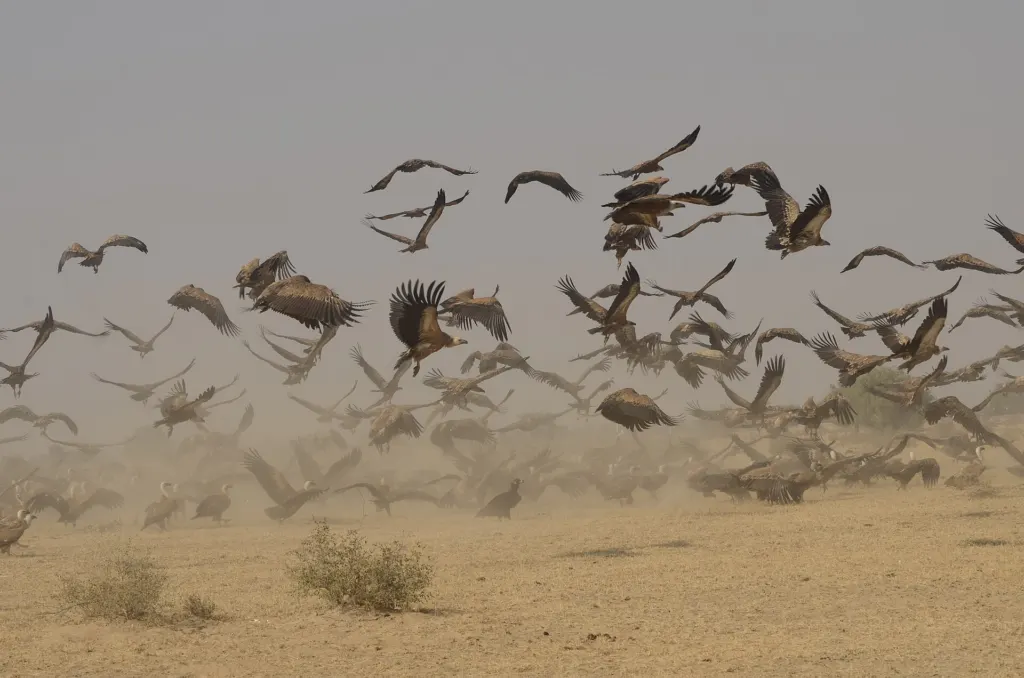
A vulture can swallow meat that would poison almost any other animal, and the secret sits in its stomach. Vulture digestive acid has been measured at a pH of about 1.0, so corrosive that the birds can safely eat rotting carcasses carrying botulinum toxin, the hog cholera virus and anthrax bacteria.
That gut is the reason close-up vulture photos keep doing the rounds online: the birds look grim, but they are doing a job nothing else on land does as well.
The only land vertebrates that must scavenge
There are 23 living vulture species, condors included. Sixteen are Old World vultures from Europe, Africa and Asia, and seven are New World vultures from the Americas. The two groups look alike but are not close relatives. Their shared bald heads, broad wings and taste for carrion evolved separately, a textbook case of convergent evolution.
On land, no other backboned animal is a strict, full-time scavenger: for vultures, dead animals are their main menu rather than a backup plan. They seldom attack a healthy animal, though they may finish off one that is sick or hurt. If a hide is too tough for its beak, a vulture simply waits for a bigger scavenger to open the carcass first.
Built for a messy meal
Each part of the bird helps with dirty food:
- The stomach. Acid around pH 1.0 destroys most of the microbes and toxins that come with old meat.
- The bald head. Bare skin is thought to stay cleaner when the bird reaches deep into a carcass, and it also sheds or holds heat.
- The legs. New World vultures urinate straight down their legs. The uric acid kills bacteria picked up while standing in a carcass and cools the bird as it evaporates.
- The crop. Vultures gorge until the crop bulges, then sit half asleep to digest, and they feed chicks by bringing food back up rather than carrying it in their talons.
To put pH 1.0 in perspective: the pH scale is logarithmic, so every step down is ten times more acidic. Acid at pH 1 is about 100 times stronger than acid at pH 3, and roughly a million times stronger than pure water at pH 7.
How they find a carcass
Old World vultures hunt mostly by sight. Several New World species are unusual among raptors because they can smell death, picking up a carcass from heights of up to a mile. Research from 2020 found vultures also listen for the noise of a predator making a kill and watch where other scavengers are gathering.
Vultures have their own group names, too. A flock circling in the air is a kettle, a group resting in trees or on the ground is a committee, and a group feeding on a carcass is a wake.
Why their decline matters
When vultures vanish, carcasses linger. In South Asia, vulture numbers crashed from the early 1990s after the birds ate livestock carcasses containing the painkiller diclofenac, which India later banned for animal use. Feral dogs multiplied to fill the gap. A 2016 study counted nine of 22 assessed vulture species as critically endangered.
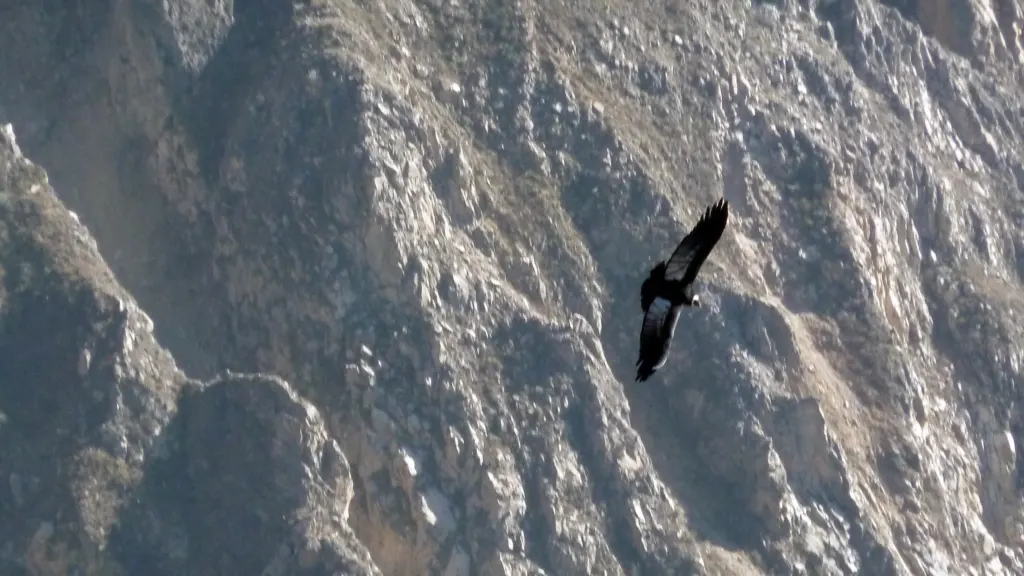
The family includes some giants. Badiyaa has profiled the Andean condor, a New World vulture with wings spanning nearly 11 feet. For a raptor recovery story with a happier arc, read how Finland’s white-tailed eagles grew about 8.7% a year, a rebound that shows how fast big birds can return once the threats ease.
Further reading
Image: PJeganathan, CC BY-SA 4.0 via Wikimedia Commons
This article was produced with AI assistance and reviewed by our Editorial Desk. How we work.