Finland’s white-tailed eagles have bounced back at almost exactly the same pace in two very different homes: about 8.7% a year on the Baltic coast and 8.8% a year in Lapland. Yet a new study finds the two populations got there by different routes.
The paper, in the ecology journal Oikos, is by Carina Nebel and Toni Laaksonen of the University of Turku with Torsten Stjernberg, Heikki Lokki and Michael Schaub. It compares a mainly coastal population around the Baltic Sea with an Arctic inland population that breeds on freshwater lakes and rivers, mostly in Lapland.
Fifty years of eagle records
The team pulled together more than half a century of data: counts of breeding pairs, how many young each nest produced, ringing records, sightings of marked birds, and genetic identification of individual eagles at the nests where they hatched and the sites where they later bred. All of it went into one statistical model that tracks birds by age and estimates survival, breeding and population growth together.
The headline numbers match. The Baltic population grew by an estimated 8.7% a year and the Lapland population by 8.8%. Both rest on the same foundation: grown eagles that survive year after year, which is typical for a large, long-lived raptor.
Same speed, different engines
Underneath, the details split. Young eagles that have left the nest but are not yet adults, known as subadults, survived better on the Baltic coast. Full adults survived better in Lapland.
Both populations showed signs of crowding, which ecologists call negative density dependence: as numbers rise, growth slows. On the Baltic coast it seems to work mainly by delaying when young birds start to breed. The authors link that to a growing pool of “floaters”, adult-age eagles that do not hold a territory or a nest, and say it points to rising limits on getting into the breeding population.
A simple way to see the finding: picture two savings accounts that both grow 8.7% a year. In one the money comes from a steady salary, in the other from interest. Looking only at the balance, you would never know. The researchers argue that conservation managers face the same trap if they watch population counts alone.
Why it matters for eagles beyond Finland
The white-tailed eagle, sometimes called the sea eagle or erne, is the largest eagle in Europe, with a wingspan that typically runs from about 1.8 to 2.45 meters (roughly 5 ft 10 in to 8 ft). It suffered about a century of shooting and persecution from the early 1800s to around World War II, then nesting failures from pesticides and other chemicals from the 1950s. Protection of nest sites, limits on pesticides and reintroductions have since brought it back across much of its range, from Norway and Finland to Scotland.
For other recovering species, the paper’s message is practical. If one population is held back by young birds dying and another by older ones, the same rescue plan will not fit both. Badiyaa has tracked other comebacks, including the northern hairy-nosed wombat’s climb from 35 animals to more than 400, and profiled another giant raptor, the Andean condor and its nearly 11-foot wings. More stories sit in our Pets & Animals section.
The fine print
The growth estimates carry wide uncertainty ranges, especially for Lapland, where the credible interval runs from a 7% yearly decline to 28% growth. The study describes Finnish populations only, and its abstract is the source for these figures. The full paper is listed under DOI 10.1002/oik.12366, and a species overview is on the white-tailed eagle page.
Further reading
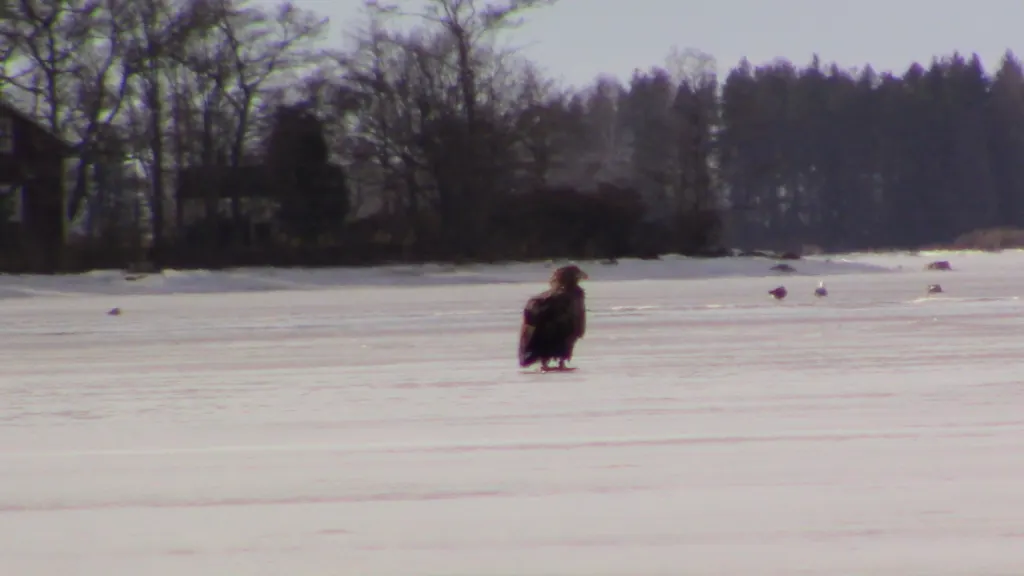
Image: Sasuki 888, CC BY-SA 4.0 via Wikimedia Commons
This article was produced with AI assistance and reviewed by our Editorial Desk. How we work.