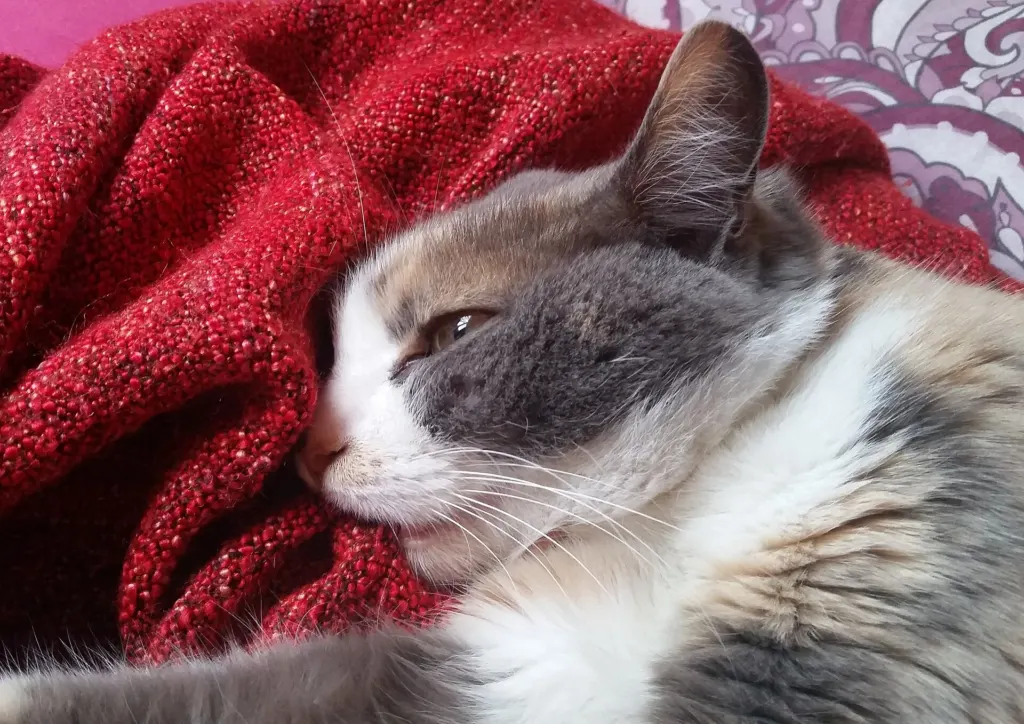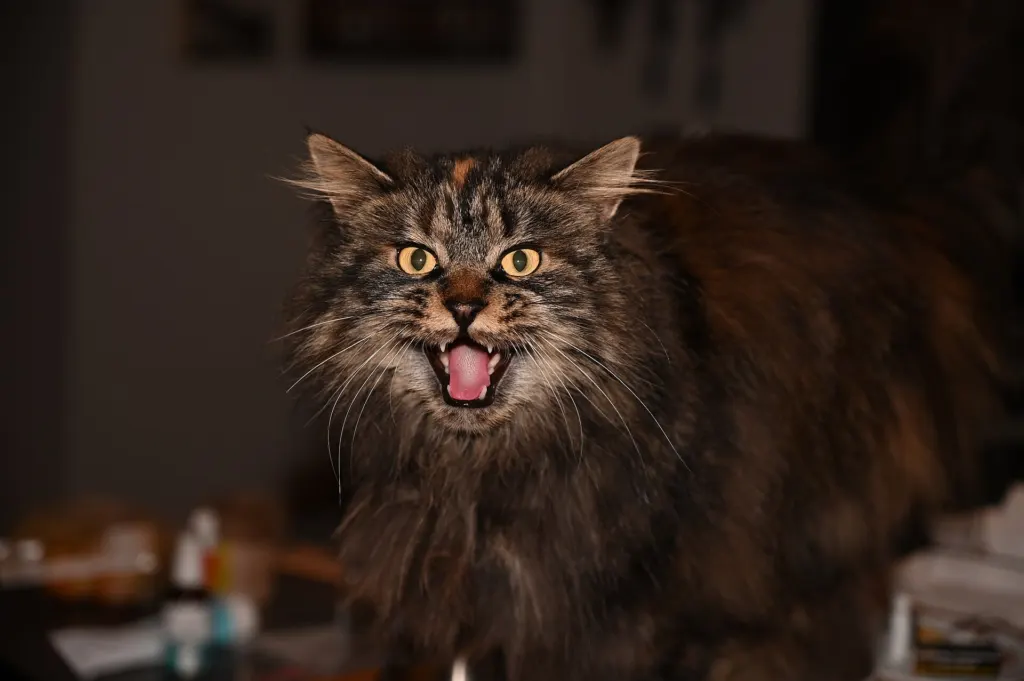
Shut a favorite treat inside a box a cat cannot open, and the cat will start talking, but mostly when a person is in the room. Animal behaviorists at the University of São Paulo in Brazil counted 86 meows from 38 pet cats facing that problem with a human present, against just 20 when the cats were left alone, according to a report on their paper in the journal Animal Behaviour.
The team, led by Naila Fukimoto, says the pattern fits the idea that a meow is a message aimed at people. In plain terms: your cat may be filing a complaint and expecting you to deal with it.
How the test worked
Each cat got a small plastic box with holes in it and a treat inside. The cat could smell the food but had no way to reach it. Over one minute, the researchers watched what happened in two set-ups, once with a person present and paying attention, once with nobody there.
With a human nearby, the odds of meowing were more than 16 times higher, by the team’s statistical analysis as reported. The cats often looked at the person while calling, and some switched their gaze back and forth between the person and the box. Alone, they tended to stand still and stare at the door.
The authors wrote that most meows were directed at a recipient, which suggests the cats were “targeting a specific audience” instead of calling into empty space.
Why cats save the meow for us
The result slots into a picture built up over decades. Adult cats rarely meow at one another. Kittens mew to get their mother’s attention, but by four to five months they stop, and the leading explanation is that grown cats kept the habit and redirected it at humans after domestication. Pet cats also meow far more than feral cats, which points to living with people as the trigger.
The vocabulary is wide. In 1944 the researcher Mildred Moelk published the first phonetic study of cat sounds and sorted 16 vocal patterns into three groups, from closed-mouth purrs and trills to open-mouth growls and hisses. Later counts have put the total near 21 distinct vocalizations.
The catch: we are bad listeners
If cats are talking to us, people are not great at decoding them. A 2020 study from the University of Milan played six meows, recorded while cats waited for food, sat in isolation or were brushed, to 225 adults. Fewer than half matched the meows to the right situation. The food meow was the easiest to recognize. Women and cat owners did better on the brushing and isolation calls, and people who scored high on empathy toward cats were better at picking out the isolation meow.
Put the two studies side by side and a simple rule of thumb emerges for owners: a meow paired with a stare at you, then at a closed door, bowl or box, is most likely a request about that object. Context does more decoding work than the sound itself.
Cat body language works the same way. Badiyaa has covered what a cat’s raised tail signals when it walks toward you, and the story of Bootsy Bear, a cat who comes running when her owner sings her favorite song. There is more in the overview of cat communication, from purring to slow blinks.
Limits of the new study
The sample was small, and the team deliberately picked cats whose owners said they meow a lot around food, so quieter cats may behave differently. The work also does not prove the cats understood that a person could open the box. The researchers suggest future studies record the acoustic shape of each meow, to test whether cats use different calls for different requests, such as food versus an opened door.
Further reading
Illustrative image. Image: Nortlio, CC BY-SA 4.0 via Wikimedia Commons
This article was produced with AI assistance and reviewed by our Editorial Desk. How we work.