When a cat trots toward you with its tail pointing straight at the ceiling, it is saying hello. Animal behavior researchers have studied that upright “tail up” posture for decades, and they read it as one of the clearest friendly signals a cat has.
The idea is doing the rounds again after Carlos Gutiérrez, a Spanish veterinarian who posts advice on his channel Mascotas y Familias, told followers that a cat approaching with its tail held high is an unmistakable sign it comes in peace, for example to greet you, according to a Spanish wellness site that wrote up his remarks. The science behind that claim is solid, and it holds a twist about rank.
What the 2009 Parma study found
Simona Cafazzo of the University of Parma in Italy and her co-author, E. Natoli, watched a social group of domestic cats and logged every time one raised its tail at another. Their paper, published in the journal Behavioural Processes in January 2009, reached three main findings:
- Kittens hold their tails up when they greet their mother, a habit also seen in wild cat species.
- Adult domestic cats keep using the gesture with each other, and it signals an intention to interact in a friendly way.
- Lower-ranking cats used it more often, and the top cats in the group received it most.
That last finding suggests the raised tail works partly as a polite nod upward: a way for one cat to acknowledge another’s higher standing while making clear it means no trouble. The researchers also found the tail-up display tended to come bundled with other friendly behaviors, and that some individual cats did it far more than others.
Why would a solitary hunter’s descendants need such a signal? The authors point out that domestic cats live far more densely than their wild ancestor, which mostly kept to itself, so the house cat had to develop clearer ways to say “I come in peace.”
Cats do it to people too
The same signal crosses species. In a 2024 study from Brazil, researchers at the University of São Paulo and partner institutions placed 20 pet cats and 20 shelter cats in an unfamiliar room with a person, had the person step out, then come back. They scored three things on video: staying close to the person, rubbing against them, and tail up. Shelter cats showed more of all those affiliative signs, especially after being left alone in a strange space, a pattern the team compared with the way young children use a parent as a secure base.
A quick tail-reading guide
Here is how the main tail positions line up, drawing on the research summarized in the encyclopedic overview of cat communication:
Straight up: friendly, confident, ready to greet. A tail that quivers while held upright as a cat meets its owner is usually read as a sign of great excitement.
Half-raised or held low: less pleased, and a low tail can mean discontent.
Slow, lazy side-to-side swing: generally relaxed.
Low to the ground with fast twitches: stalking mode, also seen in an irritated cat that may be about to swipe or bite.
Upside-down U shape: a kitten at peak play.
Puffed-up fur on tail and back, body turned sideways: a scared cat trying to look bigger.
Context still matters, since a single tail position can shift in seconds, and ears, eyes and posture fill in the rest. For more on cat quirks, Badiyaa has covered why tortoiseshell coats depend on two X chromosomes, the Reddit trend of adopted strays turning into puffballs, and England’s retirement village for elderly cats in Shrewsbury.
The Parma paper ran just seven pages, 60 to 66 in volume 80 of the journal, and it has been cited at least 27 times since.
Further reading
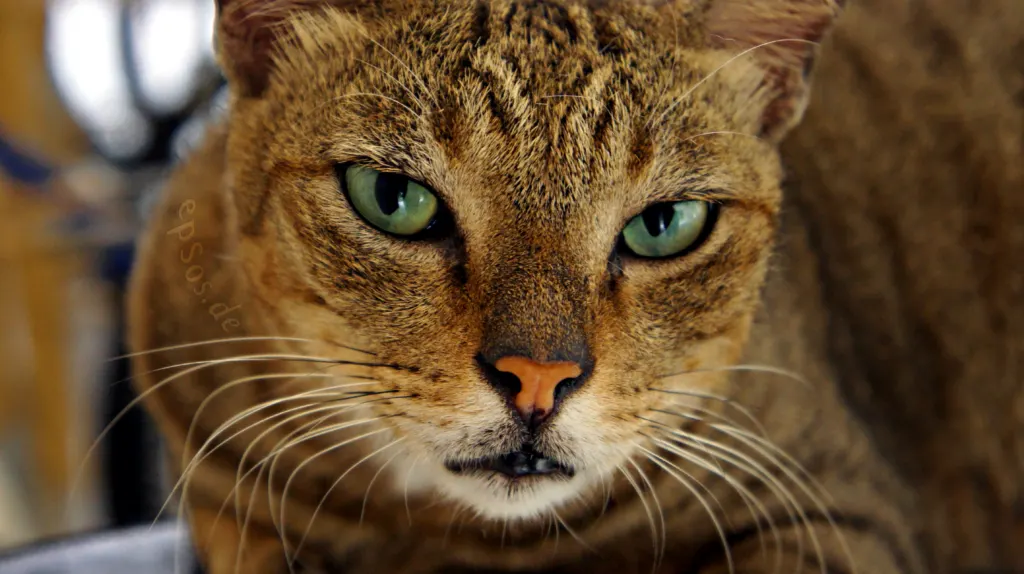
Illustrative image. Image: epSos.de, CC BY 2.0 via Wikimedia Commons
This article was produced with AI assistance and reviewed by our Editorial Desk. How we work.