The popular picture of a European sword duel ends with a scratch: one nick on the forearm, a drop of blood, honor restored, everyone off to breakfast. Dueling did have a “first blood” rule. But the gentlemen’s handbooks of the era looked down on it, and the condition that ended most fights was harsher.
What duelists wanted, at least on paper, was not a corpse. The aim was “satisfaction”: proving you would risk your life for your name. That idea shaped every rule on the field, and it explains why so many duels stopped short of death, and why so many still ended in one.
Three ways to finish a fight
The offended party usually chose the terms. Surveys of dueling custom list the main options for a sword fight:
- First blood: the bout stopped the moment either man was wounded, however lightly.
- Disablement: it went on until one fighter was hurt too badly to carry on.
- To the death, also called à l’outrance: no satisfaction until one man was mortally wounded.
The first option is the one that stuck in films and trivia lists. Yet the history of the code duello, the written rules of single combat, records that period manuals of honor “universally deride” first blood as dishonorable and unmanly. A gentleman who settled for a scratch could look as if he was dodging the real risk.
The more common stopping point was the second one: fight until a man could no longer go on, or until the attending physician called a halt. Each side brought at least one second, three by tradition, plus a doctor. Fighters usually began on opposite sides of a square about 20 paces across, often marked by handkerchiefs dropped at the corners, and stepping out of it counted as cowardice.
Why “not to the death” still killed people
Explicit fights to the death were rare. The trouble was medicine. A deep thrust from a rapier or small sword could kill days later, and wounds that a modern surgeon would close in an hour often turned septic. Many duels that were never meant to be fatal ended at a graveside anyway, after infection set in.
The numbers from France show the scale. An estimated 10,000 French people, mostly nobles, died in duels between the late 1580s and the 1620s. Between 1685 and 1716, French officers fought around 10,000 duels, and more than 400 of them ended in deaths. Put those two figures side by side and roughly one officers’ duel in 25 was fatal, which fits a culture where most fights stopped at a wound but plenty of wounds proved deadly.
How the scratch rule came back
Oddly, the “first blood” image fits the very last chapter of European dueling better than its heyday. After the Second World War, the few French duels still fought were taken seriously as matters of honor but were not fights to the death. Opponents fenced with the épée, mostly at a fixed distance, trying to draw blood from the other man’s arm.
That is how the final known French duel played out. On April 21, 1967, Gaston Defferre, Socialist deputy and mayor of Marseille, fought Gaullist deputy René Ribière with swords after insulting him in parliament. Ribière was wounded twice and lost. Nobody died.
For more myth-busting from the same centuries, read how Napoleon’s height was misread because of French feet, or how Justinian’s law code survives only in its second edition. The duel itself faded first in England, where the last known fatal duel was fought near Englefield Green in 1852.
Further reading
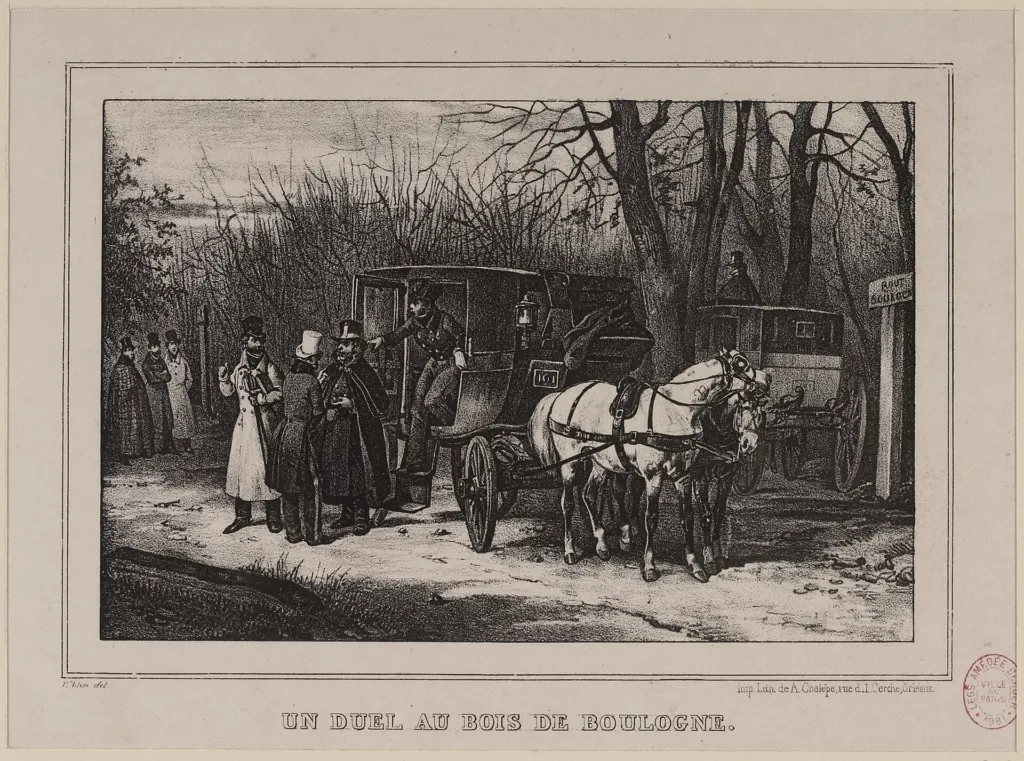
Image: Unknown lithographer (Paris Musées collection), CC0 via Wikimedia Commons
This article was produced with AI assistance and reviewed by our Editorial Desk. How we work.