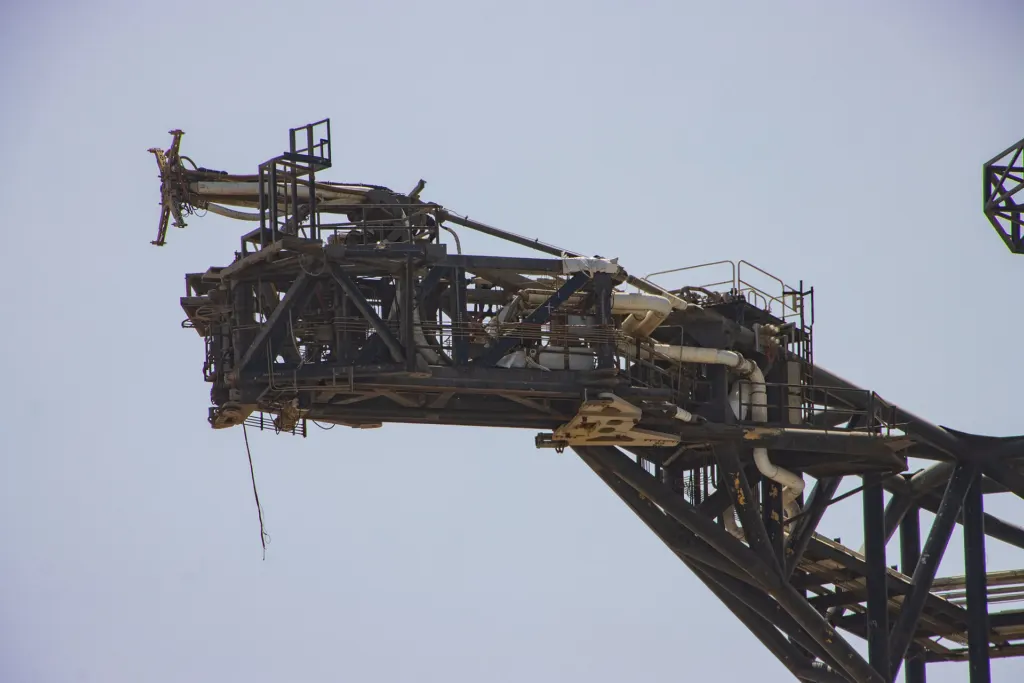
SpaceX’s launch tower plucked a returning Starship out of the air at Starbase, Texas, on Saturday, November 14, ending a flight of 22 hours, 32 minutes and 32 seconds. Ship 42, the Block 3 upper stage painted with the words “Don’t Panic,” became the first upper stage ever caught by a tower, and the first to come back from orbit and stop upright on its home pad.
The catch at Orbital Launch Pad 2 came at 21:20 UTC (3:20 p.m. Central), about a day after liftoff. The flight record for Starship Flight 15, built from SpaceX’s own mission timeline, logs the landing burn shutdown and capture at T+22:32:28.
How the last 22 hours unfolded
Our earlier report on Flight 15 reaching orbit with 26 Starlink satellites covered Friday’s launch. Saturday was about getting the ship home. After releasing its satellites, three of which carried cameras to photograph its heat shield, Ship 42 coasted for roughly 14 laps of Earth at about 277 km, tilted 30.5 degrees to the equator.
Controllers then had three chances to bail out into the ocean. The ship cleared every one: the early Hawaii check at T+1:27, the Chile check at T+7:15 and the final Hawaii check at T+20:41. A 10-second deorbit burn began at T+21:35:57, and the vehicle hit the upper atmosphere about 35 minutes later. To reach Texas it glided on its flaps along a path routed around populated parts of northern Mexico and southern Texas.
The final two minutes, second by second
Lining up SpaceX’s logged times shows how compressed the ending was. The ship slowed below the speed of sound at T+22:30:13. Its landing burn lit at T+22:32:16, the flip from belly-first to upright followed two seconds later, and the engine count dropped from three to two at T+22:32:21 and to one at T+22:32:27. One second after that the arms closed. From subsonic flight to a hanging ship took about 2 minutes and 15 seconds; the landing burn itself lasted roughly 12 seconds.
The hardware had rehearsed the moment. On September 11 and 12, the tower’s chopstick arms lifted an empty Ship 42 into a simulated post-catch position and pressed it against the ship quick-disconnect arm. In September, Elon Musk had put the odds of a first-attempt catch at “at least 50 or 60 percent.”
Why catching the top stage matters
SpaceX has caught Super Heavy boosters since 2024, but boosters only fly a few minutes and never reach orbit. An upper stage has to survive reentry from orbital speed first. Getting it back intact on the pad, rather than in pieces in the sea, is what would let the same ship be refueled and flown again instead of built new each time. That reuse underpins the high flight rates Musk has floated for a future Starbase in Louisiana flying over 30 Starships a day, and Starship is also part of NASA’s lunar plans, including the $10 billion Moon Base cargo lander program.
Flight 14’s ship, by comparison, cut its coast short after a Raptor Vacuum engine shut down early and finished with a splashdown in the Pacific.
Limits
This was not the full-recovery flight SpaceX wanted. The plan called for both stages to return to the tower, which the company had billed as “the first full recovery of an orbital launch system.” Booster 22 relit only 32 of its 33 engines for its boostback burn, called off its catch about six and a half minutes into the flight and diverted to the Gulf of Mexico. The preliminary cause in the flight log is engine underperformance and low fuel; its flight termination system was triggered and the booster was destroyed.
SpaceX has not yet said what condition Ship 42’s heat shield is in, or how soon a caught ship could fly again. Those inspections will decide whether the next step is reflying a ship or catching both stages on Flight 16.
Further reading
Image: Jenny Hautmann, CC BY-SA 4.0 via Wikimedia Commons
This article was produced with AI assistance and reviewed by our Editorial Desk. How we work.