A black hole no wider than an atom, but as heavy as an asteroid, could slip inside a star like our Sun, eat it from the core outward and then blow it apart. That is the scenario MIT physicist Ore Gottlieb and his colleagues lay out in a new study in The Astrophysical Journal, and they think the resulting flash could be bright enough for today's telescopes to catch.
"Once the disk forms, this is essentially a death sentence for the star," Gottlieb, an assistant professor of physics at MIT and the paper's lead author, said in MIT's announcement of the study.
The suspects: black holes from the first second
The villains here are primordial black holes, a still-hypothetical breed that may have formed in the first fraction of a second after the Big Bang, when dense pockets of matter collapsed under their own weight. They are a long-standing dark matter candidate, as Wikipedia's overview of primordial black holes explains, and Stephen Hawking proposed them back in 1971.
The smallest ones should be long gone. Hawking radiation, the slow quantum leak of energy from a black hole, would have evaporated anything lighter than roughly a trillion kilograms by now, according to Wikipedia's entry on Hawking radiation. Heavier relics, about the mass of an asteroid or roughly a millionth of Earth's mass, could still be drifting through space today.
How a star swallows its own killer
A lone star cannot trap one of these speeding objects; its gravity is not strong enough. The team found that a companion, such as a second star or a Jupiter-like planet, changes the game by nudging the black hole into a captured orbit. Each pass through the star then drags on it like friction, and over thousands to millions of years it sinks to the center.
"Then, this is where the action begins," Gottlieb said.
Once lodged in the core, the black hole feeds. The simulations show most of the energy from infalling gas disappears into the black hole rather than pushing gas away, so it bulks up faster than earlier estimates assumed. Within several million years it can swallow about 1% of the star's mass and grow to a few meters across.
Here the outcome splits, according to the paper's preprint on arXiv. If the star spins quickly, gas piles into a disk around the black hole, and the paper calls disk formation "the point of no return." The spinning black hole twists the disk's magnetic field into jets that tear the star open. In a slower-spinning star, the black hole simply eats its host quietly.
"These jets will just explode the star, within a few dozen seconds. It's very fast. Once you have a disk, you are done," Gottlieb said in the MIT release. The paper itself puts the disruption at within minutes.
What astronomers would see
The death would not be subtle. The team predicts a day-long blue and ultraviolet glow, X-rays and gamma rays if the jet breaks out, and a radio afterglow later on, a signal that could be spotted "many galaxies away," Gottlieb said.
The catch is that other cosmic blasts can look similar. One giveaway would be a star exploding that, by its mass, should never explode at all. Gottlieb described that as "a sort of parasite that is consuming the star from the inside."
No such event has been seen, and primordial black holes remain unproven. But the study, written with researchers from the Flatiron Institute, New York University and Stanford, hands telescope teams a concrete target. Badiyaa has covered other ideas for tracking these relics, including how tiny primordial black holes may have reheated the early universe, and the hunt for stars that collapse without exploding.
Sources
- The Life and Death of Stars that Capture Primordial Black Holes, The Astrophysical Journal (American Astronomical Society), 2026
- “If tiny ‘primordial’ black holes exist, here’s how we might find them”, MIT News, Massachusetts Institute of Technology, 2026
- The Life and Death of Stars That Capture Primordial Black Holes (preprint), arXiv, 2026
- Primordial black hole, Wikipedia, 2026
- Hawking radiation, Wikipedia, 2026
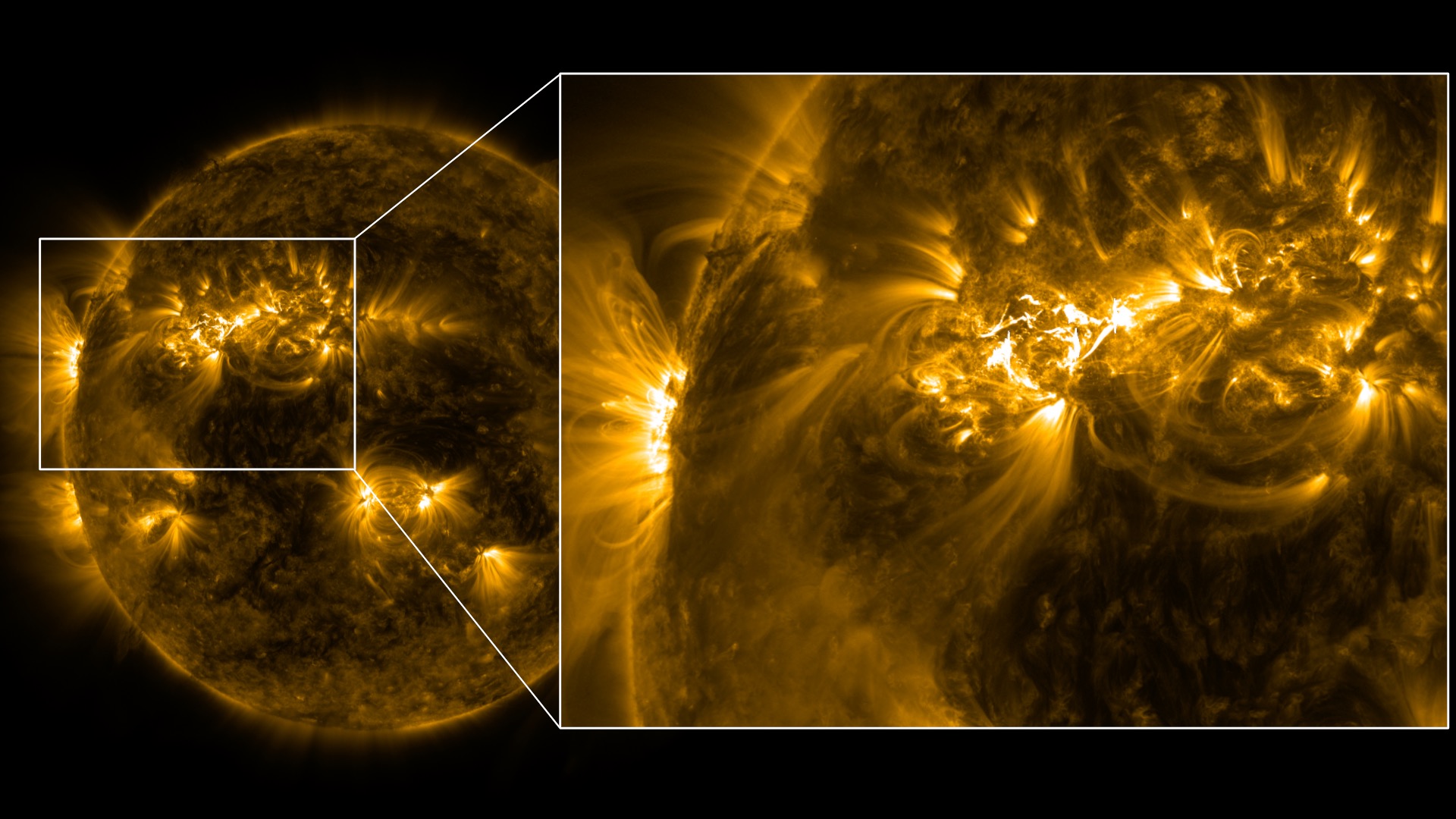
Image: NASA's Scientific Visualization Studio, Public domain via Wikimedia Commons
This article was produced with AI assistance and reviewed by our Editorial Desk. How we work.