That fizzy, swooping feeling before a first kiss or a big date is not your imagination. It is your body quietly rerouting its blood supply. When the brain decides a moment matters, it fires up the fight-or-flight response, and adrenaline and noradrenaline push the heart to beat faster and send blood toward the muscles, away from the gut. The stomach, briefly short-changed, flutters.
That is the standard physiological account summarized in Wikipedia's entry on butterflies in the stomach: blood vessels around the stomach and intestines narrow, normal waves of gut muscle contraction stutter, and the result is the familiar wobble that people describe as wings beating inside them.
Why love and nerves feel the same
The same alarm system switches on before a speech as it does before meeting a crush. Your body does not much care whether the stakes are social, romantic or physical; it simply readies you for action. That is why a sudden crush and a job interview can feel so oddly alike in the pit of your stomach, and why the idiom is so tightly tied to romance.
The phrase itself is younger than many people think. Its earliest known use is in Florence Converse's 1908 novel The House of Prayer, in which a character felt "as if he had a butterfly in his stomach," according to the same entry.
The 'second brain' in your gut
Part of the reason the gut reacts so vividly is that it has its own wiring. The enteric nervous system, a mesh of nerve cells lining the digestive tract, holds some 500 million neurons, about five times as many as the spinal cord, and can run many gut functions on its own, as Wikipedia's overview of the enteric nervous system notes. It is often called the "second brain," and more than 90% of the body's serotonin is found in the gut.
That network talks back to the head. UCLA gastroenterologist Emeran Mayer described a "complex, bidirectional communication system" between gut and brain in a 2011 review in Nature Reviews Neuroscience, one likely to shape emotion, motivation and even gut-level decision making.
Researchers literally mapped the feeling
In a 2014 study in PNAS, Finnish researchers led by Lauri Nummenmaa at Aalto University asked 701 people to color in body silhouettes showing where they felt each emotion grow stronger or weaker. The maps were strikingly consistent, and they matched across West European and East Asian volunteers. Love clustered with happiness and pride, and happiness was the only emotion that lit up sensations across the whole body.
The authors even took on the butterflies directly. In the paper's full text, they acknowledge that phrases such as "butterflies in the stomach" are often treated as metaphors rather than real physical changes, then argue their maps point to genuine, culturally universal body sensations instead of mere figures of speech.
So the next time your stomach somersaults before a date, it is your nervous system doing exactly what it evolved to do. Badiyaa has more on the science of romance in Helen Fisher's brain scans of people in love and in the evolutionary story of the human kiss.
Sources
- Butterflies in the stomach, Wikipedia, 2026
- Enteric nervous system, Wikipedia, 2026
- “Gut feelings: the emerging biology of gut–brain communication”, Nature Reviews Neuroscience (UCLA author), 2011
- “Bodily maps of emotions”, Proceedings of the National Academy of Sciences (Aalto University), 2014
- “Bodily maps of emotions” (full text), PubMed Central, US National Library of Medicine, 2014
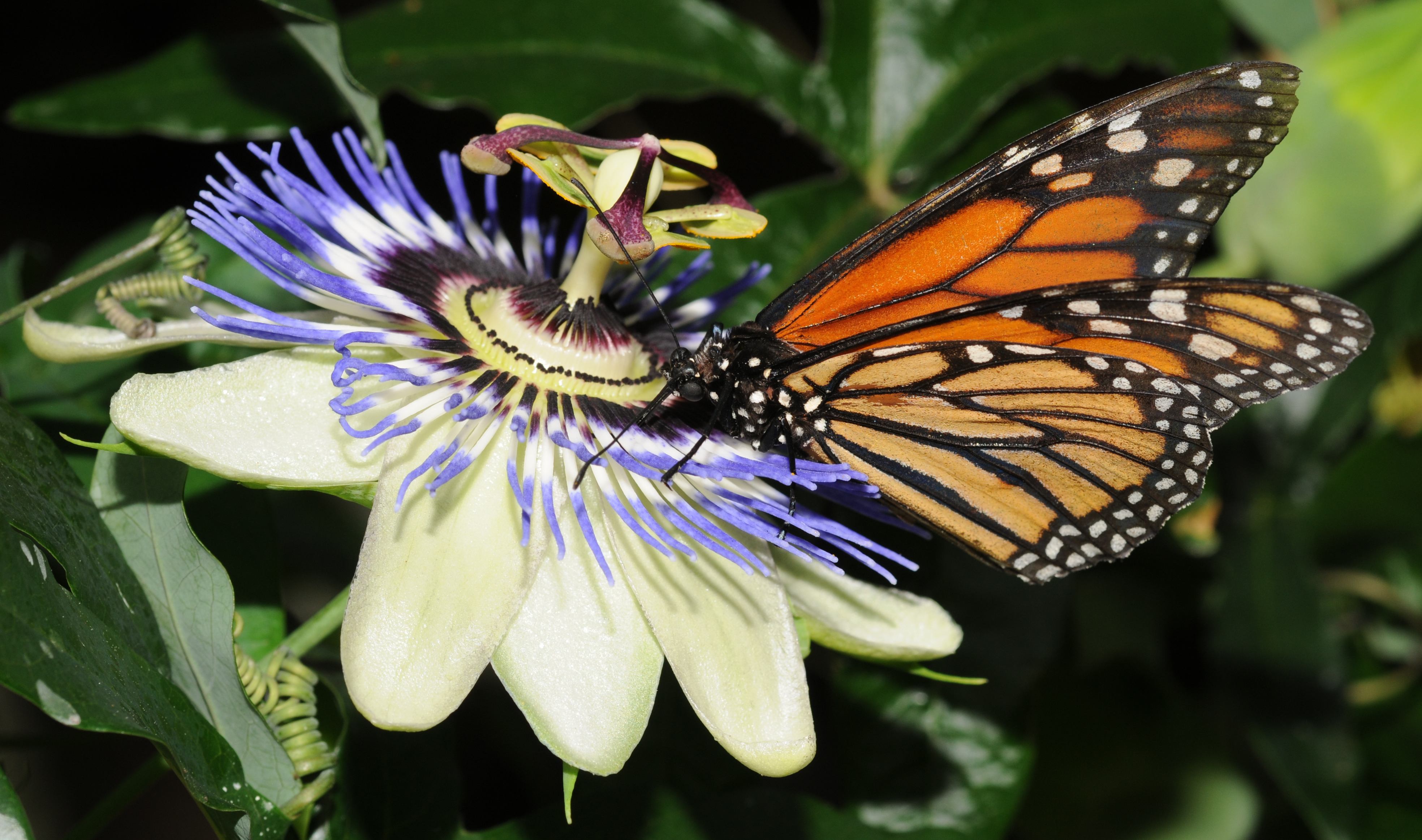
Image: Thomas Bresson, CC BY 2.0 via Wikimedia Commons
This article was produced with AI assistance and reviewed by our Editorial Desk. How we work.