A 1929 industry-sponsored film shot at the Morris Motors plant shows brand-new Morris Minor chassis being driven hard around a test circuit at Cowley, near Oxford, before any bodywork goes on. Nearly a century later, the 21-minute silent reel still makes old-car fans grin.
The film, titled The Making of the Minor, is held by the British Film Institute, whose catalog note calls the bumpy run a “Wacky Races-style chassis test.” It follows the car from the casting of the engine block to the moment delivery drivers are bused in to collect finished cars.
A sales pitch disguised as a factory tour
The reel was sponsored by industry, not shot by a curious bystander. The archive says it helped sell the new model by stressing how safe and dependable mass production was, while still showing flat-capped workers doing careful handwork. In other words, a bare frame bouncing over rough ground was the advert: if the naked chassis survived, buyers could trust the finished car.
That message mattered in 1929. Morris was already the giant of British motoring. According to the history of Morris Motors, the firm overtook Ford in 1924 to become the largest carmaker in the UK, and by 1926 it built 42 percent of the country’s cars. Founder William Morris bought most parts from suppliers and assembled them at Cowley, then started buying the suppliers themselves.
Why the Minor needed proving
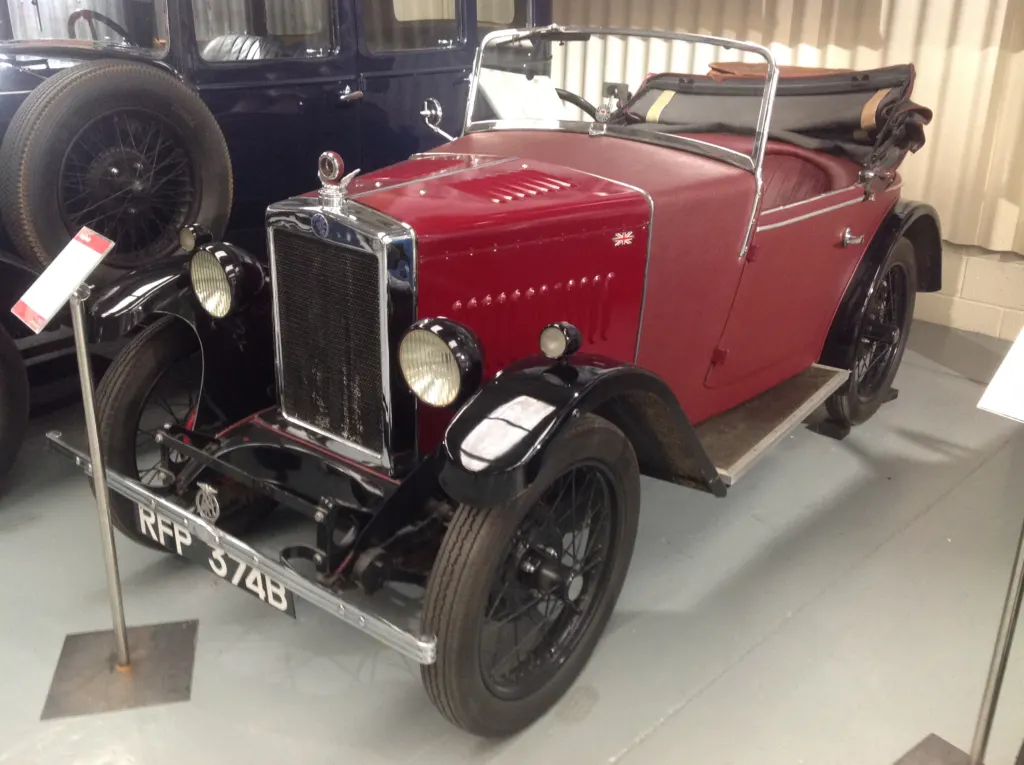
The Minor was Morris’s answer to the tiny Austin Seven, which had opened motoring to a new class of buyer from 1922. The 1928 Morris Minor had an 847cc engine designed by Wolseley, a firm William Morris had bought for himself in 1926. It made 20 horsepower and could reach about 55 mph.
It launched on October 11, 1928, at the Olympia Motor Show in London. Prices ran from £100 for a bare chassis to £135 for a two-door fabric saloon. That fabric body hid a quirk: so much padding was packed under the cloth to round off the corners that birds reportedly learned to peck through it for nesting material.
Here is how the Minor’s first years add up, using the production table for the model:
- 1929, the year the film came out: 12,638 cars and vans
- 1930: 14,264
- 1932, the best year: 19,253
- Total from 1928 to 1934: about 86,300, before the Morris Eight replaced it
Put another way, the 1929 output alone works out to roughly 243 Minors a week, every week of the year, from a car that had existed for only a few months.
What the film gets right, and what it leaves out
As history, the reel is a rare look inside a plant that no longer exists. The old Morris buildings at Cowley were demolished after the site was sold in 1992; the neighboring former Pressed Steel works is now the BMW plant that builds the modern Mini.
As evidence, it should be watched with a sponsor’s eye. A chassis test staged for a company film shows what Morris wanted buyers to see, not how the car held up on real country lanes in winter. Contemporary road testers were kinder to the later side-valve Minor than to its gearbox, noting that top gear could jump out when the load came off.
Badiyaa has covered newer car safety ideas too, such as the US proposal for cyan lights on driverless cars, and more motoring stories sit in our Tech section. The Minor name itself came back in 1948 on Alec Issigonis’s new car, and the original 1929 factory reel can still be streamed free from the archive’s online player.
Further reading
Image: Andrew Bone from Weymouth, England, CC BY 2.0 via Wikimedia Commons
This article was produced with AI assistance and reviewed by our Editorial Desk. How we work.