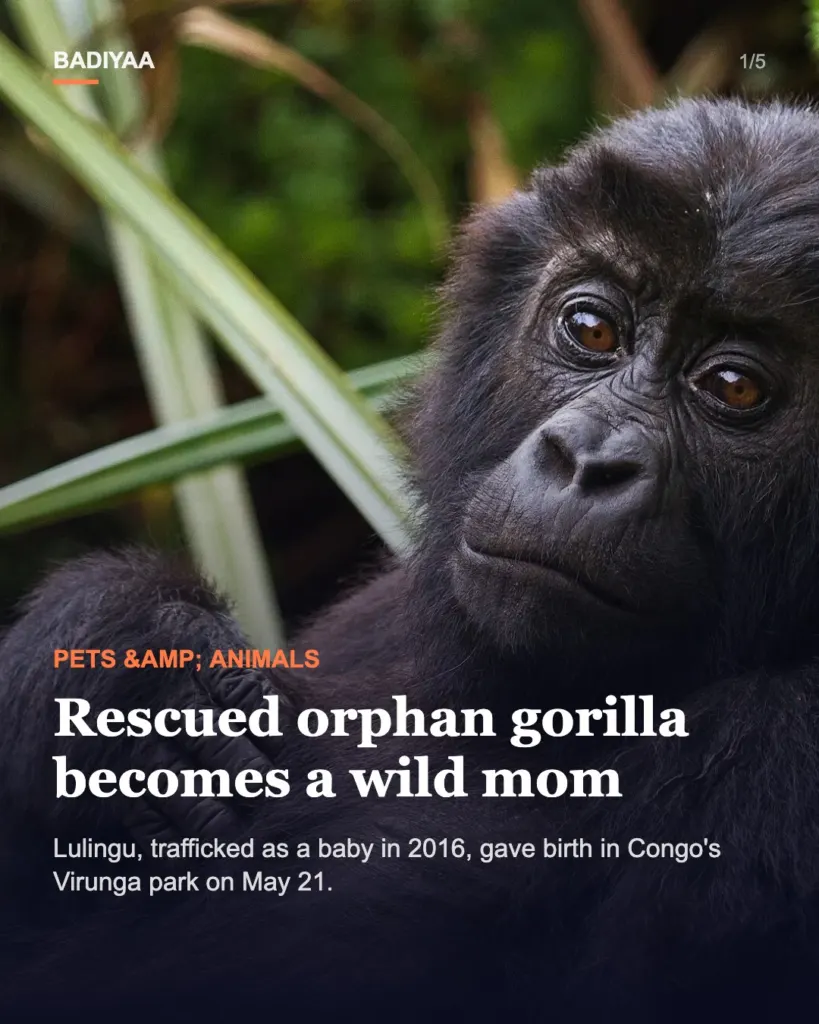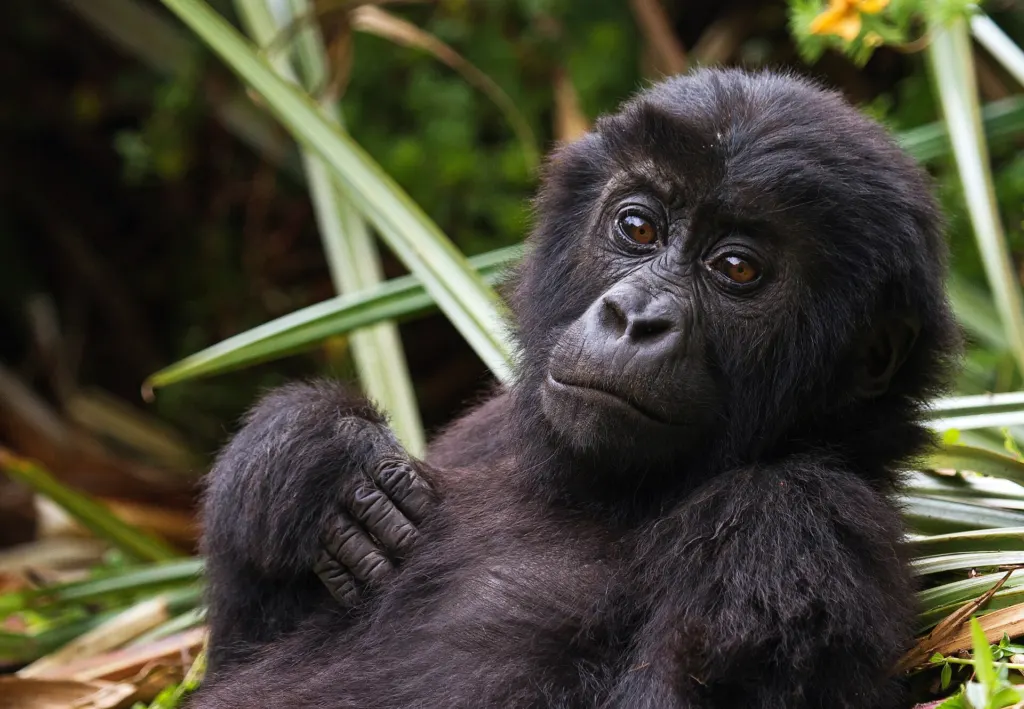
Lulingu, a Grauer’s gorilla who was sold into the wildlife trade as a baby and spent most of her life in a sanctuary, is now five months into raising her first infant in the wild on Mount Tshiaberimu, in the Democratic Republic of the Congo’s Virunga National Park. The baby was born on May 21, and the partners behind her release announced the birth in September. The story is circulating again this week.
The father is Mwasa, the wild silverback who leads the family group Lulingu and three other released females joined. The pairing is the point of the whole project: a sign that a sanctuary-raised gorilla has been accepted into a wild group and is breeding there.
From trafficked infant to mother
Lulingu’s life can be told in a handful of dates:
- February 2016: rescued from poachers trying to sell her near Kahuzi-Biega National Park. She was about 18 months old, the youngest orphan the GRACE sanctuary had ever taken in.
- Late 2016: after five months of quarantine with round-the-clock keepers, she joins the sanctuary group, where an adult female named Pinga adopts her as a surrogate mother.
- October 2024: Lulingu and three other females, Isangi, Mapendo and Ndjingala, are flown by helicopter from the sanctuary at Kasugho to a holding facility on Mount Tshiaberimu.
- December 3, 2024: after Mwasa spent days displaying at the fence, the four walk out into the forest on their own.
- May 21, 2026: Lulingu gives birth.
Grauer’s gorillas, also called eastern lowland gorillas, live only in the eastern DRC and are the largest primates on Earth. Their numbers are estimated to have dropped by 77 percent since 1994, from about 16,900 to roughly 3,800 by 2015. GRACE is the only sanctuary in the world for orphans of the subspecies.
Why one baby matters on this mountain
Before the release, just eight gorillas lived on Mount Tshiaberimu, cut off from other populations. A population viability analysis found a high probability they would die out within 50 years unless breeding females were added. The four newcomers took the count to 12, the largest translocation of eastern lowland gorillas yet attempted in Africa. On that count the infant makes 13, which means the group of eight that existed two years ago has grown by more than half (13 divided by 8 is about 1.6).
Choosing only females was deliberate. In the wild, young adult females often leave the group they were born into, while grown males rarely fit into a new one. “By adding adult females, we were mimicking these natural transfers,” GRACE executive and science director Katie Fawcett said in an interview last year. Because the females came from other parts of the eastern DRC, they also bring new genes to an isolated, inbreeding-prone group.
The monitoring work is hands-off. Trackers collect urine from leaves and run it through ordinary human pregnancy tests to spot rising hormones. “None of the four females have required veterinary treatment for illness or injury since being rewilded,” said Cedric Kibengo, a field vet with Gorilla Doctors, adding that mother and infant are healthy.
The risks that remain
None of the four had raised a baby before, and nobody has measured infant mortality for wild eastern lowland gorillas. For their close relatives, mountain gorillas, about 35 percent of infants die, roughly one in three. Benoit Ishaba, who heads gorilla monitoring on the mountain for the park, said Lulingu has been seen “nursing, cradling, and playing with the baby.”
The setting is fragile too. Virunga sits in a conflict zone, and an armed group has controlled large parts of the park since early 2025, which has fed poaching and forest loss. In March 2025, park authorities found a young gorilla caught in a snare.
The partners say at least one of the other three females may also be pregnant. Gorilla pregnancies last eight to nine months, so a second wild-born infant on Mount Tshiaberimu could arrive within weeks or months.
Image: Joe McKenna from San Diego, California, CC BY 2.0 via Wikimedia Commons
This article was produced with AI assistance and reviewed by our Editorial Desk. How we work.
Spot an error? Help verify this story
The story in 5 slides