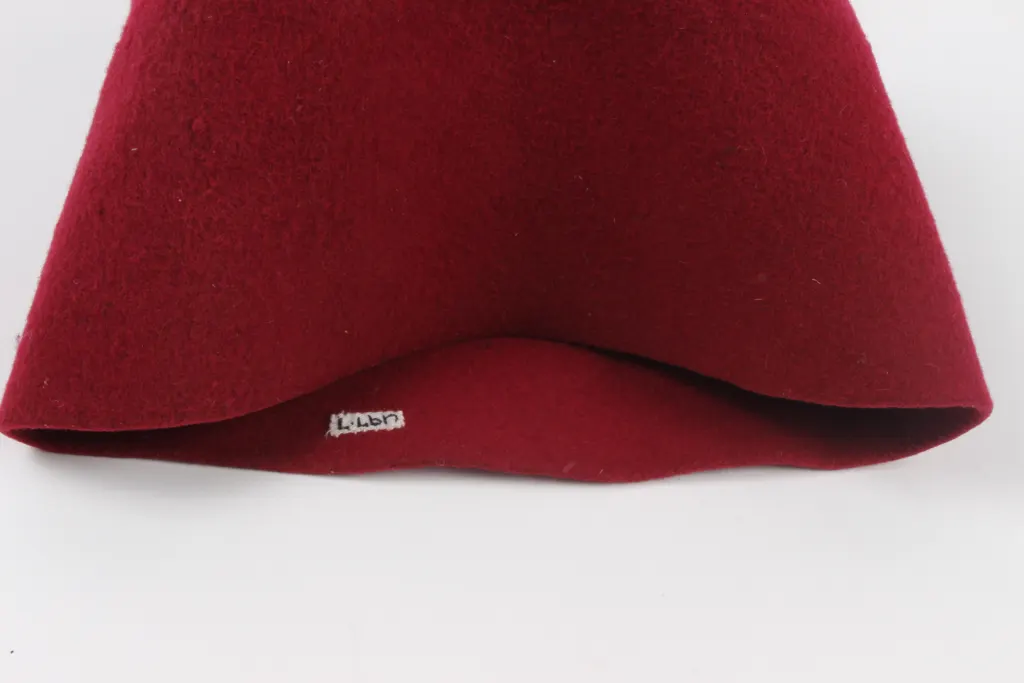
The fez became the official headgear of the Ottoman state in 1829, when Sultan Mahmud II ordered his civil officials to wear the plain red cap and banned them from wearing turbans.
The decree was a quiet revolution. Turbans and other headgear had signaled a man’s rank, religion and trade at a glance under an elaborate set of dress laws. A single cap for every official erased those markers, an egalitarian step that foreshadowed the wider Tanzimat reforms that followed. Tradesmen and artisans mostly refused to adopt it, but the fez still spread fast and became a badge of modernity across the Near East, inspiring a similar decree in Iran in 1873.
An army order of 50,000 hats
The change began with soldiers. In 1826 Mahmud II crushed the Janissaries, the empire’s old elite infantry, and started rebuilding the military with Western-style uniforms. In 1827 the new army, known as the Mansure Army, received fezzes as its headdress, and 50,000 of them were ordered from Tunis. Ottoman naval commanders had picked up the style in North Africa, which helped inspire the choice.
The earliest versions were softer and came in red, white or black, often with a cloth wound around them. Over time the turban wrap disappeared, the cap grew shorter and the color settled on red. Its brimless shape had a practical upside for Muslim wearers, who touch their foreheads to the ground during daily prayers.
A hat with a disputed birthplace
Nobody agrees on exactly where the fez began. The name is often linked to the Moroccan city of Fez, said to be the source of a crimson berry once used to dye the felt. Other historians trace its forerunners to Tunisia, where the best caps continued to be made. To keep up with demand, fez makers were persuaded to move from Tunisia to Constantinople, and factories opened in the Eyüp neighborhood. Cheap synthetic dyes later shifted much of the manufacturing to Strakonice, in what is now the Czech Republic.
That dependence on one supplier backfired in 1908. When Austria-Hungary annexed Bosnia and Herzegovina, Ottoman consumers boycotted Austrian goods, a protest remembered as the Fez Boycott. The hat survived, but it was never again universal.
From palace order to ban, in a century
- 1826: Mahmud II abolishes the Janissaries and starts military reform
- 1827: 50,000 fezzes ordered from Tunis for the new army
- 1829: civil officials must wear the fez; turbans banned for them
- 1872: the Shriners make the red fez their official headgear
- 1908: the Fez Boycott of Austrian goods
- 1925: Turkey outlaws the fez in the Hat Revolution
- 1958: Egypt bans it too
Read as a timeline, the story has a neat symmetry: the fez went from a symbol of reform to a target of reform in under a hundred years, with Mahmud II’s 1829 decree and the 1925 ban sitting 96 years apart. Clothing and grooming often carry that kind of history, as with the butter-shaped hair coils of Afar men in Ethiopia, and everyday culture can hide whole stories, like the secret British slang Polari.
The fez lives on in Morocco, where it remains part of royal court dress, and on stage: British comedian Tommy Cooper picked one up while serving in Egypt during the Second World War and wore it for the rest of his career.
Further reading
Image: Auckland Museum, CC BY 4.0 via Wikimedia Commons
This article was produced with AI assistance and reviewed by our Editorial Desk. How we work.