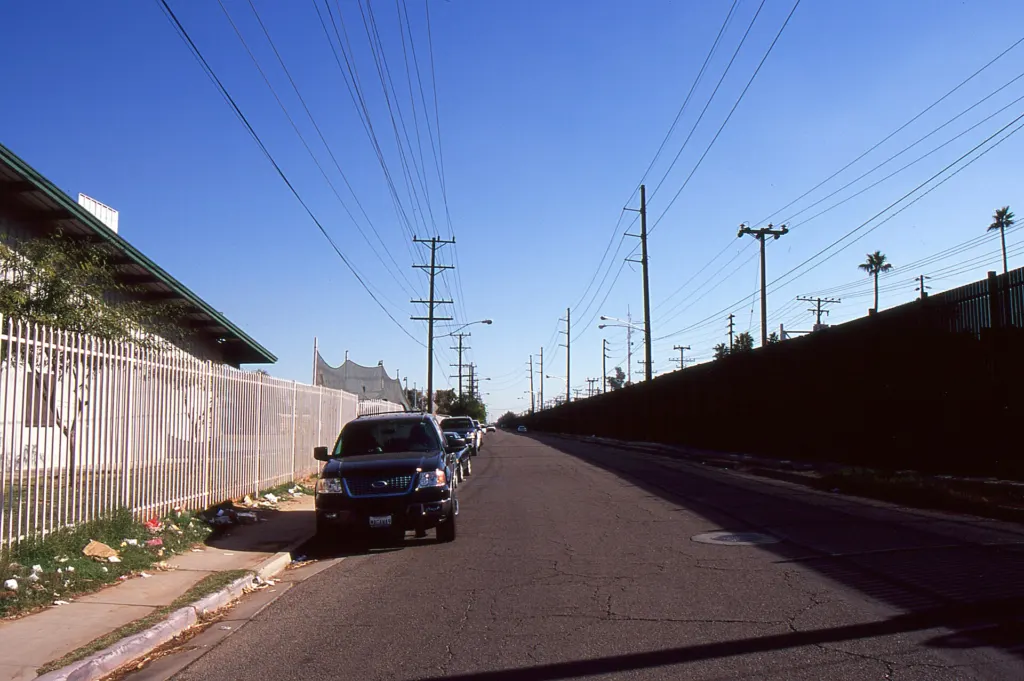
Stand on First Street in Calexico, California, and the city on the other side of the fence is Mexicali, Mexico. Their names are mirror images: Calexico blends “California” and “Mexico,” while Mexicali runs the same two words the other way around.
The wordplay is not a coincidence or a modern marketing idea. The two cities began as one cluster of small homes that happened to sit across the international line, and each half took the name that fit its side.
One settlement, two names
Around 1900, a US company received permission from Mexico’s government to cut a canal through the Colorado River delta and bring water into a dry desert basin. Developers branded the area the “Imperial Valley” to lure farmers. According to the Wikipedia history of Mexicali, the first 500 farmers arrived in 1903, and by late 1904 about 100,000 acres were under irrigation, with 10,000 people growing cotton, fruit and vegetables.
The housing that sprang up along the line was called Calexico on the US side and Mexicali on the Mexican side. Calexico started in 1899 as a tent camp of the Imperial Land Company and was incorporated as a city in 1908. Before settling on the portmanteau, its founders had considered the names Santo Tomas and Thomasville, says the Wikipedia article on Calexico. Mexicali was officially created as a town on March 14, 1903, and its name is credited to Colonel Agustín Sanguinéz.
The same desert, very different sizes
The twins share a climate. Both are low, flat and hot: Calexico sits about 3 feet above sea level, and Mexicali recorded 125.6°F (52°C) on July 28, 1995. Both also saw a rare snowfall in December 1932.
What they do not share is size. Here is how the pair compares, using census figures cited on Wikipedia:
- Calexico (2020 census): 38,633 people in 8.6 square miles.
- Mexicali (2020 census): 854,186 people in about 43.9 square miles.
- Status: Calexico is a small city in Imperial County; Mexicali is the capital of the state of Baja California.
- Nicknames: Calexico calls itself “The International Gateway City,” while Mexicali residents go by “Cachanillas.”
Divide the populations and Mexicali has roughly 22 residents for every one in Calexico, even though the two cities began as a single strip of homes. The combined metropolitan area is estimated at about 1 million people.
A Chinese quarter in the desert
One of Mexicali’s most surprising chapters came from that early irrigation boom. Instead of hiring local workers to dig the canals, US-backed land companies brought in thousands of Chinese laborers. Mexicali’s old Chinese district, La Chinesca, grew from that history, and the city long claimed the largest per-capita Chinese population in Mexico, about 5,000 people, until Tijuana passed it in 2012. That nickname, Cachanillas, comes from a local plant the Cucapah people used to build shelters.
Sister cities, officially
For more than a century the two cities have traded workers, shoppers and visitors on foot and by car. They made the bond formal on April 28, 2017, when they became sister cities. For Calexico, Mexicali is its only one.
Odd borders are a recurring theme on Badiyaa, from the Belgian road in Martelange lined with Luxembourg gas stations to Kentucky Bend, a slice of Kentucky cut off from the rest of the state.
For a drive between them, the gap is small: Calexico sits about 122 miles east of San Diego, and Mexicali’s downtown begins just across the line.
Further reading
Image: Omar Bárcena, CC BY 2.0 via Wikimedia Commons
This article was produced with AI assistance and reviewed by our Editorial Desk. How we work.