Clips of newspaper carriers landing a rolled paper square on a doorstep from a moving car still pull huge audiences online, and they hide a job with a long, odd history. The first US newspaper carrier is traditionally said to be Barney Flaherty, hired on September 4, 1833, a date some still mark as Newspaper Carrier Day.
For most of the 20th century the job belonged to children. A paperboy (the term covered girls only later, and in some places not at all) walked or cycled a fixed route, delivering papers to homes and offices. In New York State in 1970, girls were still barred from delivering newspapers, and boys under 14 needed a paperboy license.
What the job really involved
Delivery was only part of it. Carriers counted and separated their bundles, rolled the papers, slipped them into plastic bags when rain threatened, and went door to door collecting payment from customers. For many young people in Western countries, it was a first job, squeezed in before or after school.
The trade grew up alongside crowded city newspaper markets. At the peak, New York City alone had as many as 50 competing daily papers. Street sellers, the newsboys who shouted headlines on corners, were a separate trade from the carriers who brought papers to the door.
Why the paperboy disappeared
Several forces squeezed the job out of children’s hands at once:
- Afternoon papers, which fit a school day, largely died out; morning editions often had to land before 6 a.m.
- Child-labor laws in the mid-20th century restricted young workers.
- Small towns that could be covered on a bicycle declined, and routes grew longer.
- Parents worried more about children out alone in the dark.
- News moved online, and subscriptions fell.
Most home delivery today is done by adults in cars, usually hired on contract rather than as staff. Weekly community papers and free shoppers, which still go out in the afternoon, are where young carriers last longest.
The porch throw is a real skill
That shift to cars changed the craft. A walking carrier could place a paper by hand. A driver working a long rural or suburban route has to throw from the window, often across the passenger seat, without stopping. The math explains why speed matters: a route of 300 papers at 30 seconds per stop would take two and a half hours; cutting each stop to 15 seconds saves 75 minutes every morning. A clean toss that lands on the mat instead of the bushes is the difference between a fast route and an angry customer.
That is why the best throws look so satisfying on video: a spinning paper that skids to a stop exactly at the door is the product of thousands of repetitions on the same street, in the dark.
For more on newspapers’ strange side stories, read how Scrabble’s letter values came from counting newspaper front pages, and how Nellie Bly raced around the world in 72 days in 1889.
International Newspaper Carrier Day falls during National Newspaper Week each October; the next one is on October 7, 2027.
Further reading
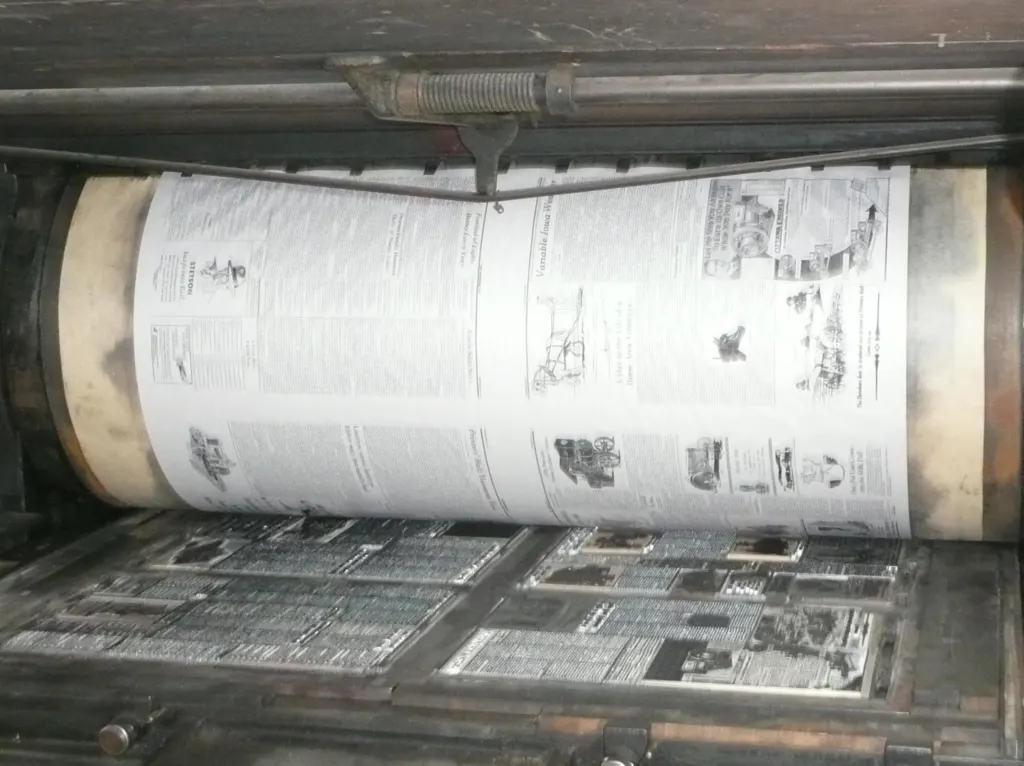
Image: Douglas W. Jones, CC0 via Wikimedia Commons
This article was produced with AI assistance and reviewed by our Editorial Desk. How we work.