Zora Neale Hurston needed just seven weeks to write Their Eyes Were Watching God. The novel came out on September 18, 1937, sank under harsh reviews from fellow Black writers, and by the time she died in 1960 she lay in an unmarked grave in Fort Pierce, Florida. Today it is one of the most taught American novels of the 20th century.
According to the novel's Wikipedia entry, Hurston drafted it in Haiti while on a Guggenheim Fellowship, describing herself as "under internal pressure" as she wrote. The same entry says she also worked on it in Belle Glade, Florida, staying with a labor camp manager named Harvey Poole who taught her about bean picking on the muckland. That is the world of the book's second half.
A love story she had just lived
The book follows Janie Crawford through three marriages, from a farm marriage arranged by her grandmother, to life as the mayor's wife in the all-Black town of Eatonville, to a romance with a younger drifter called Tea Cake in the Everglades, where the 1928 Okeechobee hurricane tears through the story.
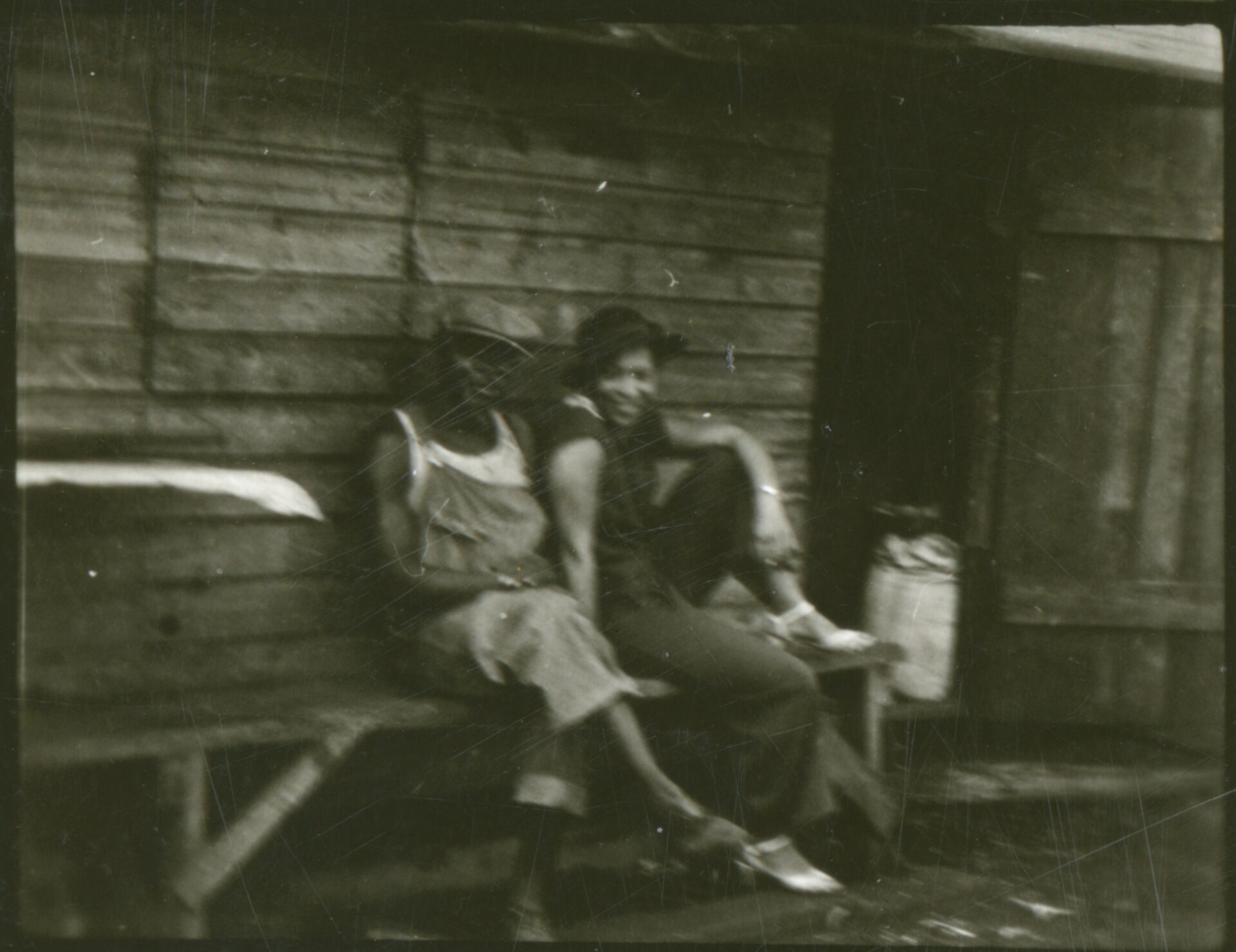
Hurston knew those places. Her family moved to the real Eatonville when she was three, and her father was elected its mayor in 1897. Tea Cake was inspired by Percy Punter, a Columbia graduate student she was involved with in 1935. In her autobiography she wrote that she had "tried to embalm all the tenderness of [her] passion for him." A 1935 field photograph from Belle Glade, kept on Wikimedia Commons from Alan Lomax's recording trip, shows her at work in the region that same year.
The reviews that buried it
White critics were largely kind. Leading Black writers were not. Richard Wright accused her of writing for "a white audience whose chauvinistic tastes she knows how to satisfy," and Ralph Ellison complained of a "blight of calculated burlesque." Sales were modest, and her work faded from view for decades.
Hurston kept writing, but her later years were hard. She worked as a substitute teacher and, at one point, as a maid in Miami Beach.
The grave, and the 10-year mystery on the stone
In 1973 novelist Alice Walker went looking for Hurston's resting place in Fort Pierce, found an unmarked grave in the right area, and paid for a gray marker reading "A GENIUS OF THE SOUTH." The stone gives her birth year as 1901. Hurston's Wikipedia biography explains the slip: she was born on January 7, 1891, and at 26 she began claiming 1901 so she could qualify for a free high school education in Baltimore. The decade she shaved off in 1917 is still carved in stone today.
Walker's 1975 essay "In Search of Zora Neale Hurston" set off a revival. Robert Hemenway's biography followed in 1977, the novel was reissued in 1978, and one later paperback edition sold its entire print run of 75,000 copies in less than a month.
From flop to required reading
- 1937: published by J. B. Lippincott after seven weeks of writing.
- 1960: Hurston dies; her grave goes unmarked.
- 1973: Alice Walker sets the headstone.
- 1978: the novel returns to print.
- 2005: a TV film produced by Oprah Winfrey stars Halle Berry as Janie.
That is 41 years between publication and the reissue that brought it back. Hurston's official estate website now notes that the book "is required reading in many high schools and colleges and cited as a formative influence by Toni Morrison and Maya Angelou."
Hurston was part of the same Harlem circle as Langston Hughes, as Badiyaa reported in how a Langston Hughes poem gave Lorraine Hansberry's famous play its title. Her long-unmarked grave also echoes Scott Joplin's 57 years in an unmarked New York grave. Eatonville still holds a Zora! Festival in her honor every year.
Sources
- Their Eyes Were Watching God, Wikipedia, 2026
- Zora Neale Hurston and unidentified man, Belle Glade, 1935, Wikimedia Commons, 2020
- Zora Neale Hurston, Wikipedia, 2026
- Zora Neale Hurston (official website), Estate of Zora Neale Hurston, 2025
Image: Alan Lomax, Public domain via Wikimedia Commons
This article was produced with AI assistance and reviewed by our Editorial Desk. How we work.