Archaeologists digging at Old Dongola in northern Sudan have finally reached the original floor of the Great Church of Jesus, a medieval cathedral that, by their latest measurements, was bigger than the White House in Washington, D.C.
The Sudanese-Polish team, led by Prof. Artur Obłuski of the University of Warsaw's Polish Centre of Mediterranean Archaeology, also uncovered a grand staircase into the church and buttresses that braced its apse. The University of Warsaw's announcement of the latest season, published on November 10, says the floor was reached only at the staircase so far, because the building is so well preserved that some walls still stand about 11 meters high.
A cathedral the size of a landmark
Obłuski gave the current numbers himself: "At present, we know that it was 47 m wide and approximately 57 m long, while we cautiously estimate its height at around 21 m. This was a building larger than the famous White House in Washington, D.C.—and we are planning to excavate it!"
Converted into American units, that is roughly 154 feet wide, 187 feet long and about 69 feet tall, with a footprint of around 2,680 square meters, or close to 28,800 square feet. The surviving walls by the staircase, at about 11 meters, are as tall as a three- or four-story building.
He also compared the church's influence to that of Hagia Sophia in Istanbul. "The Great Church of Jesus appears to be a natural candidate for such a role in Nubia, and perhaps even in this part of Africa," he said, calling such buildings "trendsetters." The find also forces a rethink: another church outside the city walls had long been treated as Dongola's cathedral.
A second church, upstairs
The season brought a surprise next door. A structure attached to the cathedral held a church on its upper floor. Its walls now rise only about a meter, but the team filled six large shelving units with fragments of painted plaster from the debris.
Some fragments carry Greek writing. Dr. Agata Deptuła, the expedition's epigraphist, identified pieces of biblical odes, including part of the Prayer of Hannah, mother of the prophet Samuel, written in letters only about half a centimeter high.
Why Makuria matters
Old Dongola, known in Old Nubian as Tungul, was the capital of Makuria, a Christian Nubian kingdom on the Nile. The Wikipedia history of the Kingdom of Makuria records that its capital was founded around 500, that the kingdom became Christian in the mid-6th century, and that a Rashidun Arab army besieged Dongola in 652 and was turned back. The two sides then signed the Baqt treaty, which kept a largely uninterrupted peace with Egypt until the 13th century.
The kingdom peaked between the 9th and 11th centuries. The Wikipedia entry on Old Dongola notes that the royal court left in 1364 and that the town's throne hall, converted into a mosque in 1317, stayed in use as one until 1969.
Timeline of the dig
- 1964: Polish excavations at Old Dongola begin.
- 2021: the team first encounters the building now identified as the Great Church of Jesus.
- 2023: a 13th-century church tied to King David is found on the cathedral's north side.
- 2026: the original floor, staircase and upper-story church are uncovered.
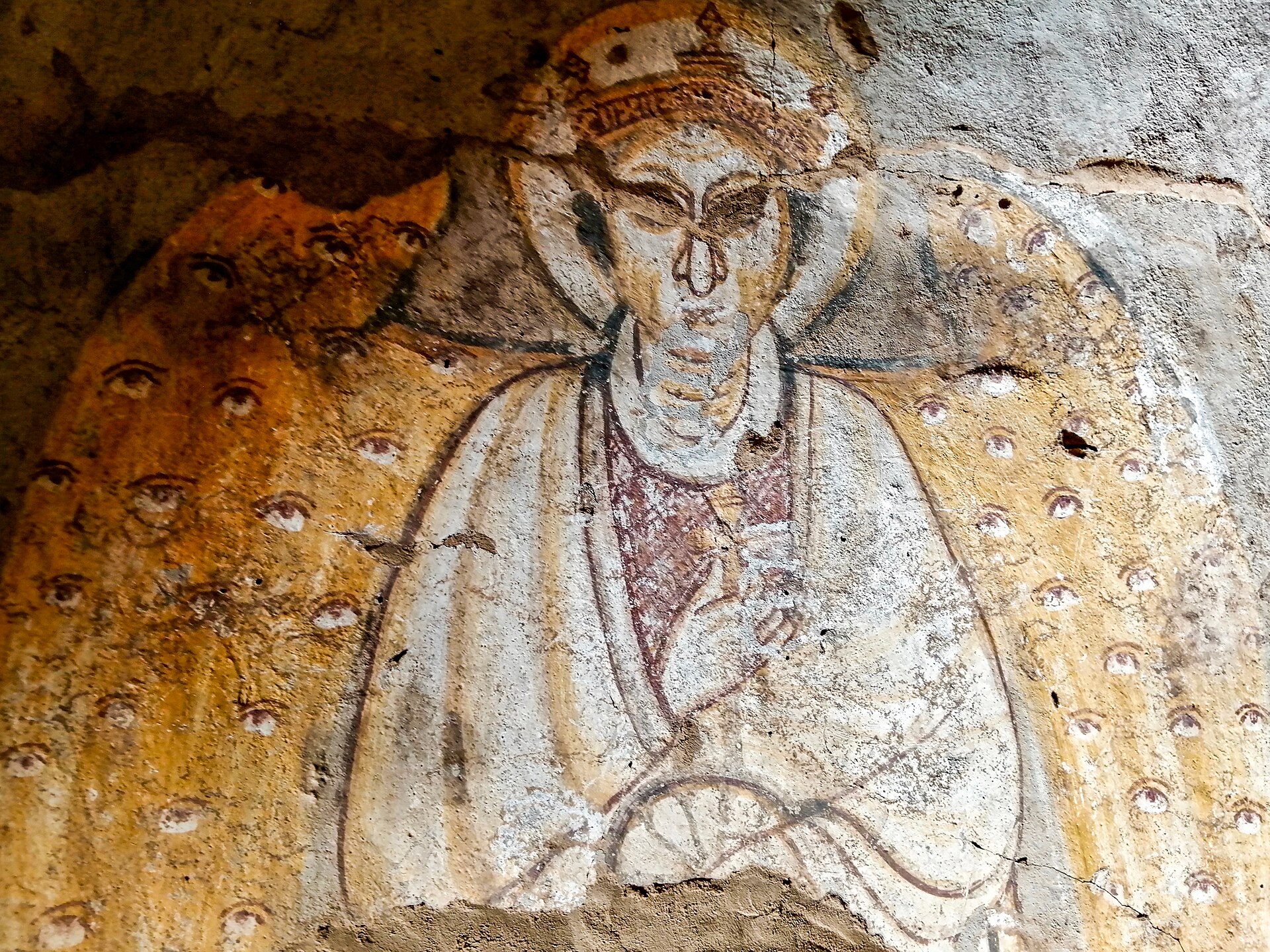
That makes 62 years of Polish fieldwork at a single site. The lead image, a winged angel fresco from a medieval church at Old Dongola, gives a sense of the painted interiors the team is hunting for.
For more ancient finds, read Badiyaa's stories on the gilded Cybele disc from Ai-Khanoum in Afghanistan and the meteorite iron in Spain's Treasure of Villena.
Obłuski says the team hopes to settle the church's full size next season.
Sources
- The largest church in medieval Nubia, University of Warsaw, 2026
- Makuria, Wikipedia, 2026
- Old Dongola, Wikipedia, 2026
- Winged angel, fresco at a Medieval church, Old Dongola site, Sudan, Wikimedia Commons, 2026
Image: Tanjagari, CC BY-SA 4.0 via Wikimedia Commons
This article was produced with AI assistance and reviewed by our Editorial Desk. How we work.