One of the most famous questions in American poetry takes up just six words: "What happens to a dream deferred?" Langston Hughes put it at the top of an 11-line poem called "Harlem" in 1951, and eight years later playwright Lorraine Hansberry lifted the poem's third line for the title of a Broadway landmark, A Raisin in the Sun.
Here is where the line actually comes from, and how it traveled.
The book behind the line
"Harlem" was not first published as a stand-alone poem. It sits inside Montage of a Dream Deferred, a book-length suite Hughes published in 1951. The Wikipedia entry on Montage of a Dream Deferred describes the first edition as 75 pages holding 91 separately titled poems, which Hughes meant to be read as one long piece set over a single day and night in Harlem.
The structure borrows from bebop. In his prefatory note Hughes said the poem, "like be-bop, is marked by conflicting changes, sudden nuances, sharp and impudent interjections, broken rhythms." The "dream deferred" phrase runs through the whole book as its main motif, and "Harlem" lands in the fifth section, titled "Lenox Avenue Mural."
What the poem says
The opening question is followed by a string of images rather than an answer. Hughes asks whether a deferred dream will "dry up / like a raisin in the sun," whether it will fester, stink or crust over, then offers one guess, that "Maybe it just sags / like a heavy load." The last line is a single jolt: "Or does it explode?"
According to the Wikipedia article on the poem "Harlem", the scholar N. Michelle Murray has pointed out that the dream itself is never named. The same page quotes Scott Challener, a professor of English and American studies, calling it "one of the most influential poems of the 20th century."
How a raisin reached Broadway
Lorraine Hansberry took the poem's third line for her play about the Younger family on Chicago's South Side. The Wikipedia entry for A Raisin in the Sun records that it opened at the Ethel Barrymore Theatre on March 11, 1959, ran for 530 performances and was the first play by a Black woman produced on Broadway. Its director, Lloyd Richards, was the first Black director of a Broadway play, and Sidney Poitier starred as Walter Lee Younger.
The title choice did a lot of work. Audiences who knew the poem walked in already holding its question, and the Youngers' fight over an insurance check and a house in a white neighborhood played out as one long attempt at an answer.
The line's timeline
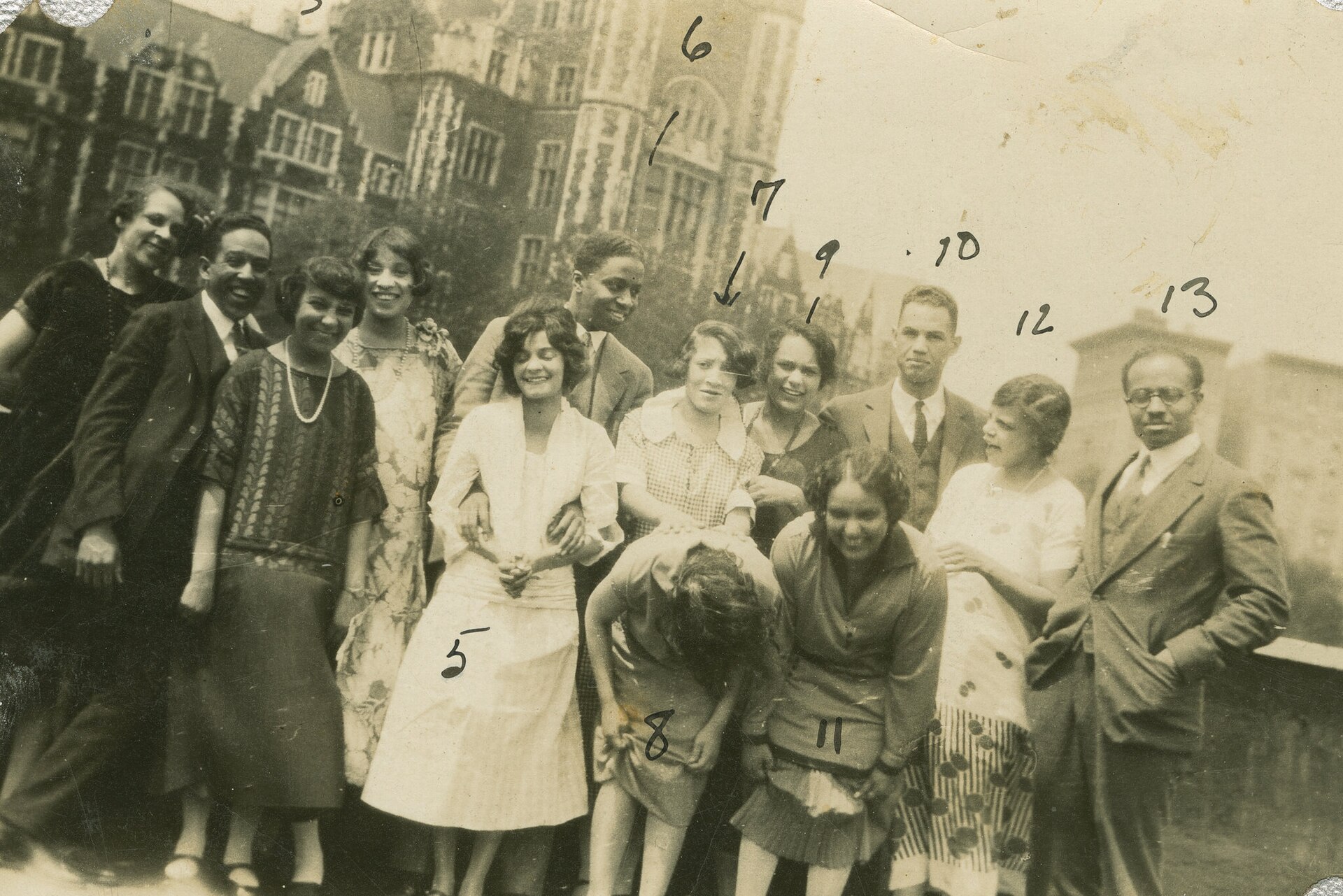
- 1925: Harlem friends throw a breakfast party for the young Hughes at 580 St. Nicholas Avenue, the gathering shown in a 1925 photograph held on Wikimedia Commons.
- 1951: Montage of a Dream Deferred is published, with "Harlem" in its fifth section.
- March 11, 1959: A Raisin in the Sun opens on Broadway.
- 1961: the original Broadway cast reprises the story on film.
- 2004 and 2014: Broadway revivals win Tony Awards, the 2014 production taking best revival of a play.
Counting from the poem, the line has now been on stage for 67 years, and in print for 75.
The quote is also a reminder that Hughes returned to the same idea again and again, using the "dream deferred" motif in other poems such as "Boogie 1AM" and "Good Morning." For more of the stories behind famous lines, see Badiyaa's pieces on Fannie Lou Hamer's "sick and tired" speech in Harlem and how John McCrae's In Flanders Fields made the poppy a symbol, plus our history of the Harlem Hellfighters of the 369th Infantry.
Montage of a Dream Deferred turns 75 in 2026, and A Raisin in the Sun reaches its 67th Broadway anniversary on March 11.
Sources
- Harlem (poem), Wikipedia, 2026
- Montage of a Dream Deferred, Wikipedia, 2026
- A Raisin in the Sun, Wikipedia, 2026
- Guests at a 1925 breakfast party for Langston Hughes, Schomburg Center, New York Public Library, via Wikimedia Commons, 1925
Image: Unknown photographer, Public domain via Wikimedia Commons
This article was produced with AI assistance and reviewed by our Editorial Desk. How we work.