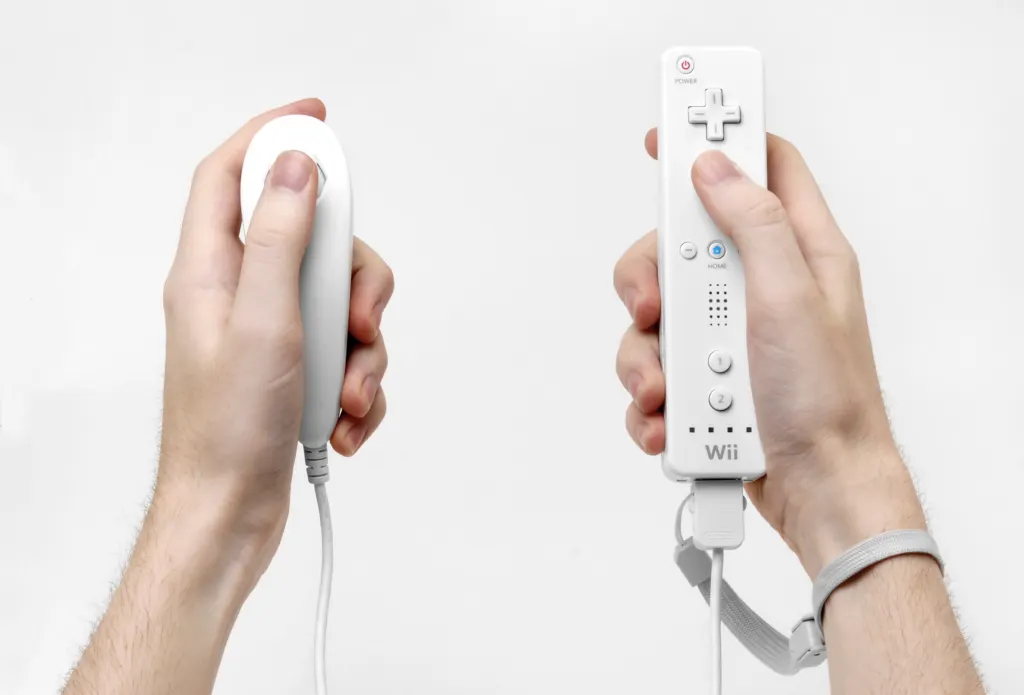
Twenty years ago this week, on November 19, 2006, Nintendo put the Wii on sale in North America for $249.99, and a small white box with a wand-like remote went on to sell 101.63 million units. That lifetime total comes from Nintendo’s own investor relations sales table, which still lists the console beside the Switch and the new Switch 2.
Japan followed on December 2 at 25,000 yen, Australia on December 7 and Europe on December 8. Shoppers queued, stock ran short in several markets, and within a year the Wii had become the best-selling console of its generation.
A console built to be cheap and different
Under president Satoru Iwata, Nintendo chose not to chase Microsoft’s Xbox 360 or Sony’s PlayStation 3 on raw graphics power. Shigeru Miyamoto and Genyo Takeda led a project first code-named Revolution, and the bet was on a new way to play rather than a faster chip, as the Wikipedia history of the Wii lays out.
The centerpiece was the Wii Remote. An accelerometer read how the controller was tilted and swung, while an infrared camera at its tip tracked LEDs in a Sensor Bar placed by the TV. In the bowling game bundled with the console, the way a player turned their wrist changed the spin on the virtual ball.
The name itself drew jokes when it replaced Revolution in 2006. Nintendo of America’s then-president Reggie Fils-Aimé defended it as short, distinctive and easy to say in any language.
Wii Sports and the living-room boom
Wii Sports, packed in with the console in most regions, became its defining game, with 82.9 million copies counted. Mario Kart Wii was the best seller sold on its own, at 37.3 million. Wii Fit and its Balance Board arrived in December 2007 and pulled in players who had never owned a console before.
The Wii was also Nintendo’s first console with built-in internet access. Players could download older games through the Wii Shop Channel and make cartoon avatars called Miis, which Nintendo still uses today.
The numbers, two decades on
Nintendo’s table also lets us put the Wii’s run in perspective. Owners bought 921.85 million Wii games, which works out to roughly 9 games for every console sold (921.85 divided by 101.63). The Wii outsold the GameCube before it, at 21.74 million, by about 4.7 to 1, and its own successor, the Wii U, at 13.56 million, by about 7.5 to 1. Only the Nintendo DS family, at 154.02 million, and the original Switch, at 157.20 million, have done better among Nintendo hardware.
The Wii’s influence spread past Nintendo too: Microsoft’s Kinect and Sony’s PlayStation Move were both answers to its motion controls. Critics argued the focus on casual players pushed away longtime fans, a gap the Wii U tried and failed to close.
How it wound down
- 2013: production ended in Japan on October 20 and in Europe on October 24, while the stripped-down Wii Mini kept going for a few more years.
- June 2013: the WiiConnect24 service and its channels closed.
- May 2014: online play through Nintendo Wi-Fi Connection ended.
- January 2019: the Wii Shop Channel closed, ending its online services.
Nintendo’s latest console history is covered in our look at how Ocarina of Time has come to every Nintendo home console, and the company’s effort to preserve its past shows in Nintendo of America’s search for a digital archivist. More console stories sit in Badiyaa’s gaming section.
As of Nintendo’s September 30, 2026 figures, the Wii’s lifetime count stands at 101.63 million consoles.
Sources
- Dedicated Video Game Sales Units, Nintendo Co., Ltd. Investor Relations, 2026
- Wii, Wikipedia, 2026
Image: Evan-Amos, Public domain via Wikimedia Commons
This article was produced with AI assistance and reviewed by our Editorial Desk. How we work.