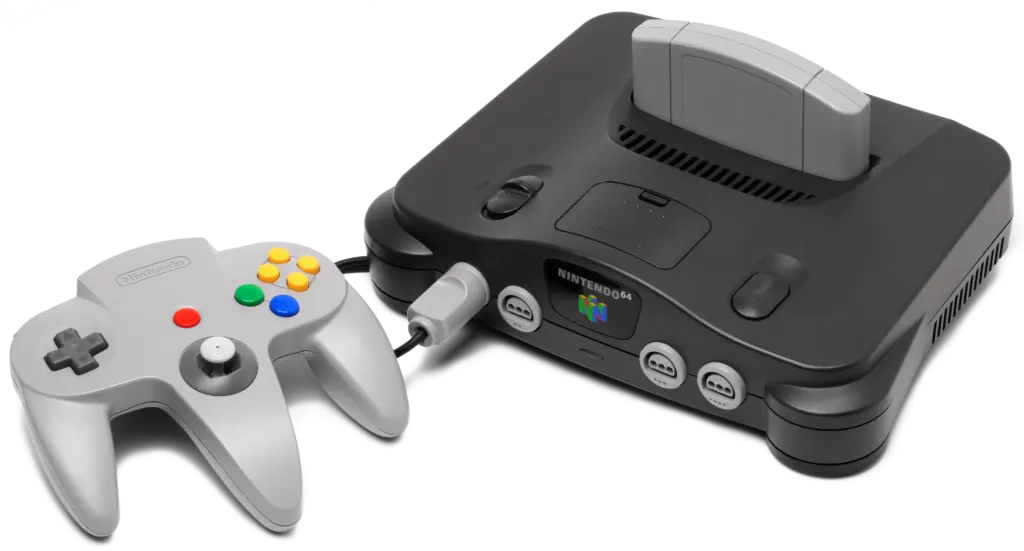
The Legend of Zelda: Ocarina of Time has now appeared on every home console Nintendo has made since 1998, and the newest version, a full remake for Nintendo Switch 2, went on sale on November 5, 2026. That makes Link’s time-travel quest one of the most re-sold games in the company’s history, with two ground-up remakes, several emulated ports and a harder remix that started life on an abandoned disk drive.
The Switch 2 edition is the third time Nintendo has rebuilt the game from scratch. It gives characters full voice acting in cutscenes, a camera players can swing freely, and the ability to sprint and jump on command, three things the 1998 original never allowed. We compared those changes in detail in our side-by-side look at the Switch 2 remake and the N64 classic.
Every version of Ocarina of Time, in order
- Nintendo 64, November 1998. The original cartridge launched in Japan on November 21 and in North America two days later. US pre-orders topped 500,000, a Guinness world record at the time.
- GameCube, 2002 to 2003. An emulated copy shipped on a bonus disc for people who pre-ordered The Wind Waker, paired with Master Quest. It ran at 640 by 480, double the N64 resolution.
- iQue Player, November 2003. A Chinese plug-and-play console got the game as one of its five launch titles.
- Wii Virtual Console, February 2007. A download for 1,000 Wii Points, without rumble, which left the Stone of Agony item useless.
- Nintendo 3DS, June 2011. Ocarina of Time 3D, the first remake, built with the Japanese studio Grezzo. It added touchscreen and gyroscope controls, a Boss Challenge mode and an easier Water Temple.
- Wii U Virtual Console, July 2015. This time with controller vibration restored.
- Nintendo Classics on Switch, October 2021. The N64 version joined the subscription library.
- Nintendo Switch 2, November 2026. The second full remake.
Master Quest: the version that waited four years
The oddest branch of the family tree is Master Quest. After finishing the original, Nintendo built a harder remix called Ura Zelda, roughly “Another Zelda”, for the 64DD, a disk add-on for the N64 that barely sold. Ura Zelda kept the story but rearranged dungeons and puzzles, in the spirit of the second quest hidden in the 1986 Legend of Zelda.
Nintendo shelved it because so few people owned a 64DD and pressing it on cartridges was too costly. It finally surfaced on GameCube discs in 2002 in Japan and 2003 in the West, and it came back again inside the 3DS remake.
Why Nintendo keeps returning to it
The numbers explain a lot. The N64 cartridge sold about 7.6 million copies worldwide and earned roughly $150 million in the US in the last 39 days of 1998 alone. It also introduced Z-targeting, the lock-on system that most 3D action games still copy, and context-sensitive buttons that change what one press does depending on where Link stands.
Its reputation has outlived every hardware generation. Ocarina of Time held the top score on Metacritic, 99 out of 100, for more than a quarter of a century, until Grand Theft Auto VI matched it this week; we covered that tie in our story on GTA 6 scoring 99 alongside Ocarina of Time.
What the count looks like now
Counting only releases Nintendo sold or gave away, that makes eight distinct ways to play the game across 28 years: one original, three emulated console ports, one Chinese port, one subscription release and two remakes. Fans have also built their own: in March 2022 a group called Harbour Masters released Ship of Harkinian, an unofficial PC port made possible after enthusiasts decompiled the N64 code into readable C in November 2021.
The Switch 2 remake has already found a big audience. Nintendo reported 5.2 million copies sold in its first four days, as we reported in our story on the Ocarina of Time remake’s opening sales. Saturday, November 21, marks 28 years since the first cartridge went on sale in Japan.
Further reading
Image: Evan-Amos, Public domain via Wikimedia Commons
This article was produced with AI assistance and reviewed by our Editorial Desk. How we work.