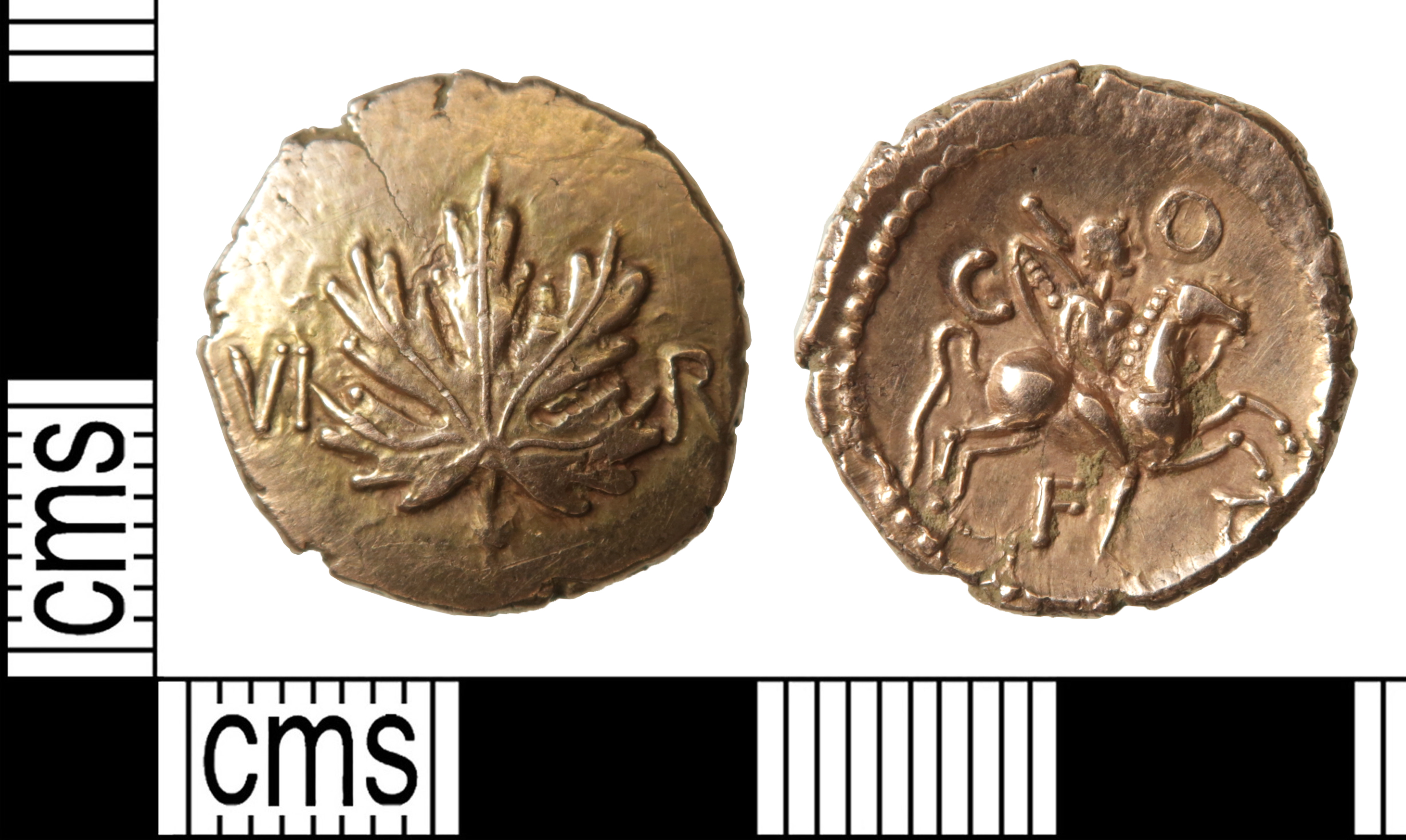
The British ruler whose flight to Rome gave Emperor Claudius his excuse to invade Britain may not have been a king at all. Bournemouth University archaeologist Miles Russell argues that Verica, long recorded as a man who led the Atrebates of southern England, was a woman, and this month he set out the case again in a new article that has reopened the debate.
If Russell is right, a woman, not a man, set in motion the Roman conquest of Britain in AD 43, years before the better-known revolt of Boudica.
Who Verica was
Verica ruled as a client of Rome in the decades before the invasion, from about AD 15 to about 42, according to Wikipedia's entry on Verica. Coins issued in Verica's name suggest a realm covering roughly modern Sussex and east Hampshire, with a capital at or near what later became Roman Chichester. Rome recognized Verica with the title rex. The Roman historian Cassius Dio describes a ruler he calls "Berikos", widely taken to be Verica, fleeing Britain for the court of Claudius after a revolt. Because Verica was formally an ally of Rome, that exile handed Claudius a reason to send in his legions.
The three clues
Russell's argument rests on three points, as summarized in the same entry:
- The name. Verica ends in -a, an ending that usually marks a female name.
- The coins. Some of Verica's coinage shows a topless rider on horseback, which Russell reads as a female figure.
- The title. Verica's coins use rex, part of the phrase rex sociusque et amicus, which Russell treats as a title Rome gave to client rulers of either sex.
The idea that Verica was male, in his view, comes from assumptions made by 19th-century historians rather than from the evidence itself.
Not everyone is convinced
Classicist Roger Tomlin has pushed back, arguing there is no evidence that Rome ever called a female client ruler rex, and he compared reading gender off a coin's horseman to claiming Queen Victoria was a man because her gold coins show a male rider slaying a dragon. Historian Daphne Nash, meanwhile, has pointed out that some of Verica's coins show a figure with an Adam's apple dressed in male priestly clothing. Verica's father is usually given as Commius and a brother as Eppillus, but no surviving text from the period states Verica's sex outright.
Britain's other ruling women
A female Verica would not be alone. Within a generation of the invasion, two British women held real power. Cartimandua ruled the Brigantes of northern England from around AD 43 to 69, and the Roman historian Tacitus records her handing the resistance leader Caratacus to Rome in chains, as Wikipedia's entry on Cartimandua notes. Boudica, queen of the Iceni, led a revolt in AD 60 or 61 that burned Camulodunum, Londinium and Verulamium, according to Wikipedia's entry on Boudica.
The timeline, counted out
Set the dates in a row and Verica's place becomes clear. Verica's reign runs roughly 27 years, from about AD 15 to 42. The expulsion comes in 42, one year before Claudius lands in 43. Boudica's revolt follows about 18 years after that invasion. If Verica was a woman, that makes three women at the center of the first two decades of Roman Britain: one who invited the Romans in, one who worked with them, and one who tried to throw them out.
Coins are the main physical trace Verica left, and finds keep turning up across southern England; Badiyaa has covered another famous haul in the Hoxne Hoard of 14,865 Roman coins found in Suffolk, and more ancient lives read from physical evidence in medieval teeth from England's Peak District.
For now the question stays open: the answer will have to come from more coins, or from a new reading of the scraps of Roman text that mention a ruler called Berikos.
Sources
- Verica, Wikipedia, 2026
- Cartimandua, Wikipedia, 2026
- Boudica, Wikipedia, 2026
Image: Hampshire Cultural Trust, Katie Hinds, CC BY 2.0 via Wikimedia Commons
This article was produced with AI assistance and reviewed by our Editorial Desk. How we work.