Tropical rainforests cover a thin band around the equator, yet they are home to an estimated 40% to 75% of all species on Earth, including about two-thirds of flowering plants. How they became so crowded with life is still one of biology's open questions.
The numbers are hard to picture. According to Wikipedia's tropical rainforest entry, a single hectare, about two and a half acres, can hold 42,000 insect species, up to 807 trees from 313 species and 1,500 species of higher plants. Many millions of plants, insects and microbes are thought to be still undescribed.
Old forests, younger species
Rainforests themselves are ancient. They have existed for hundreds of millions of years, and most of today's sit on fragments of the old supercontinent Gondwana. Australia's Daintree is thought to be about 180 million years old, older than the Amazon, according to London's Natural History Museum.
Many of the species living in them are far younger. Genetic evidence suggests that some groups split into new species 1 million to 2 million years ago. By Badiyaa's math, 2 million years is just over 1% of the Daintree's estimated age, so a lot of rainforest life has turned over many times inside forests that stayed put.
Three ideas for why the tropics are so diverse
- Competition and niche splitting. With so many similar species packed together, losers either die out or find a new niche: a different food, habitat or feeding time. Two birds that eat the same fruit at different hours are one example.
- Pleistocene refugia. In 1969 the ornithologist and geologist Jürgen Haffer proposed that during ice-age dry spells the Amazon broke into forest islands separated by open country. Bird populations stranded in those refuges evolved apart, then the forest rejoined. The idea is still debated, partly because the genetic dates for some species split before the Pleistocene began.
- Disturbance. Volcanism, shifting rivers, storms and climate change have repeatedly broken habitats apart, and the fossil record credits those events with encouraging new species and local endemics.
Layers of life, from canopy to floor
Rainforests are stacked. Emergent trees reach 45 to 55 meters, occasionally 70 to 80. Below them, the canopy acts like a green roof that blocks about 95% of sunlight. The forest floor gets less than 2%.
That floor is a recycling plant. "The microorganism world in a tropical rainforest is so high, so rich, so diverse, and these organisms are recycling and turning things back to nature," said Gothamie Weerakoon, the Natural History Museum's senior curator of lichens and slime moulds, in the museum's guide. She warned that without fast decay, fallen matter could pile up several meters in a year.
A shrinking library
The museum reports that the world lost a record 67,000 square kilometers of primary rainforest in 2024. By our calculation, that is about 184 square kilometers a day, or close to 13 hectares every minute. The Amazon alone, covering more than 6 million square kilometers, may hold 10% of the world's known plant and animal species.
Recent research keeps adding detail. Badiyaa has reported on a study of 2.7 million trees showing tropical trees help their neighbors and on a rainforest butterfly that turned out to be three species, a reminder of how much of this diversity is still being sorted out.
Sources
- Tropical rainforest, Wikipedia, 2026
- Tropical rainforests: Earth's richest ecosystems, Natural History Museum, London, 2025
- Jürgen Haffer, Wikipedia, 2026
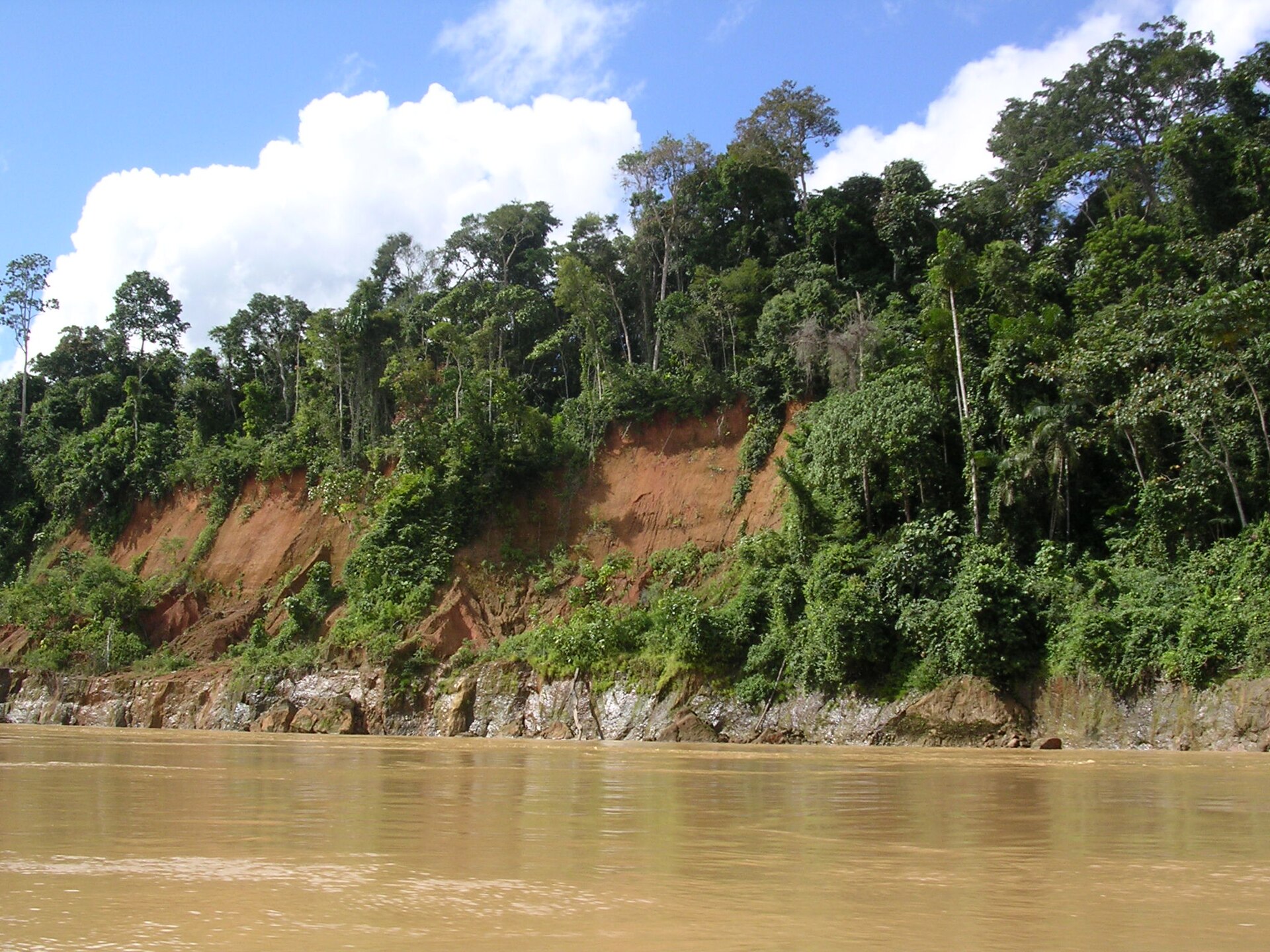
Image: Roosevelt Garcia, Public domain via Wikimedia Commons
This article was produced with AI assistance and reviewed by our Editorial Desk. How we work.