Tires are mostly air, and shipping air is expensive. That simple problem is behind a clip titled “Stacking and compressing tires for shipment,” which climbed Reddit’s r/Damnthatsinteresting on November 17 as viewers watched round, springy tires get packed into tight, interlocking blocks.
The post does not say where it was filmed or which method the workers use, and Badiyaa could not play the video itself. But the tire trade has a small toolkit of tricks for squeezing more rubber into a truck or shipping container, and each one exists for the same reason: the empty hole in the middle of a tire takes up space that a freight company still charges for.
Trick one: lacing
Lacing is the move that looks most like magic. Instead of standing tires in neat rows, workers tilt each one so it leans into the opening of the tire beside it, building an interlocked pattern that resembles a woven basket or a fallen row of dominoes. Every tire partly fills its neighbor’s hole.
Martin Depelteau, president of the tire-rack maker Martins Industries, who says he has visited more than 500 tire warehouses, has listed what that gains and costs. Lacing saves up to 25 to 30 percent of storage space compared with other methods, and the interlocked tires hold each other steady. The catch: it only works with identical tires of the same product code, loading takes longer, counting stock is harder, and tires can be damaged if they sit squeezed in that position for too long.
Trick two: the barrel stack
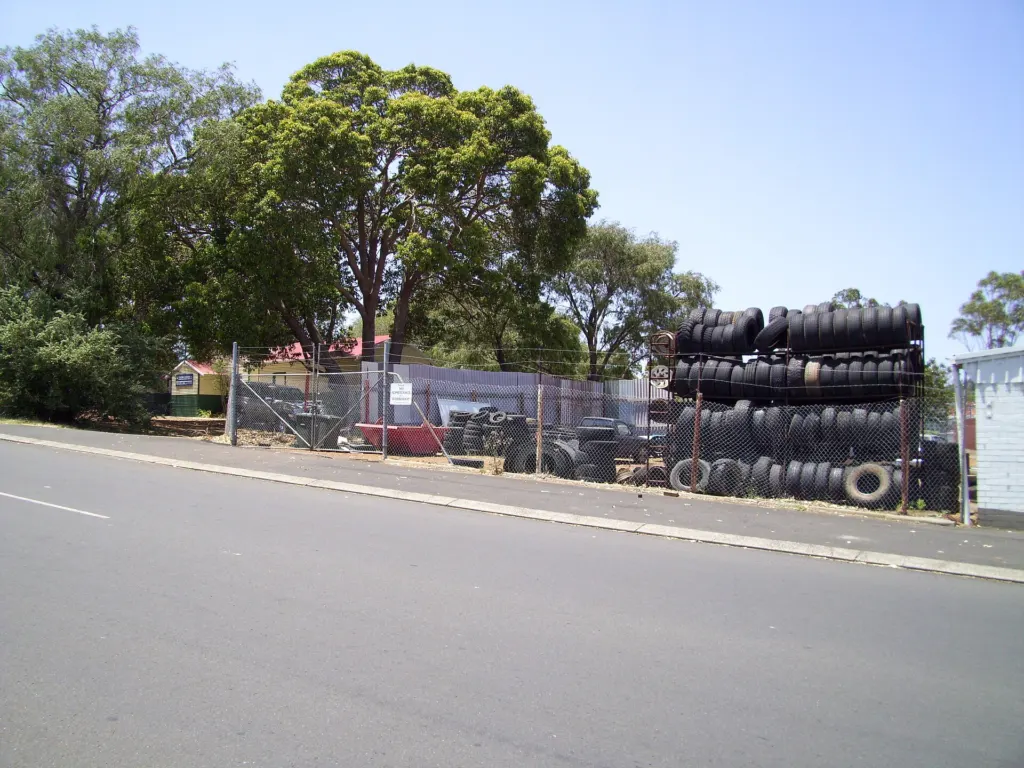
The most common and cheapest option is to lay tires flat and pile them into tall columns, often called barrel stacks. They use vertical space well and are quick to load. Depelteau’s list notes the downside: tall stacks can wobble and topple when racks move, and the tires at the bottom can develop flat spots if they stay under the weight for too long.
Trick three: tripling
For long voyages, some shippers go further and push tires inside one another. Tire tripling means forcing two tires inside a third, so three travel in the space of one. A 2010 trade report put the gain in plain numbers: a standard container that normally holds around 1,600 tires can take up to 3,500 once they are tripled. The method was long done by hand, which is exhausting work, and the report said bent beads and shoulders often left manually tripled tires damaged. Machine makers responded with air-powered presses that can triple a tire every 30 seconds.
The math behind the squeeze
Here is why shippers bother. If a container costs the same to move whether it holds 1,600 tires or 3,500, then each tire’s share of the freight bill drops to 1,600 divided by 3,500, or about 46 percent of what it was. That is a saving of roughly 54 percent per tire, before any extra handling cost.
The limit is the tire itself. A modern tire is built from natural and synthetic rubber wrapped around fabric and steel cords, and its bead, the edge that seals against the wheel rim, is reinforced with steel cables that resist stretching. Squeeze too hard and that bead can kink, which is why lacing and tripling are done with care, or by machine.
Old tires have second lives too: Badiyaa has covered a 1990 Wisconsin test road built over shredded tires, and for tires moving at the other extreme of speed, see how Formula One crews now change all four in under two seconds.
The next time a delivery truck pulls up to a tire shop, look inside: if the tires are leaning into one another like a row of slanted coins, someone has laced them.
Stacking and compressing tires for shipment
byu/RampChurch inDamnthatsinteresting
Further reading
Image: Evad37, CC0 via Wikimedia Commons
This article was produced with AI assistance and reviewed by our Editorial Desk. How we work.