For years, one Reddit user owned the perfect noodle pot: round, single-serving and exactly the width of a block of Samyang’s Buldak noodles. Then, they say, the noodles went square. Their before-and-after photos, posted to r/mildlyinfuriating on November 9, became one of the most-viewed posts on Reddit’s front page the next day.
“Years of a perfectly sized noodle pot, ruined by a noodle redesign,” the poster wrote under the title “Had the perfect pot for my instant noodles. Then Samyang changed the shape of their noodles.”
Round, then square, then a fight in the comments
The poster later added details. The Buldak noodles they used to buy were round, they said, and “a year or two ago turned to square.” To show how snugly a round block used to sit in the pot, they photographed a different round brick, a pack of Chapagetti, which they said still fits, as does Shin Ramyun.
That substitution set off the argument. Some readers spotted the Chapagetti packet and accused the poster of misleading people, insisting Samyang’s Buldak blocks had always been rectangular. The poster answered with a joke: “I woke up today and chose to gaslight Reddit about noodles. My villainy knows no bounds.”
Others backed the poster up. One longtime buyer said they clearly remembered the switch from circle to square about two years ago. Several readers argued the answer depends on the flavor: in their telling, Buldak’s Cream Carbonara has been sold as a round disk while the regular Carbonara is a rectangle, and at least one person said their recent Cream Carbonara packs had also turned up square. Readers in Denmark, Poland and elsewhere in Europe said theirs had always been square, while a buyer in the UK reported a round pack bought the day before. One commenter concluded it was probably regional, or down to which factory made the batch.
Samyang has not commented on the thread, and we could not confirm whether the company changed the shape of any product.
Why noodle blocks come in different shapes
The shape of an instant noodle block is a factory decision as much as a design one. In a typical line, dough is pressed between rollers into a long sheet, folded and rolled again to build a chewy texture, then cut into strands. Rotating slitters and a slow conveyor give the strands their trademark waves. The noodles are steamed for one to five minutes, then dried, usually by frying in oil at 140 to 160 degrees Celsius (284 to 320 Fahrenheit) for a minute or two, which cuts their moisture from as much as half their weight to a few percent.
The block takes the shape of whatever holds the noodles while they dry. One commenter who described working knowledge of the process argued that square blocks are simpler to make, because strands can be folded and cut onto a conveyor, while round ones need to be dropped into round pans first. That is one reader’s explanation rather than anything Samyang has said, but it matches a reality buyers see on the shelf: most noodle bricks are rectangular.
A small fight over a big brand
Samyang has a lot riding on Buldak. The Seoul company made Korea’s first instant noodle in 1963 and launched Buldak Spicy Chicken Ramen in 2012; the line took off on YouTube and later through the “Fire Noodle Challenge.” Its revenue doubled between 2022 and 2025 to roughly $1.5 billion, and the company opened a fourth ramen factory in June 2025 with capacity for 100 million units a year.
Instant noodles are an everyday food on a vast scale. About 103 billion servings were eaten worldwide in 2018, and South Koreans eat more per person than anyone, around 75 servings each a year. With that much ramen in circulation, a few millimeters of corner can annoy a lot of cooks.
Readers offered fixes ranging from a rectangular tamagoyaki pan to simply snapping the corners off. One wrote: “Years of optimized kitchen workflow destroyed in one boardroom meeting.” More strange stories from around the internet are on our Offbeat page.
Further reading
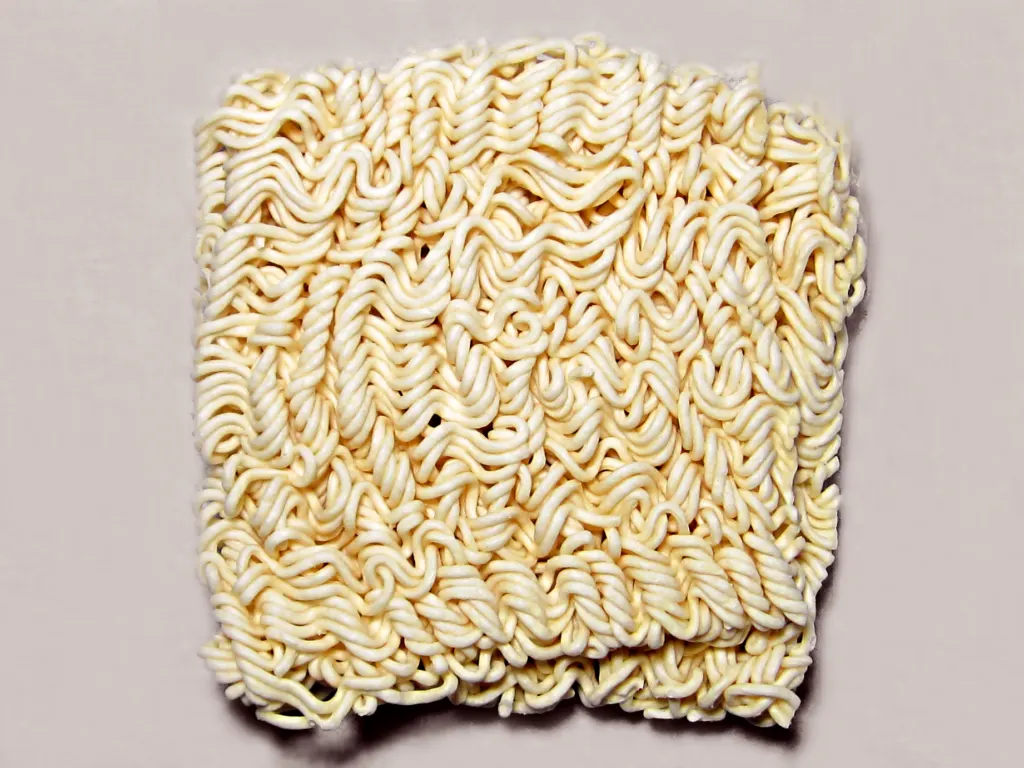
Illustrative image. Image: Ninosan, CC0 via Wikimedia Commons
This article was produced with AI assistance and reviewed by our Editorial Desk. How we work.