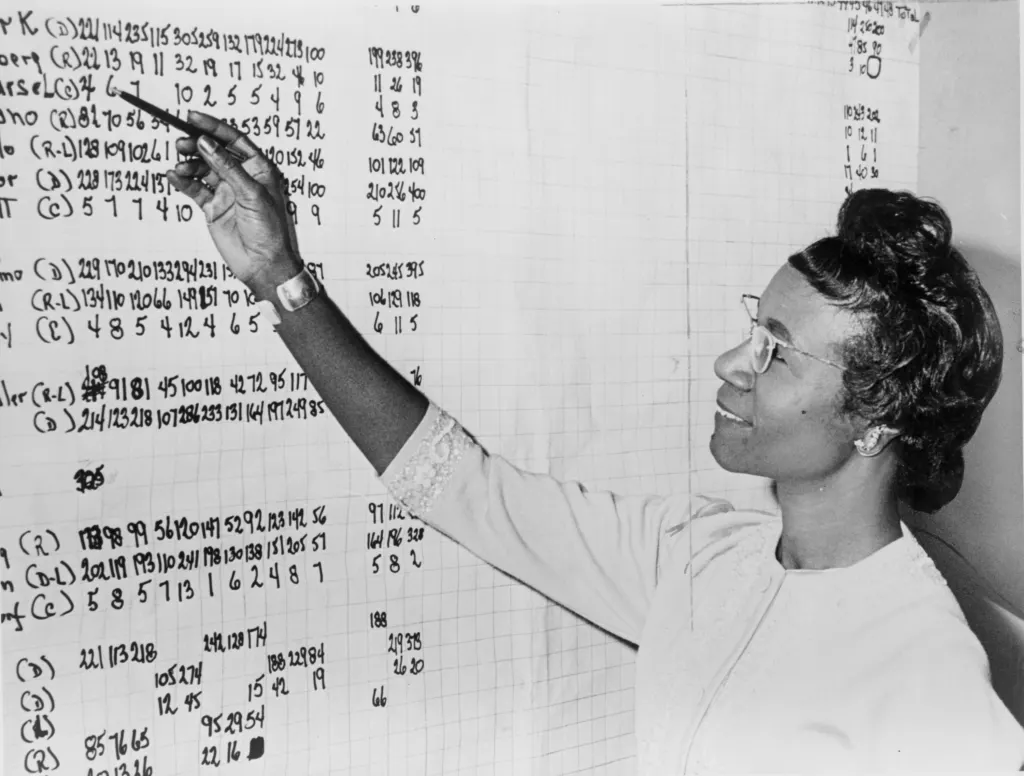
“I am not the candidate of black America, although I am black and proud.” Shirley Chisholm said those words on January 25, 1972, in a Baptist church in her Brooklyn congressional district, as she formally announced that she was running for the Democratic presidential nomination.
The full passage, as recorded in the Wikipedia biography of Shirley Chisholm, runs: “I am not the candidate of black America, although I am black and proud. I am not the candidate of the women’s movement of this country, although I am a woman and equally proud of that. I am the candidate of the people and my presence before you symbolizes a new era in American political history.”
Unlike some of the lines attached to her name, this one has a clear date, place and occasion. That makes it a useful contrast with the “bring a folding chair” line, which first reached print weeks after her death in 2005.
Why she framed it that way
Chisholm had been the first Black woman elected to Congress in 1968, and by 1972 she was both a founding member of the Congressional Black Caucus and a well-known voice for women’s rights. The announcement anticipated the two boxes others would put her in, and stepped out of both. In the same speech she called for a “bloodless revolution” at that summer’s Democratic convention.
Her campaign made her the first Black candidate to seek a major party’s presidential nomination, and the first woman to seek the Democratic one.
The 1972 run in numbers
- $300,000: roughly what the whole campaign spent.
- 12: primary ballots that carried her name, according to the US House of Representatives’ official history of Chisholm.
- 3.5 percent: her share in the March 14 Florida primary, where she finished seventh.
- 157,435: votes in the June 6 California primary, her biggest single total.
- 430,703: votes across the whole primary season, 2.7 percent of nearly 16 million cast.
- 152: first-ballot delegate votes at the July convention in Miami Beach, which the House history puts at about 10 percent of the total.
In June 1972 she also became the first woman to take part in a US presidential debate.
What she said about the odds
Chisholm never claimed she expected to win. Looking back, she said she had run “in spite of hopeless odds … to demonstrate the sheer will and refusal to accept the status quo,” a line also preserved in her Wikipedia biography.
She was candid about what she faced inside her own coalition, too. The House history quotes her verdict from the campaign trail: “Black male politicians are no different from white male politicians. This ‘woman thing’ is so deep. I’ve found it out in this campaign if I never knew it before.”
Read side by side, the announcement and that later remark show the same idea from two directions: she refused to be anyone’s single-issue candidate, and she found that others kept trying to make her one.
The slogan on her campaign posters came from her first race for Congress, as Badiyaa traced in the story of how “Unbought and Unbossed” began as her 1968 Brooklyn motto. Those same two words were later inscribed on her vault at Forest Lawn Cemetery in Buffalo, New York.
Sources
- Shirley Chisholm, Wikipedia, 2026
- CHISHOLM, Shirley Anita, US House of Representatives: History, Art and Archives, 2026
Image: Roger Higgins, Public domain via Wikimedia Commons
This article was produced with AI assistance and reviewed by our Editorial Desk. How we work.