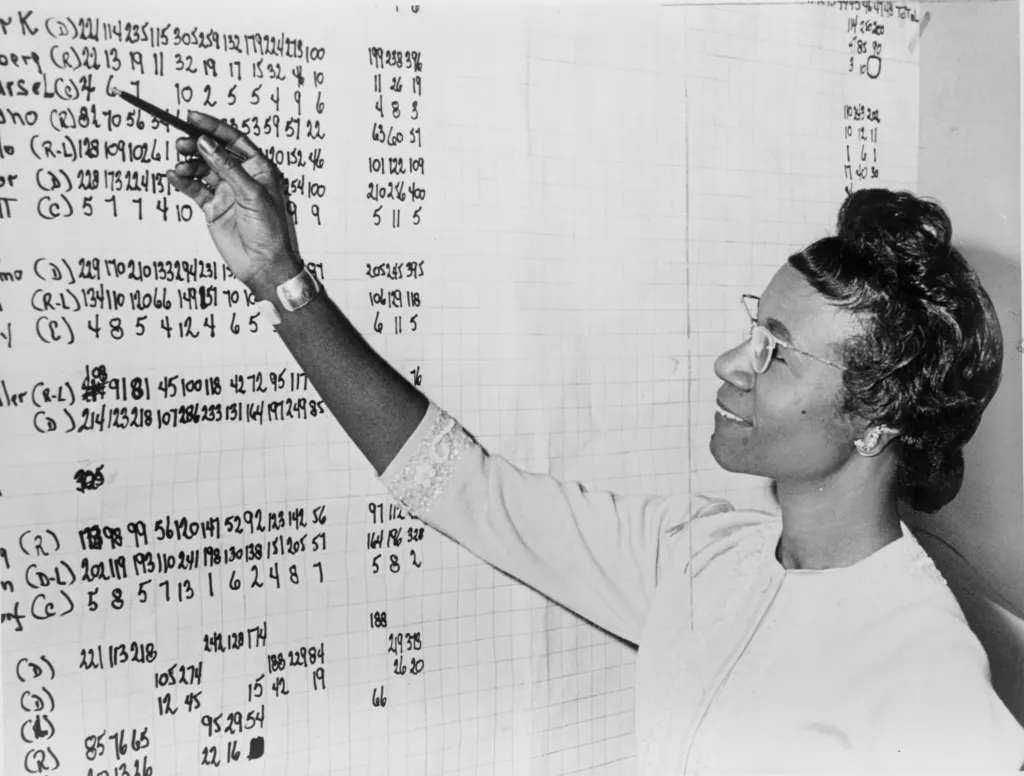
Four words cut into a vault at Forest Lawn Cemetery in Buffalo, New York, sum up Shirley Chisholm: “Unbought and Unbossed.” The phrase did not start as an epitaph or a book title. It began as the campaign motto of a Brooklyn schoolteacher-turned-legislator running for Congress in 1968, and it followed her for the rest of her life.
Where the slogan came from
The House of Representatives’ own history office places the motto in the 1968 race for a newly drawn Brooklyn district centered on Bedford-Stuyvesant. A court-ordered redistricting had created the seat, and the borough’s Democratic machine, led by Stanley Steingut, backed a different candidate in the primary, state senator William Thompson. Chisholm leaned instead on community organizers she had worked with for more than a decade, and beat Thompson by about 800 votes in mid-June.
That is the context that gives “unbossed” its bite. She had won without the party bosses. “Unbought” carried the other half of the promise: no one had paid for her.
She also campaigned loudly. A sound truck rolled up to housing projects while she announced, “Ladies and Gentlemen . . . this is fighting Shirley Chisholm coming through.” She explained the method herself: “I have a way of talking that does something to people.”
In November she faced James Farmer, the civil rights veteran who helped found the Congress of Racial Equality and helped organize the early-1960s Freedom Rides, now carrying both the Republican and Liberal nominations. Farmer argued the district needed “a man’s voice in Washington.” Chisholm turned that line against him and won with 67 percent of the vote, becoming the first Black woman elected to Congress.
From motto to memoir to monument
The phrase then took on a life of its own. A short timeline of where it shows up:
- 1968: campaign motto for the House race in Brooklyn.
- 1970: title of her autobiography, published by Houghton Mifflin in Boston.
- 1972: printed under her photo on posters for her run for the Democratic presidential nomination, reading “Vote Chisholm 1972 unbought and unbossed.”
- 2005: carved on her vault in Buffalo after her death on January 1, and used in the title of a documentary on her 1972 campaign by filmmaker Shola Lynch, which went on to win a Peabody Award.
- 2010: reissued as an expanded 40th anniversary edition of the book.
The 1970 book is also where she credits her childhood in Barbados, where she lived on her grandmother’s farm from age five to nine. “If I speak and write easily now, that early education is the main reason,” she wrote.
Did she live up to it?
Measured against her record, the motto holds up only in part, and Chisholm’s own allies said so. By the late 1970s some liberal critics in New York argued that her support for machine-backed candidates undercut the “unbossed” half of the motto. Her biographer Barbara Winslow offered a different reading: as a Black woman with no natural political base, Chisholm may have sided with party leaders to secure a platform for the progressive causes she cared about.
Both readings fit the facts. The words were a campaign promise first, and like most promises they look cleaner on stone than they did in Brooklyn clubhouses.
Badiyaa has traced another line often credited to her in our check on the “bring a folding chair” quote, and the longer story of Black representation in Congress begins with Hiram Revels and Blanche Bruce of Mississippi. The 1970 first edition of Unbought and Unbossed is listed in the House history office’s bibliography for anyone who wants to read her account in full.
Further reading
Image: Roger Higgins, Public domain via Wikimedia Commons
This article was produced with AI assistance and reviewed by our Editorial Desk. How we work.