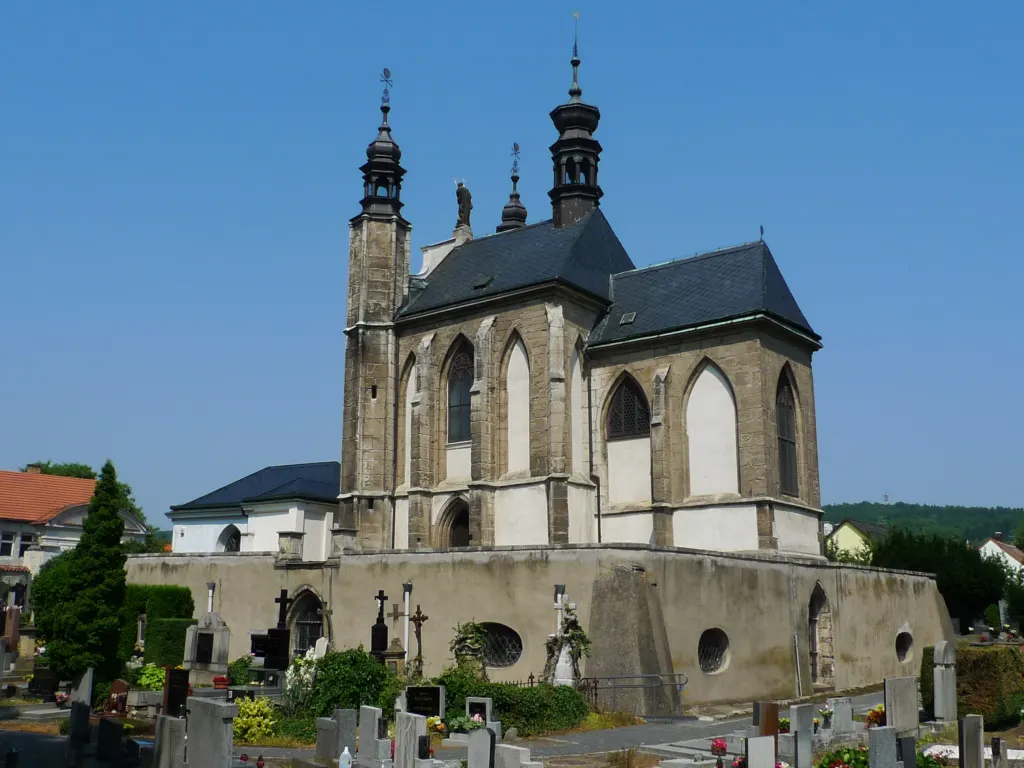
Somewhere between 40,000 and 70,000 people rest in a small chapel in the Czech Republic, and many of their bones have been turned into the furniture. The Sedlec Ossuary, in Sedlec, a suburb of the Czech town of Kutná Hora, has a chandelier that includes at least one of every bone in the human body. More than 200,000 visitors a year come to see it, and photos of the interior are circulating on Reddit again.
A pop culture landmark
Many of those visitors arrive already knowing the room from a screen. In Kingdom Come: Deliverance II, the player’s character visits the ossuary and stacks bones into pyramids, watched over by a legendary blind monk. Ewan McGregor and Charley Boorman stopped there in the travel documentary Long Way Round. It was a location for the Dungeons & Dragons movie and for Blood & Chocolate, and it drives the plot of John Connolly’s novel The Black Angel.
The first filmmaker to take it seriously paid for it. In 1970, a century after the bones were arranged, Jan Švankmajer shot a 10-minute documentary there that Czechoslovakia’s Communist authorities banned for alleged subversion.
Four centuries of practical reasons
Why are there so many bones in one place? It began with a handful of soil and ended with a woodcarver:
- 1278: King Ottokar II of Bohemia sends Henry, abbot of the Cistercian monastery at Sedlec, to the Holy Land. Henry returns with a little earth from Golgotha, the site of the crucifixion, and scatters it over the cemetery, which quickly becomes a sought-after burial ground across Central Europe.
- Mid-1300s to early 1400s: The Black Death and then the Hussite Wars fill the graveyard with thousands more, and it has to be greatly expanded.
- Around 1400: A Gothic church goes up in the middle of the cemetery, with a lower chapel to hold bones unearthed during building or cleared for new graves.
- After 1511: Legend says a half-blind monk takes on the task of exhuming skeletons and piling the bones in the chapel.
- 1703 to 1710: Architect Jan Santini Aichel rebuilds the upper chapel in the Czech Baroque style and adds an entrance to brace a front wall that was leaning outward.
- 1870: The noble Schwarzenberg family hires the woodcarver František Rint to bring order to the heaps.
Read in order, the dates explain the strangeness: the bones were gathered over roughly four centuries for practical reasons, and only in the final step, 1870, did anyone turn them into decoration.
What Rint made
The ossuary is a Roman Catholic chapel set beneath the Cemetery Church of All Saints, once part of Sedlec Abbey. Rint left four bell-shaped mounds in the corners and hung the chandelier from the center of the nave, with strings of skulls draped across the vault. He built piers and monstrances beside the altar and the Schwarzenberg coat of arms on a wall, all of bone. Near the door, he signed the work the same way.
The Czech lands keep yielding odd finds; Badiyaa reported how a stone propping up a barn in Morkůvky turned out to be a 3,000-year-old spearhead mold. Browse more on our Offbeat page.
Rint’s signature, spelled out in bone by the entrance, has now greeted visitors for more than 150 years since the chapel’s 1870 makeover.
Further reading
Image: H2k4, CC BY-SA 3.0 via Wikimedia Commons
This article was produced with AI assistance and reviewed by our Editorial Desk. How we work.