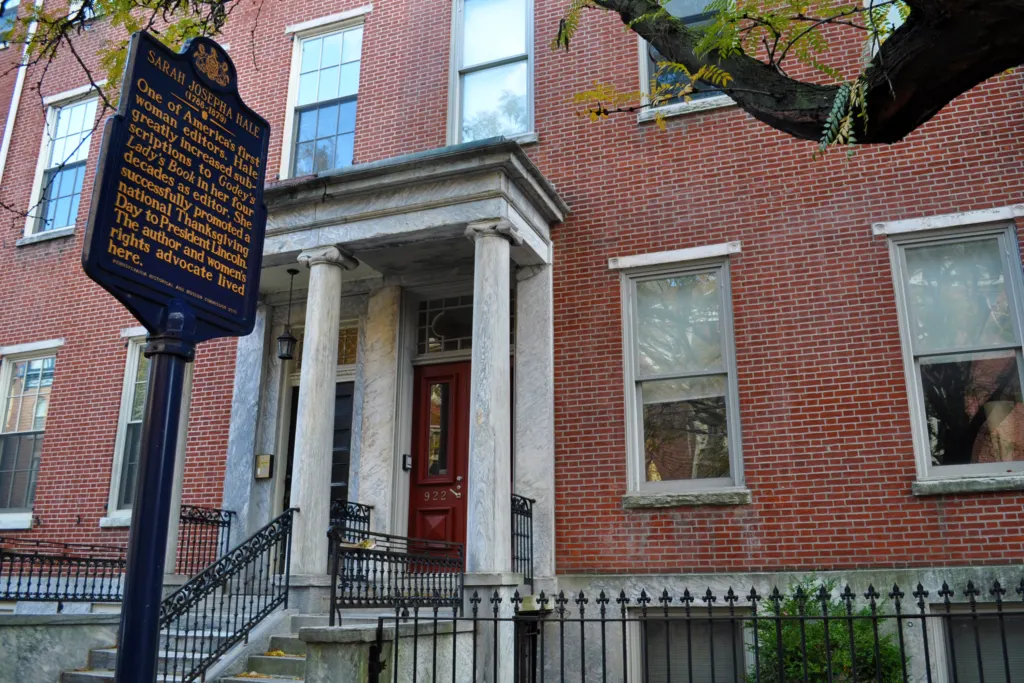
On September 28, 1863, a 75-year-old magazine editor in Philadelphia wrote to Abraham Lincoln asking for “a few minutes of your precious time.” Five days later, on October 3, Lincoln proclaimed the last Thursday of November a national day of Thanksgiving. The editor was Sarah Josepha Hale, and she had been asking presidents for that holiday since 1846.
The letter that tipped it
Hale’s letter, transcribed on Wikisource, is short and practical. Signing herself “Editress of the ‘Lady’s Book’,” she asked that Thanksgiving be made “a National and fixed Union Festival.” She explained that she had pressed the idea in her magazine for 15 years and sent it to the governors of every state and territory, to US ministers abroad and to Navy commanders. Getting each state to pass a law would take years, she wrote, so a presidential proclamation would be “the best, surest and most fitting method.”
She even supplied the date: the last Thursday in November, “which falls this year on the 26th.” And she asked for speed, so that the proclamation would reach the states before their governors fixed dates of their own.
Who wrote the proclamation
Hale told Lincoln she had already written to her friend William H. Seward, the secretary of state, asking him to raise the matter. That detail matters, because the National Park Service’s history of Lincoln and Thanksgiving says Seward drafted the October 1863 proclamation that Lincoln issued. The text invited Americans “in every part of the United States” to observe the day and to remember “widows, orphans, mourners or sufferers” of the Civil War, then three months past Gettysburg.
A 17-year campaign, in brief
- 1827: Hale’s first novel, Northwood, devotes a chapter to a New England Thanksgiving table.
- 1846: She begins urging a single national date, writing to presidents Taylor, Fillmore, Pierce and Buchanan without success.
- September 28, 1863: Her letter to Lincoln.
- October 3, 1863: Lincoln’s proclamation sets November 26 as the day.
- 1941: The holiday is fixed on the fourth Thursday of November.
Before 1863, states set their own dates, some in October and some as late as January, and the feast was little known in the South, according to Hale’s Wikipedia biography. Hale’s persistence earned her the nickname “Mother of Thanksgiving.”
The rest of her résumé
Hale edited Godey’s Lady’s Book for 40 years, building it into the most widely read magazine of the pre-war era, with more than 150,000 subscribers. She wrote “Mary’s Lamb,” the nursery rhyme Thomas Edison recited into his phonograph in 1877, a moment Badiyaa covered in our story on Edison’s phonograph. She raised money to finish the Bunker Hill Monument and backed women’s higher education, helping to found Vassar College.
Lincoln issued nine thanksgiving proclamations during the war, the NPS notes, but the 1863 one is treated as the holiday’s start because the country has kept the day every year since. For more on the Thanksgiving table, see how the turkey became America’s Thanksgiving bird, and for Lincoln’s other November 1863 text, the five handwritten copies of the Gettysburg Address.
Hale died in Philadelphia on April 30, 1879, two years after retiring from Godey’s at 89.
Sources
- Letter to Abraham Lincoln from Sarah Josepha Hale (September 28, 1863), Wikisource, 1863
- Lincoln and Thanksgiving, National Park Service, Lincoln Home National Historic Site, 2024
- Sarah Josepha Hale, Wikipedia, 2026
Image: Nick-philly, CC BY-SA 4.0 via Wikimedia Commons
This article was produced with AI assistance and reviewed by our Editorial Desk. How we work.