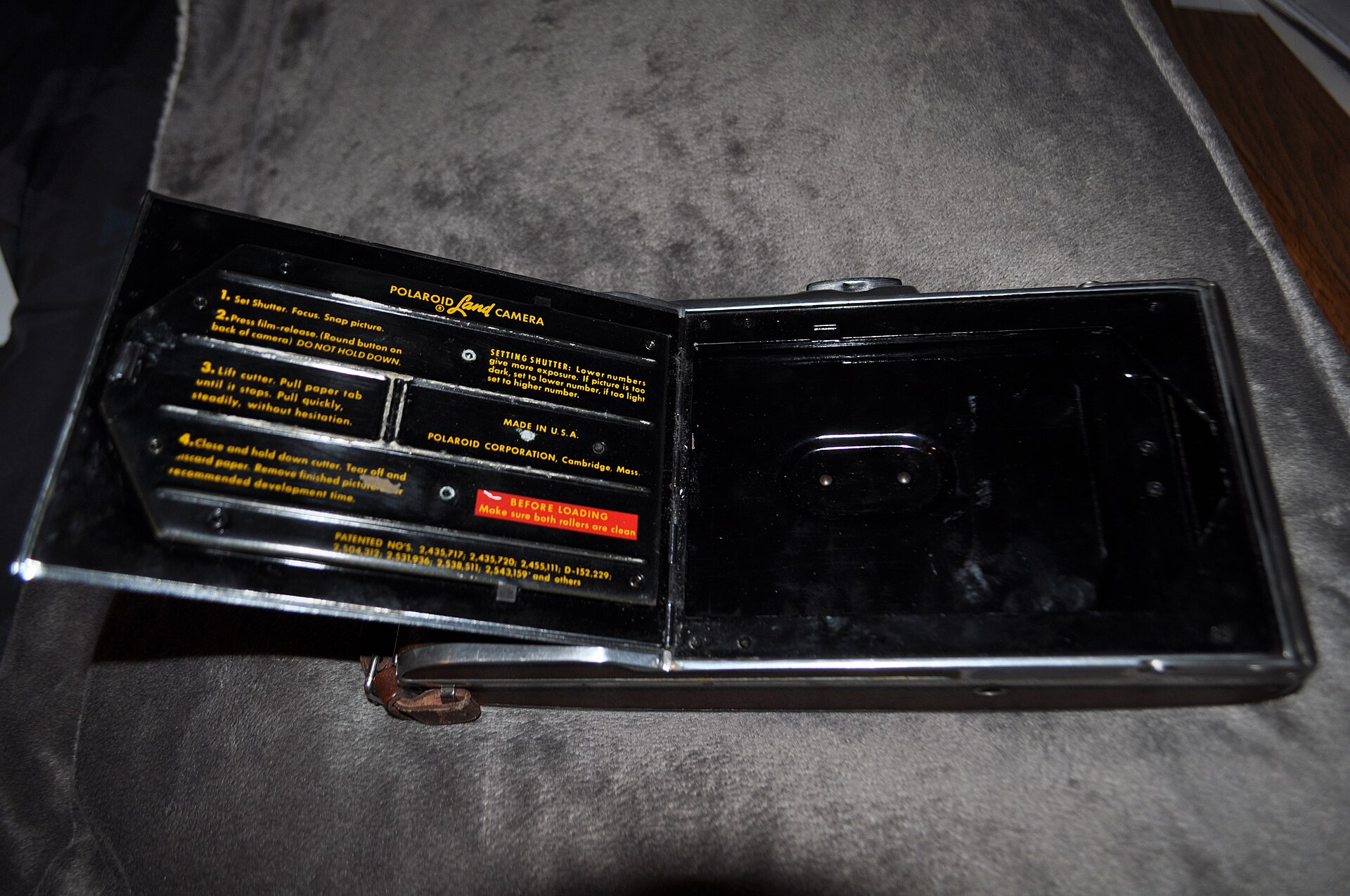
Polaroid's first instant camera, the Land Camera Model 95, went on sale to the public on November 26, 1948. This Thursday marks 78 years since shoppers could first take a picture and hold a finished print about a minute later, without a darkroom or a trip to a photo lab.
The camera carried the name of its inventor, the American scientist Edwin Land, who worked out his self-developing process between 1943 and 1947, according to Wikipedia's history of the Land Camera. He had shown instant film in New York City a year before the Model 95 reached stores.
A question from a child
The idea is usually traced to Land's daughter, Jennifer, who wanted to know why she could not see her photos right away. Wikipedia's instant camera article records her question as: "Why can't I see them now?" The Model 95 was his answer.
How the Model 95 made a print in a minute
The early camera used two rolls loaded side by side: a negative roll, and a roll of positive paper carrying small pods of chemical reagent. The steps went like this:
- The photographer exposed a frame of negative inside the camera.
- Pulling a tab dragged the negative and positive together through a pair of rollers, which burst a pod and spread the reagent evenly between the layers.
- Inside that "sandwich," the image moved from negative to positive by a process called diffusion transfer.
- After about a minute, the user opened a small door in the back and peeled the print away from the negative.
The first prints came out sepia toned. Black-and-white prints that followed had to be wiped with a fixing coat to stop them fading, a sticky chore that later film did away with.
From sepia to the SX-70: a timeline
- 1947: Land demonstrates instant film in New York.
- November 26, 1948: the Model 95 goes on sale.
- 1963: Polacolor pack film brings instant color, 15 years after the first camera.
- 1972: integral film arrives with the SX-70, which ejected a self-contained print with nothing to peel or time.
- 1982 to 1983: Land retires, and the "Land" name is dropped from new cameras.
- 1992: Polaroid stops making roll film, 44 years after the Model 95 used it.
Counted from the first sale, the Land Camera name stayed on Polaroid's cameras for 35 years.
Why it still shows up everywhere
Instant prints became tools as well as keepsakes. They were used for ID cards and passport photos, and film crews relied on them to check continuity between takes, as the instant camera entry notes. Artists including Andy Warhol and David Hockney built work around them.
The camera also left a mark on pop culture. Outkast's 2003 hit "Hey Ya!" told listeners to "shake it like a Polaroid picture," and the company responded by advising people not to, since shaking does not speed up drying and can damage the print. Instagram's original 2010 app icon closely resembled a Polaroid Land Camera 1000.
Badiyaa has looked at other everyday inventions with long tails, from how Denso Wave's QR code stores data to the first nickel jukebox in San Francisco, and at Microsoft's first Windows release in 1985.
Sources
- Land Camera, Wikipedia, 2026
- Instant camera, Wikipedia, 2026
Image: Gary600playsmc, CC BY-SA 4.0 via Wikimedia Commons
This article was produced with AI assistance and reviewed by our Editorial Desk. How we work.