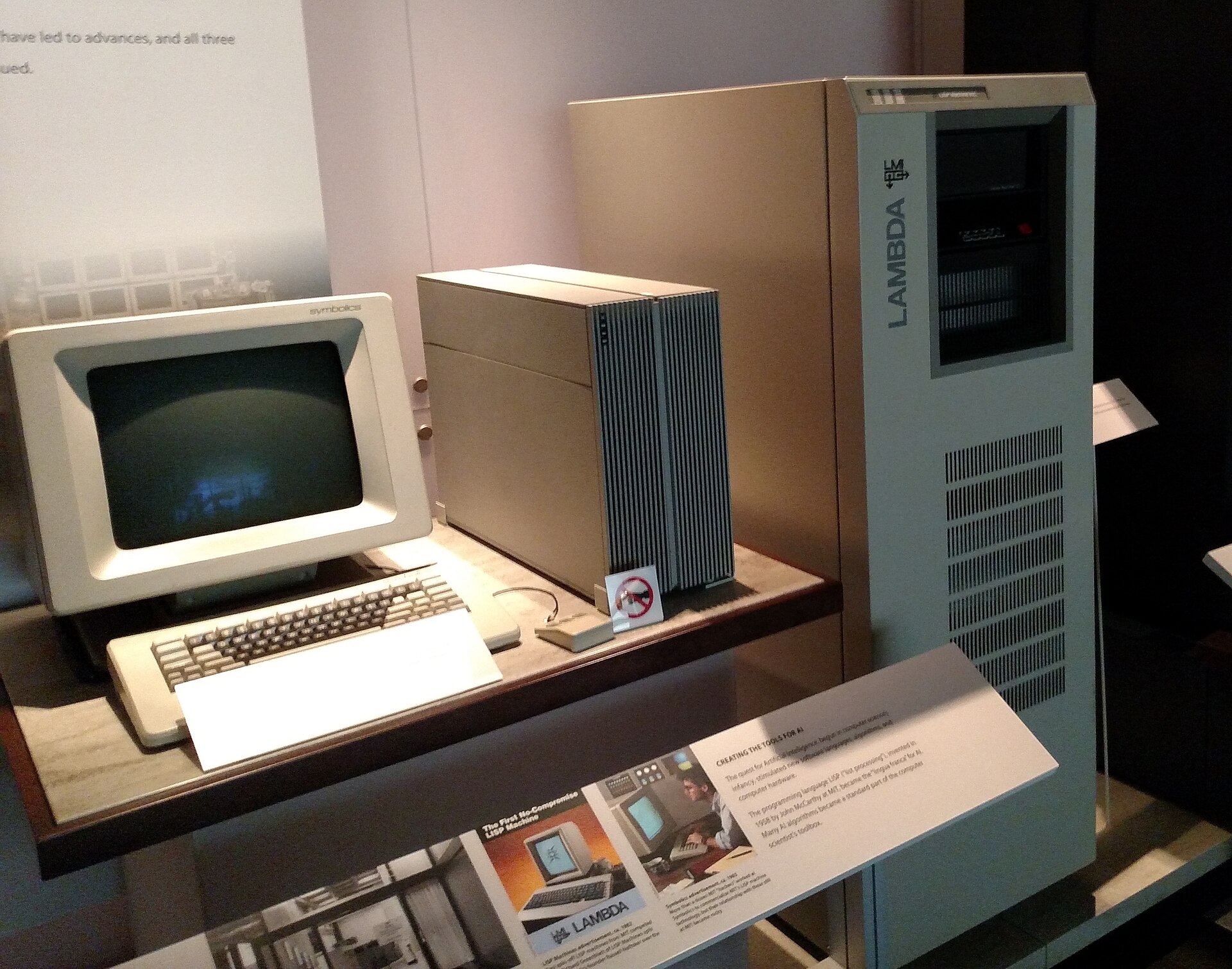
Mickey Petersen, the programmer behind the Mastering Emacs book and blog, has spent 15 months building an AI coding tool instead of the two or three he first budgeted. The result, DreamCoder, is now out, and Petersen says the software ended up writing itself inside itself.
In his DreamCoder launch post on Mastering Emacs, Petersen describes it as "a frontier coding harness with a tiling window manager that runs in your browser on all 3 platforms." He started in May 2025, after trying Claude Code shortly after its release, and set out to build something he felt was less cramped than a terminal window.
Why an Emacs veteran built a browser app
Petersen's public reputation rests on teaching people one of the oldest editors still in active development. Emacs began in 1976 at the MIT Artificial Intelligence Laboratory, according to Wikipedia's history of Emacs, and GNU Emacs reached version 31.1 in August 2026.
So the obvious question is why DreamCoder is not an Emacs package. Petersen addresses it head on, calling it "the 900 lb gnu in the room." His answer is reach: he wants a coding harness for everyone, and he writes that the world is still not ready for an Emacs-shaped future. He does promise future work combining DreamCoder and Emacs.
The Emacs fingerprints are everywhere anyway. Global commands sit behind Alt+x, a nod to Emacs's M-x. Pane-specific commands use Alt+c. Alt+m switches to a keyboard mode where WASD moves between panes. Full Emacs key bindings were planned but parked, because browsers block several key combinations Emacs relies on.
What DreamCoder does differently
Most AI coding tools look alike, Petersen argues: a sidebar of chat titles and one chat pane. DreamCoder instead treats chats, terminals, images and code reviews as tiles. Each pane has a minimum, comfortable and maximum size, and a constraint solver decides what fits. When there is no room, a pane slides into a hidden window bar, where hovering shows a live view.
The launch post lists the features he considers table stakes for a top-tier harness:
- Background sub-agents and shell commands, plus custom agents
- MCP server support, skills and hooks
- Workspaces that act like virtual desktops, each with a minimap that pulses while work runs and turns green when idle
- An importer for existing Pi, OpenCode or Codex configurations
- A claimed 99% cache hit rate and sessions that run for days
He also leans hard on local models. Petersen singles out Qwen 3.8 27B as "fantastically good for its size" and writes that small open-weight models have become surprisingly capable for local development compared with a year ago. Badiyaa covered the much larger end of that family when Alibaba released its 2.4-trillion-parameter Qwen3.8 model, and the push toward laptop-sized AI in Thinking Machines Lab's Inkling 2 Mini.
The history lesson in the middle
About half of the launch essay is not about DreamCoder at all. Petersen traces a line from John McCarthy's 1950s Advice Taker and the birth of LISP, through Warren Teitelman's ADVISE system, to the advice functions still inside GNU Emacs today. His point is that symbolic AI failed to produce intelligence but left behind flexible tools like LISP and Emacs, while neural networks, the camp once starved of funding, won.
That gives the launch a bittersweet tone. Petersen writes that he feels "a profound sadness" at having started DreamCoder by hand in Emacs, only to watch it write itself in DreamCoder. He calls it the most ambitious and technically complex project of his life.
What comes next
Petersen says his current focus is a pentesting and cybersecurity suite inside DreamCoder, where the AI probes endpoints and humans assess the findings. He sums up his design philosophy in one line: "Taste is a scarce, human resource." The time math is part of the story too: a tool he expected to finish in at most three months took five times as long.
The Mastering Emacs homepage now leads with the DreamCoder announcement, ahead of its guide to what changed in Emacs 31.1.
Sources
- Announcing DreamCoder, Mastering Emacs (Mickey Petersen), 2026
- Mastering Emacs, Mickey Petersen, 2026
- Emacs, Wikipedia, 2026
Image: Jason Riedy, CC BY 2.0 via Wikimedia Commons
This article was produced with AI assistance and reviewed by our Editorial Desk. How we work.