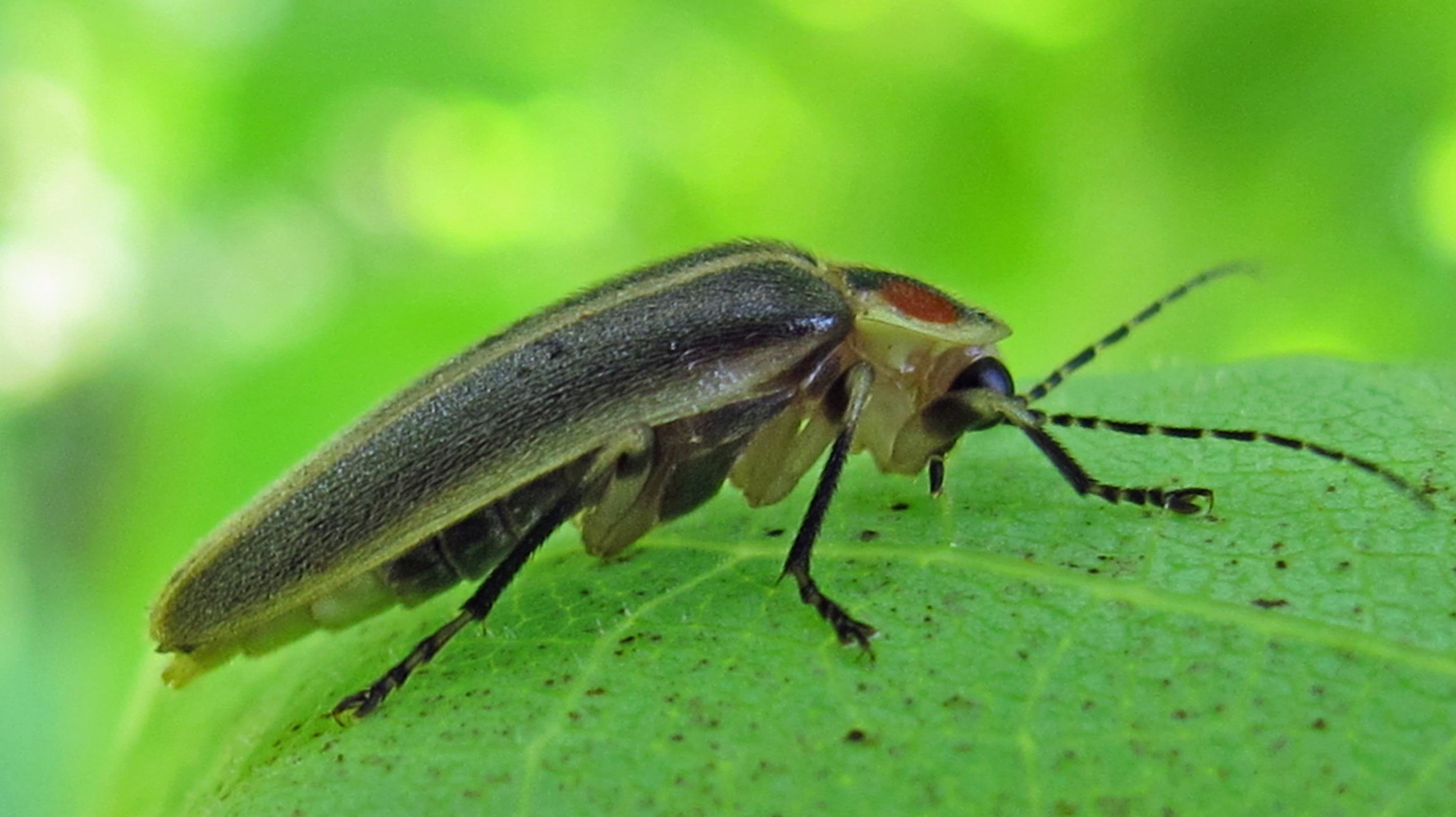
On a summer night in the eastern US, a male firefly flashes his best pickup line into the dark. A female in the grass answers with exactly the right reply. He drops in for the date. She eats him.
That is not a metaphor. Females of the firefly genus Photuris fake the flirting signals of another firefly's females, lure in the males and devour them. Scientists have a name for them that sounds like a film noir poster: firefly femmes fatales.
How fireflies flirt with light
Fireflies are beetles, and many of the 2,400-plus described species glow to find mates. The reference entry on fireflies explains that in lightning bugs such as Photinus, males cruise the air flashing a species-specific code, and the mostly flightless females answer from below with their own timed flash. Duration, rhythm, color and even the shape of the flight path all help each species recognize its own kind.
The light is a cold chemical glow made by the enzyme luciferase acting on luciferin. It probably began as a warning that firefly larvae taste bad, and was later borrowed for romance.
The 1965 paper that named the femmes fatales
Biologists had long known that Photuris females were carnivores. What nobody had actually watched was how they caught their dinner.
James E. Lloyd, then in Cornell University's Department of Entomology, filled the gap. His 1965 report in Science, titled “Aggressive Mimicry in Photuris: Firefly Femmes Fatales”, showed Photuris females attracting and eating Photinus males by mimicking the flash replies of Photinus females. The abstract notes the behavior had been suspected but “had not been observed previously.”
The trick is called aggressive mimicry: a predator imitating a signal its prey wants to see. Here the signal is a come-hither flash, which makes it about as ruthless as dating gets.
Why she wants him: the poison
Dinner turned out to be only half the motive. In 1997, a Cornell team led by the chemical ecologist Thomas Eisner reported in a study in the Proceedings of the National Academy of Sciences that Photuris females “gain more than nutrients” from their victims.
Photinus fireflies carry defensive steroids called lucibufagins, chemicals related to the toxins in some poisonous toads. Photuris cannot make them. By eating the males, the females steal the poison for themselves.
The full text of the Eisner paper describes the payoff. Photuris females that had eaten Photinus males, or been fed lucibufagin, were rejected by Phidippus jumping spiders, and lucibufagin alone was enough to put the spiders off. In one test, hungry spiders rejected every one of 29 females that had eaten two Photinus males, but killed and partly ate 15 of 29 unfed ones. Wild-caught females carried varying amounts, and the more they had, the less the spiders wanted them. In the lab, a single female ate as many as six Photinus over a period of days.
A genus of copycats
According to the reference entry on the Photuris genus, at least 64 species are recognized, all in temperate North America, mostly from the East Coast to Texas. Their common names are a delight: the July comet, the slow blues, the Christmas lights and, fittingly, the heebie-jeebies (Photuris hebes).
So the next time you watch a backyard light show in June, some of those blinking conversations are real romances. Others are an ambush.
Nature has plenty of other dark tricks. Badiyaa has explained how the zombie-ant fungus Ophiocordyceps makes ants climb, bite a leaf and die and how bombardier beetles fire near-boiling spray at predators.
Sources
- “Aggressive Mimicry in Photuris: Firefly Femmes Fatales”, Science (James E. Lloyd, Cornell University), 1965
- “Firefly femmes fatales acquire defensive steroids (lucibufagins) from their…”, Proceedings of the National Academy of Sciences (Eisner et al., Cornell University), 1997
- “Eisner et al. full text”, PubMed Central, US National Library of Medicine, 1997
- “Photuris”, Wikipedia, 2026
- “Firefly”, Wikipedia, 2026
Image: Jacy Lucier, CC BY-SA 4.0 via Wikimedia Commons
This article was produced with AI assistance and reviewed by our Editorial Desk. How we work.