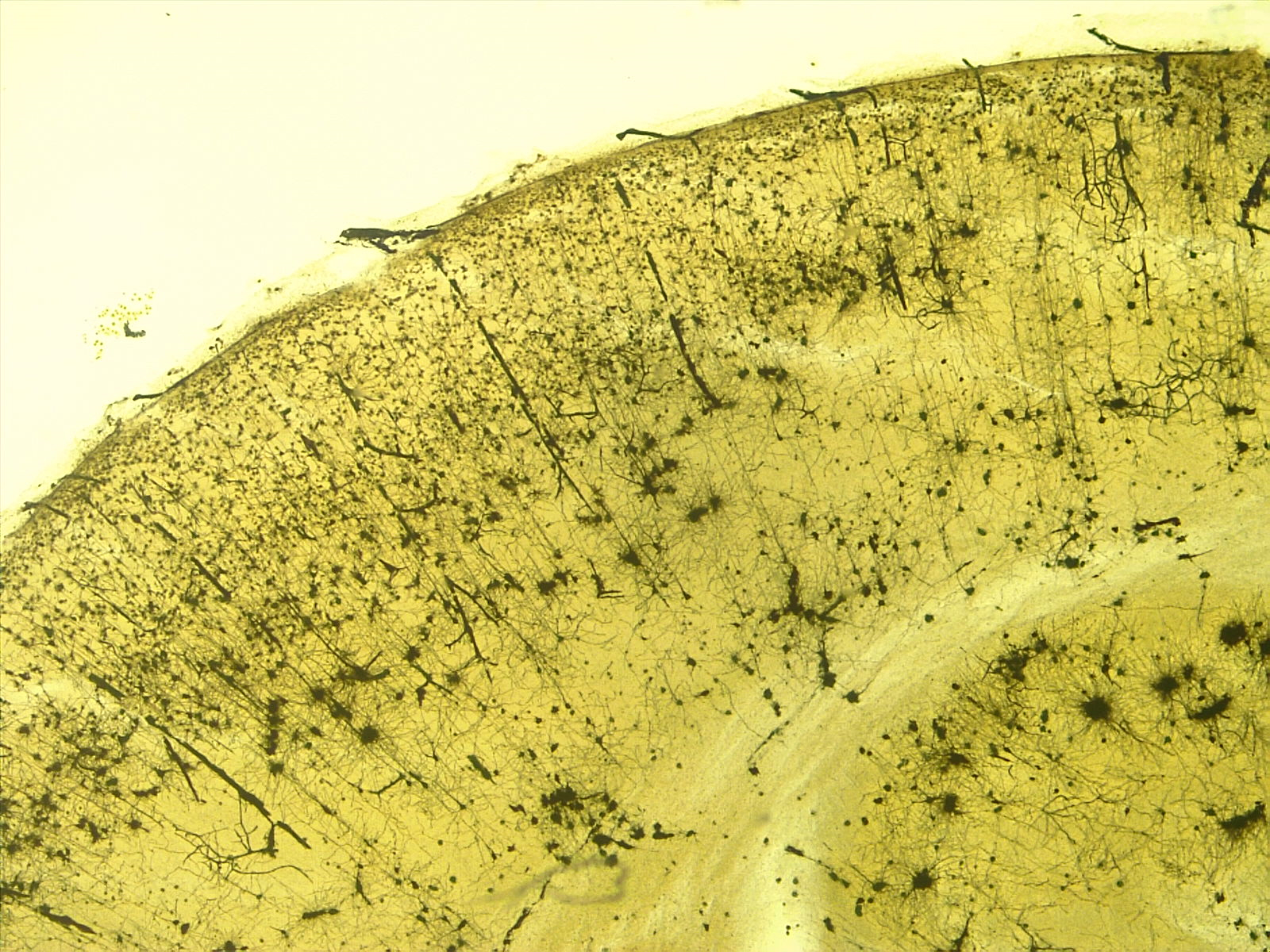
Neuroscience has a running joke about a single brain cell whose only job is to recognize your grandmother. In 2005 the joke got a celebrity upgrade, the "Jennifer Aniston neuron." Now a study of more than 14,000 mouse neurons suggests that across most of the cortex, one-cell-one-job is the exception, not the rule.
The study, a 2026 paper in Nature, comes from Lorenzo Posani, Shuqi Wang, Samuel Muscinelli, Liam Paninski and Stefano Fusi at Columbia University's Zuckerman Institute. Its bottom line, in the authors' words: "cortical circuits prioritize diversity over categorical structure."
From grandmother cells to Jennifer Aniston
The idea has a cheeky history. According to the history of the grandmother cell, cognitive scientist Jerry Lettvin coined the term around 1969 in a course at MIT, telling a made-up story about a surgeon who found "mother cells." In 2005, UCLA neurosurgeons recording from epilepsy patients found individual neurons that fired for pictures of particular stars, Jennifer Aniston among them. Even then, the researchers said they had found evidence for sparse coding, not true grandmother cells.
The deeper question never went away. Are neurons sorted into clear types that each carry one kind of information, which scientists call categorical representations? Or does each cell mix many signals together?
A brain-wide map of 43 regions
To settle it on equal terms, the Columbia team used a public dataset from the International Brain Laboratory, a collaboration of 22 neuroscience groups that shares its data openly. Its labs recorded mice doing one standard task with Neuropixels probes, electrodes first announced in 2017 that pack 960 recording sites onto a shank about a centimeter long. The mice turned a little wheel to steer a picture to the center of a screen, while the picture's side was rigged to favor left or right in blocks of trials. After filtering, the analysis covered about 14,000 neurons from around 180 recording sessions across 43 regions of the cortex.
The answer depended on how far the researchers zoomed out. Across the whole cortex, neurons did fall into groups, and those groups tracked how brain regions are wired together. Inside individual regions, though, neat categories were rare and turned up only in primary sensory areas. Everywhere else, responses were strikingly varied.
The clustering faded steadily moving up the hierarchy from sensory areas toward more cognitive ones, while the complexity of what each population represented climbed.
Why messy neurons make a smarter brain
The paper argues that this diversity is a feature. When each neuron mixes signals in its own way, a population can represent information in many dimensions at once. That lets downstream cells pull out almost any combination of facts with a simple readout, so the same neurons can serve many different tasks.
Fusi has argued for this kind of mixing for years. A 2013 Nature study on mixed selectivity, which he co-wrote, made the case that neurons responding to blends of variables are important for complex cognitive tasks. The new work tests the idea at a far larger scale.
It also hints at a change in method. If single cells rarely have clean labels, studying one neuron at a time will miss much of what a brain region is doing, and the population becomes the thing to watch. The data come from mice, and whether human cortex behaves the same way is still an open question.
Badiyaa has looked at other surprises in brain wiring, including why brain axons look like strings of pearls and a 2026 review on whether consciousness rests on chemistry AI lacks.
Sources
- “Rarely categorical, highly separable representations along the cortical hierarchy”, Nature (Columbia University Zuckerman Institute), 2026
- “The importance of mixed selectivity in complex cognitive tasks”, Nature, 2013
- “International Brain Laboratory”, International Brain Laboratory, 2026
- “Grandmother cell”, Wikipedia, 2026
- “Neuropixels”, Wikipedia, 2026
Image: Ns takes photos, CC BY 4.0 via Wikimedia Commons
This article was produced with AI assistance and reviewed by our Editorial Desk. How we work.