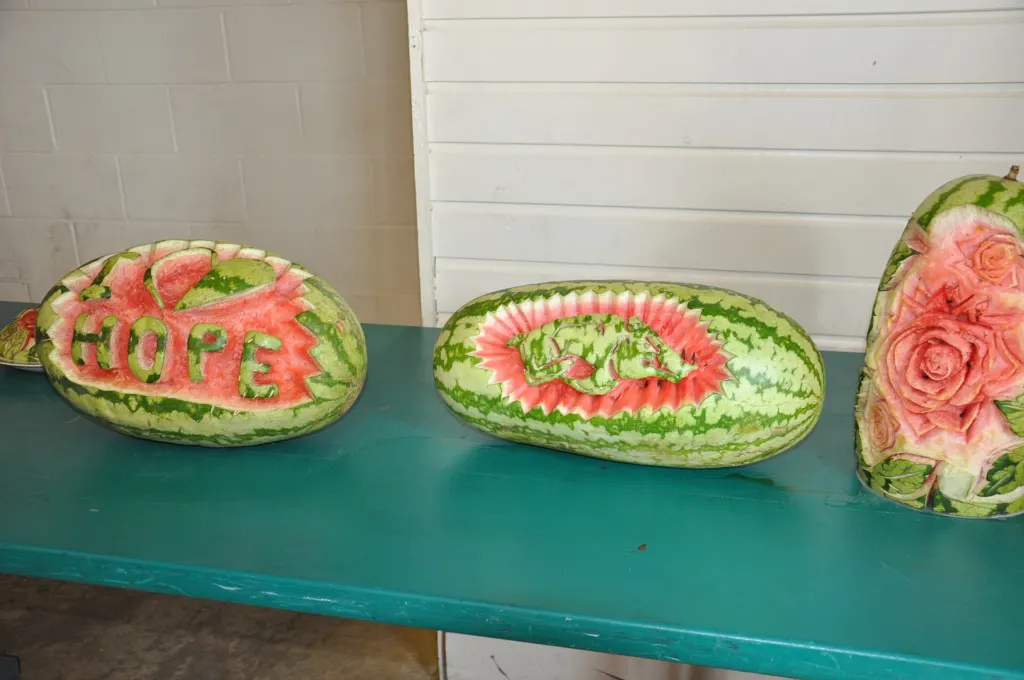
A watermelon got Patsy Montana to Chicago. The singing cowgirl, born Ruby Blevins in Arkansas on October 30, 1908, rode along in 1933 when two of her brothers hauled a prize melon to the Chicago World’s Fair, and came home with a radio job instead.
Two years later she recorded “I Want to Be a Cowboy’s Sweetheart,” a song she wrote herself. It is widely credited as country music’s first million-selling record by a woman. She would have turned 118 on Friday, October 30.
From Ruby to Rubye to Patsy
She was the youngest of eleven children and the only girl in a house full of brothers. As a teenager she added an “e” to her first name, becoming Rubye, because she thought it looked more sophisticated. Her family’s account and the reference books agree on that detail, though they differ on the year.
In Los Angeles she studied violin, then won a 1931 talent contest by yodeling Jimmie Rodgers songs. That win put her on local radio, first billed as “The Yodeling Cowgirl From San Antone.” The name Patsy Montana came while she sang with the Montana Cowgirls on a show built around the singer-songwriter Stuart Hamblen and the rodeo roper Monte Montana.
The Chicago trip changed everything. She auditioned at station WLS, joined a Kentucky string band renamed the Prairie Ramblers to suit her Western image, and became a regular on the National Barn Dance, a country radio show that predates the Grand Ole Opry.
The million-seller, and the fine print
In 1935 producer Art Satherley took Montana and the Ramblers to New York to record for the American Record Corporation. Out of that session came the polka-tempo “Cowboy’s Sweetheart,” with its bright yodel and lyrics about wanting the freedom of a life on the range.
Here is where a careful reader should slow down. The Encyclopedia of Arkansas, written by University of Arkansas folklorist Robert Cochran, says flatly that the song was the first million-seller by any woman in country music. Her open encyclopedia entry repeats the claim and pins it to a 1978 reference book on golden discs. The Country Music Hall of Fame and Museum, which inducted her in 1996, is more cautious: its official biography calls the recording the first by a female country artist “to become a runaway hit,” and gives no sales figure at all.
No audited sales total from 1935 appears in any of those sources. So the fairest wording is the one we used above: she is credited with the first million-seller by a woman in country music, and nobody disputes that the song was her breakout and the first big hit by a female country star.
Three birthplaces for one cowgirl
Even her birthplace depends on which source you open. Badiyaa compared the three references side by side:
- Country Music Hall of Fame and Museum: Hope, Arkansas.
- Encyclopedia of Arkansas: near Hot Springs, in Garland County, with the family living in Hempstead County, where Hope sits, by the 1920 census.
- Her open encyclopedia entry: Beaudry, Arkansas, with her childhood spent near Hope.
All three agree on the date, October 30, 1908, and on her death in San Jacinto, California, on May 3, 1996. The likeliest reading is that she was born in Garland County and grew up around Hope, which is why the town claims her.
A working career that ran six decades
Montana appeared in Gene Autry’s 1939 Western Colorado Sunset, hosted her own network radio show in 1946 and 1947, and later sang on the Louisiana Hayride. Her 1964 comeback album featured a young Waylon Jennings on lead guitar.
The Arkansas encyclopedia counts more than 7,000 personal appearances between 1934 and 1992 across the United States, Canada and Europe. Spread over those 58 years, that works out to roughly 120 shows a year, or more than two a week, for most of her adult life.
In the fall of 1995, just before turning 87, she played Hope and Little Rock, still in boots and a cowboy hat and still closing with “Cowboy’s Sweetheart.” She died the following May. The Country Music Hall of Fame inducted her later in 1996, the same year as Buck Owens and Ray Price.
Further reading
Image: Mike Ross, CC BY 2.0 via Wikimedia Commons
This article was produced with AI assistance and reviewed by our Editorial Desk. How we work.