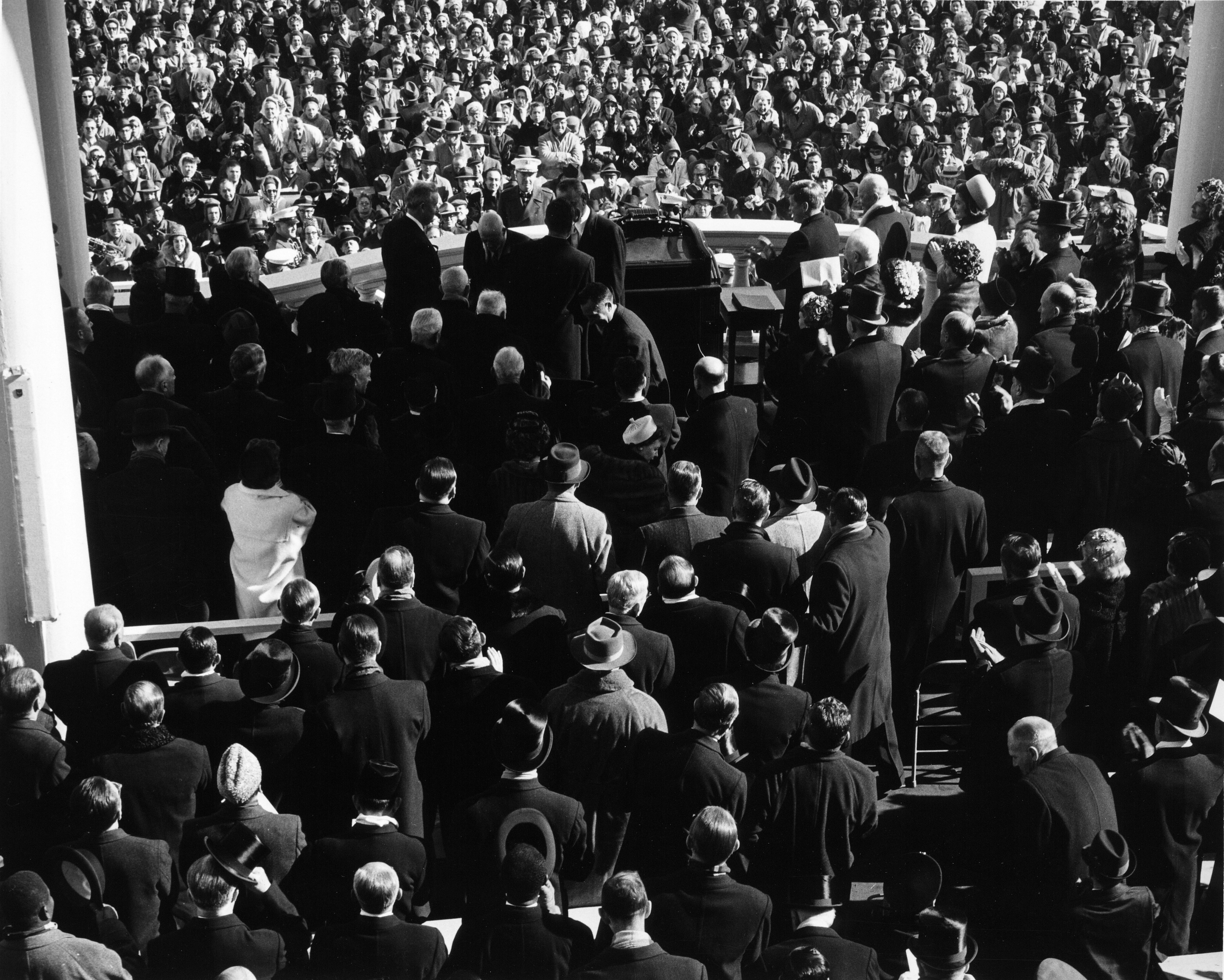
John F. Kennedy's most famous sentence was not a one-off. Seconds after telling the crowd at the US Capitol on January 20, 1961, to "ask not what your country can do for you," he turned the same formula on the rest of the planet, and that second line has largely been forgotten.
Here is the passage exactly as it appears in the National Archives transcript of the inaugural address:
"And so, my fellow Americans: ask not what your country can do for you--ask what you can do for your country. My fellow citizens of the world: ask not what America will do for you, but what together we can do for the freedom of man."
The first sentence ended up carved in stone at his grave in Arlington National Cemetery. The second, addressed to "citizens of the world," rarely makes the posters.
Where the line came from
The National Archives says the climax was "honed down from a thought about sacrifice that Kennedy had long held in his mind and had expressed in various ways in campaign speeches." He started collecting ideas in late November 1960, wrote in a nearly unreadable longhand on a yellow legal pad, and kept cutting. The Archives holds a Kennedy draft dated January 17, 1961, three days before he delivered it.
Speechwriter Ted Sorensen worked with him, and Kennedy had Sorensen study Abraham Lincoln's Gettysburg Address. The Wikipedia history of the inauguration shows how freely the team borrowed: "Let us never negotiate out of fear. But let us never fear to negotiate" is nearly identical to a suggestion from Harvard economist John Kenneth Galbraith, and another line grew out of a note from Adlai Stevenson.
The 1884 sentence that got there first
The idea behind "ask not" is older than Kennedy. In an 1884 Memorial Day speech, future Supreme Court justice Oliver Wendell Holmes Jr. urged listeners "to recall what our country has done for each of us, and to ask ourselves what we can do for the country in return." The same article also links the line to Franklin D. Roosevelt's 1936 "rendezvous with destiny" speech.
What Kennedy added was the flip. Rhetoric teachers call it antimetabole: repeating words in reverse order ("your country" and "you," then "you" and "your country") so that the sentence snaps shut.
A short speech on a freezing day
- Length: 1,366 words, the first inaugural address delivered to a televised audience in color.
- Running time: 13 minutes and 59 seconds, the fourth-shortest inaugural address on record, according to the Wikisource edition of the speech.
- Weather: 22°F at noon with a windchill of 7°F, after 8 inches of snow overnight, and Kennedy spoke without an overcoat.
- Start time: 12:51 p.m. Eastern, straight after Chief Justice Earl Warren swore him in.
Put those numbers together and the pace comes to roughly 98 words a minute, slow and deliberate by the standard of everyday speech, which helps explain why the key lines landed so cleanly on radio and television.
From words to a program
The Archives notes that the speech urged Americans to take up public service, and the follow-through was quick. On March 1, 1961, less than six weeks later, Kennedy signed an executive order creating the Peace Corps as a pilot program within the State Department; Congress made it permanent later that year.
Kennedy's speeches have a habit of being misremembered. Badiyaa has checked the transcripts before, showing that JFK never called himself a jelly doughnut in Berlin and that his moon speech at Rice ends with "and the others, too". The inaugural is the same story: the full passage runs two sentences, not one, and both begin "ask not."
Sources
- President John F. Kennedy's Inaugural Address (1961), National Archives and Records Administration, 2026
- Inauguration of John F. Kennedy, Wikipedia, 2026
- John F. Kennedy's Inaugural Address, Wikisource, 2026
Image: Office of the Architect of the Capitol, Public domain via Wikimedia Commons
This article was produced with AI assistance and reviewed by our Editorial Desk. How we work.