Left to its own clockwork, Earth would start sliding back into an ice age in roughly 10,000 years. That is the striking forecast from a million-year look at the planet's climate, and the same team says the chill will very likely never arrive on schedule, because the carbon dioxide people have already pumped into the air has pushed the climate off its natural track.
The prediction comes from a 2025 study in Science led by Stephen Barker of Cardiff University, with colleagues in California, Germany and London. They lined up a million years of evidence on Northern Hemisphere ice sheets and deep-ocean temperatures against three slow rhythms in Earth's motion: the stretch of its orbit, the wobble of its axis and the angle of its tilt.
A pattern hiding in plain sight
The fit surprised the researchers themselves. "We were amazed to find such a clear imprint of the different orbital parameters on the climate record," Barker said in the University of California, Santa Barbara's release on the study. "It is quite hard to believe that the pattern has not been seen before."
The split they found is neat. The wobble, known as precession, mostly decides when an ice age ends. The tilt, or obliquity, matters more for how warm the following interglacial gets and for when ice starts building again. According to the paper, every glacial cycle of the past 900,000 years follows that recipe, which led co-author Lorraine Lisiecki of UC Santa Barbara to describe "a predictable pattern over the past million years" for the swings between ice ages and warm spells like today.
Run the recipe forward and the current warm spell, the Holocene, which began about 11,700 years ago, should be sitting in a stable middle stretch, with the next glaciation due around 10,000 years from now.
The ice age that may be skipped
Then comes the twist. "Such a transition to a glacial state in 10,000 years' time is very unlikely to happen because human emissions of carbon dioxide into the atmosphere have already diverted the climate from its natural course," said co-author Gregor Knorr of Germany's Alfred Wegener Institute, quoted in the same release.
That echoes an earlier warning. In a 2016 paper in Nature, Andrey Ganopolski and colleagues at the Potsdam Institute for Climate Impact Research worked out the mix of summer sunlight and CO2 that tips Earth into glaciation. Their numbers were even more dramatic. Even without human influence, Ganopolski said in the Potsdam institute's announcement, a new ice age would come "no earlier than in 50.000 years from now." Moderate future emissions of 1,000 to 1,500 billion tons of carbon, the team added, would postpone it by at least 100,000 years. In Ganopolski's words, "we are basically skipping a whole glacial cycle, which is unprecedented."
Two forecasts, one message
The two studies disagree on the natural date, roughly 10,000 years in one and at least 50,000 in the other, a gap of five times or more. They agree on what matters more: the chill is no longer up to the orbit alone. The background mechanics, laid out in Wikipedia's overview of Milankovitch cycles, are slow; Earth's tilt swings between about 22.1 and 24.5 degrees over roughly 41,000 years and is now on the decreasing side of that cycle, the direction that normally favors growing ice.
Limits
Both forecasts rest on how well past cycles predict future ones, and neither is a weather report. The Science team says its next step is a baseline of Earth's natural climate for the next 10,000 to 20,000 years, to be paired with climate models so that the human effect can be measured against it.
Badiyaa has looked at the last ice age before, in our report on the 20-year debate over who killed the mammoths, and at where today's carbon goes in the Scripps oxygen record of the ocean carbon sink.
For now, the 10,000-year figure is best read as the date the planet's own clock would have set, a date that carbon dioxide already in the air is expected to overrule.
Sources
- "Distinct roles for precession, obliquity, and eccentricity in Pleistocene 100-kyr glacial cycles", Science (Barker et al.), 2025
- A Predictable Pattern for Earth's Climate Changes, UC Santa Barbara Marine Science Institute, 2025
- "Critical insolation-CO2 relation for diagnosing past and future glacial inception", Nature (Ganopolski et al.), 2016
- Human-made climate change suppresses the next ice age, Potsdam Institute for Climate Impact Research, 2016
- Milankovitch cycles, Wikipedia, 2026
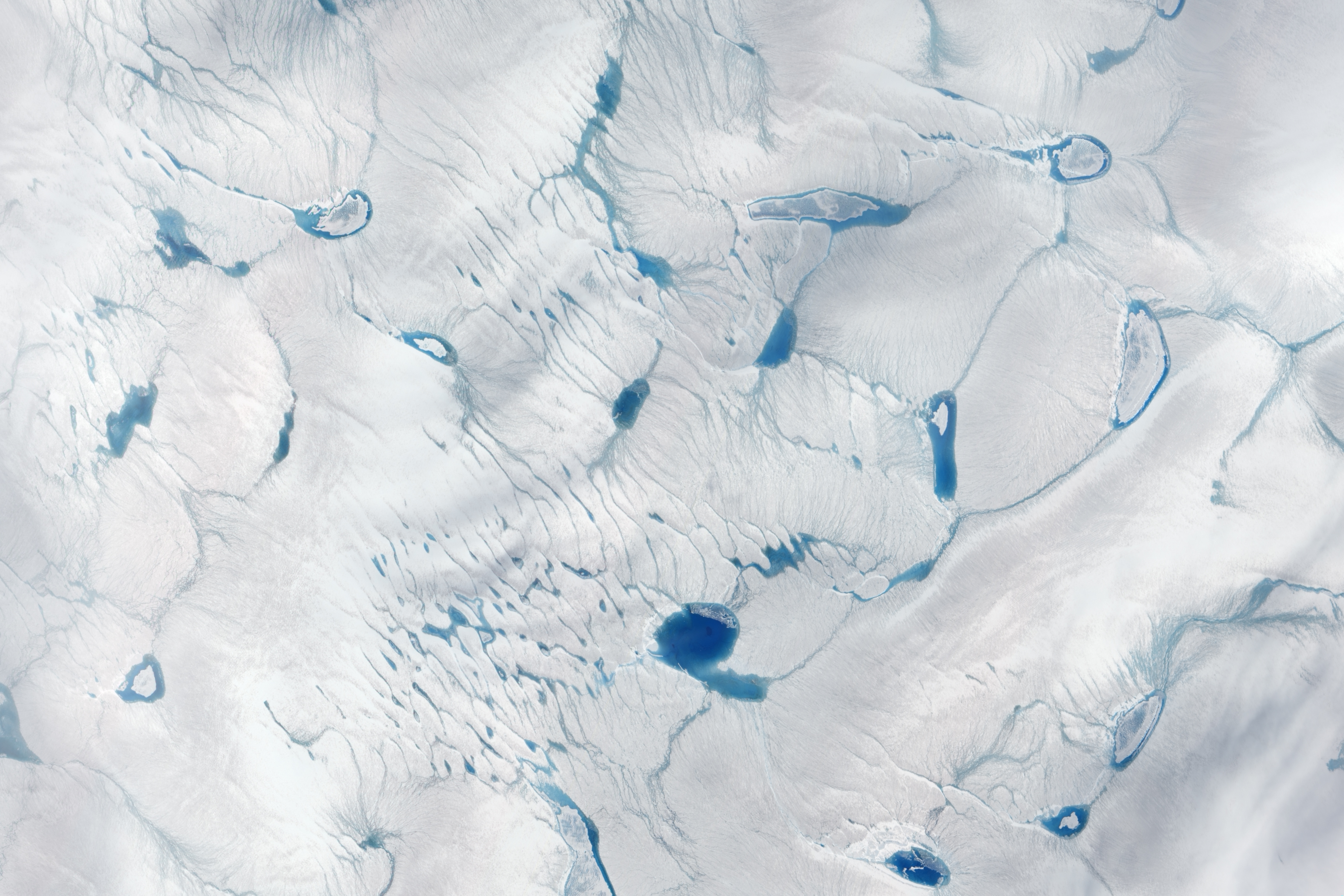
Image: NASA Goddard Space Flight Center, Public domain via Wikimedia Commons
This article was produced with AI assistance and reviewed by our Editorial Desk. How we work.