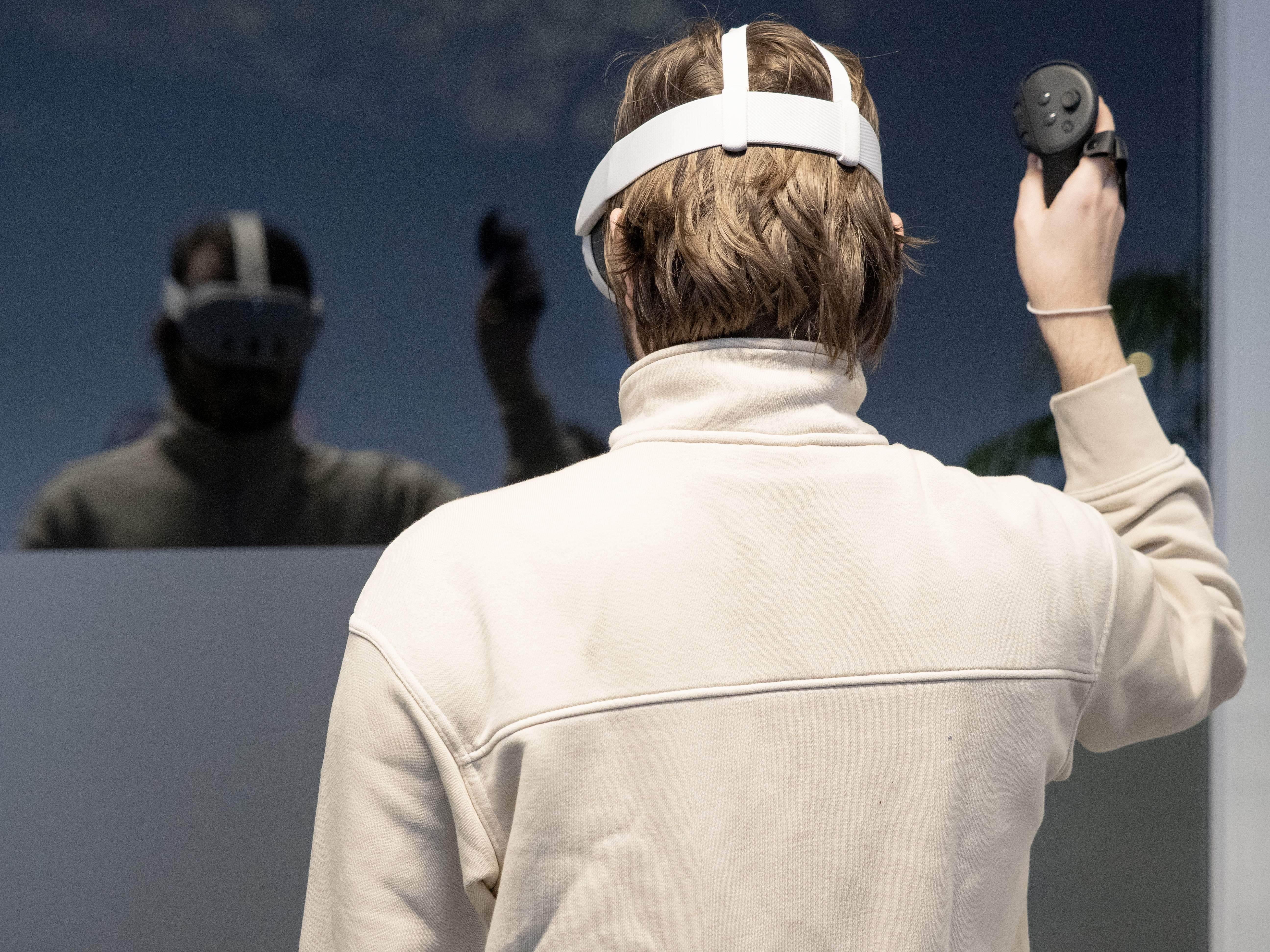
Picture a tank, a set of electrodes and a lifetime of perfect experiences you could never tell apart from real ones. Would you climb in? Robert Nozick bet that most people would refuse, and more than 50 years later his "experience machine" is still one of the most argued-over ideas in moral philosophy, pulling heavy reader traffic in the US and Canada this week.
The Harvard philosopher set out the scenario in his 1974 book Anarchy, State, and Utopia. As quoted on Wikipedia's biography of Robert Nozick, he imagined that "Superduper neuropsychologists could stimulate your brain so that you would think and feel you were writing a great novel, or making a friend, or reading an interesting book." Then came the hook: "Should you plug into this machine for life, preprogramming your life's experiences?"
What the thought experiment is for
Nozick was aiming at ethical hedonism, the view that pleasure is the only thing with value in itself and pain the only thing with negative value. The Stanford Encyclopedia of Philosophy's entry on hedonism, revised on November 17, 2026, traces that idea back through Jeremy Bentham and lists Nozick's tank among the best-known objections to it.
The logic is short. If pleasure were all that mattered, a machine that guarantees more pleasure would be the obvious choice. If people still have a reason to say no, then something besides pleasure must matter. Wikipedia's article on the experience machine lays the argument out as five numbered steps ending in that conclusion.
Nozick offered three reasons to stay unplugged:
- We want to actually do things, not just feel as if we did them.
- We want to be a particular kind of person. A body floating in a tank, he wrote, is "an indeterminate blob."
- A machine-made world cuts us off from anything deeper than what people can build. "There is no actual contact with any deeper reality, though the experience of it can be simulated," he wrote.
The encyclopedia entry quotes his verdict from pages 43 and 44 of the book: "something matters to us in addition to experience."
What happened when researchers asked real people
Nozick never polled anyone. Later researchers did, and the answers were messier than he assumed. In a 2010 paper in Philosophical Psychology, Felipe De Brigard flipped the setup: he told 72 US undergraduates they were already inside the machine and asked whether they wanted out. Among those told nothing about their real lives, 54% chose to disconnect. Among those told their real life was in a maximum-security prison, only 13% did.
De Brigard read that as status quo bias: people tend to keep whatever life they already have, real or not. The psychologist and philosopher Joshua Greene made a similar point with a version in which a technician wakes you in the year 2659 and offers to end the simulation you chose decades ago.
Here is the Badiyaa takeaway in numbers: in De Brigard's no-information group, close to half of the students chose to stay plugged in, a far smaller majority than Nozick's argument takes for granted.
Limits and lasting reach
None of this settles the question. A survey of students is not a verdict on what has value, and the philosophers still argue over what the tank can show; the encyclopedia calls the debate "ongoing and lively." The idea has also leaked into culture, from Cypher choosing the simulation in The Matrix to the dream machines of Inception.
Wikipedia's article on Anarchy, State, and Utopia notes the book won the 1975 US National Book Award in Philosophy and Religion, and the same pages hold Nozick's famous Wilt Chamberlain argument, a fitting link to Badiyaa's look at Wilt Chamberlain's NBA-record 55 rebounds against the Celtics. For more on how people judge knowledge itself, read our report on a survey of what scientists and the public think science is, and our profile of Baruch Spinoza, the philosopher Einstein admired.
Nozick himself returned to the machine in his 1989 book The Examined Life, 15 years after he first asked readers to imagine the tank.
Sources
- Robert Nozick, Wikipedia, 2026
- Hedonism, Stanford Encyclopedia of Philosophy, Stanford University, 2026
- Experience machine, Wikipedia, 2026
- If you like it, does it matter if it's real? (Felipe De Brigard), Philosophical Psychology, 2010
- Anarchy, State, and Utopia, Wikipedia, 2026
Image: InclusiveGameLab, CC BY-SA 4.0 via Wikimedia Commons
This article was produced with AI assistance and reviewed by our Editorial Desk. How we work.